|
|
|
| High-Strength and High-Conductivity Cu-10Fe In Situ Composites Fabricated via Cold Spraying and Subsequent Thermo-Mechanical Treatment |
HU Xiaona1, CHEN Wei1( ), ZOU Jin1, HU Qiang1, LU Deping1, MA Li2 |
1 Jiangxi Key Laboratory of Advanced Copper-based Materials, Institute of Materials and Intelligent Manufacturing, Jiangxi Academy of Sciences, Nanchang 330096, China
2 Jiangxi Naile Copper Industry Co. Ltd., Yingtan 335000, China |
|
Cite this article:
HU Xiaona, CHEN Wei, ZOU Jin, HU Qiang, LU Deping, MA Li. High-Strength and High-Conductivity Cu-10Fe In Situ Composites Fabricated via Cold Spraying and Subsequent Thermo-Mechanical Treatment. Acta Metall Sin, 2026, 62(10): 1713-1726.
|
|
|
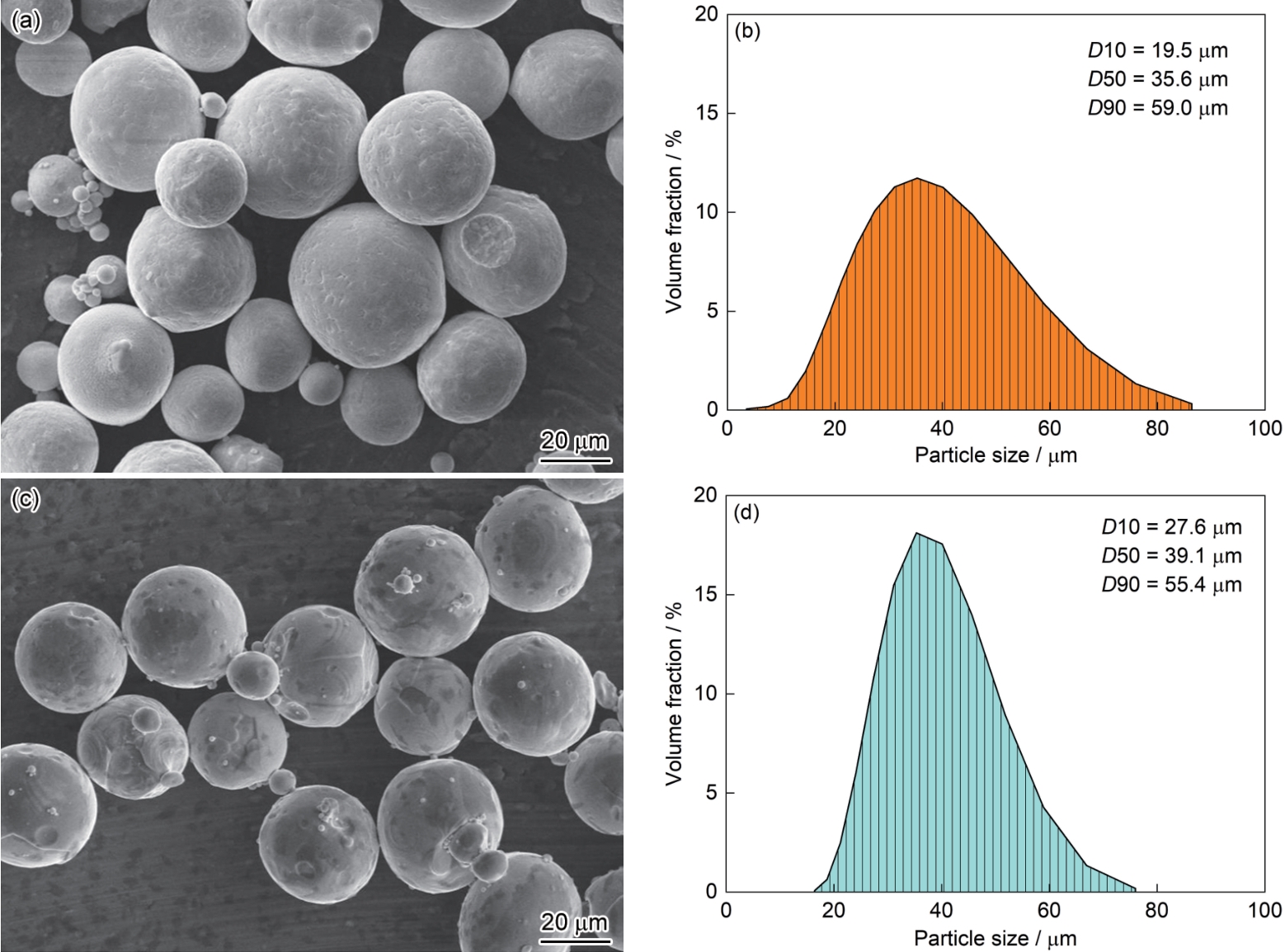
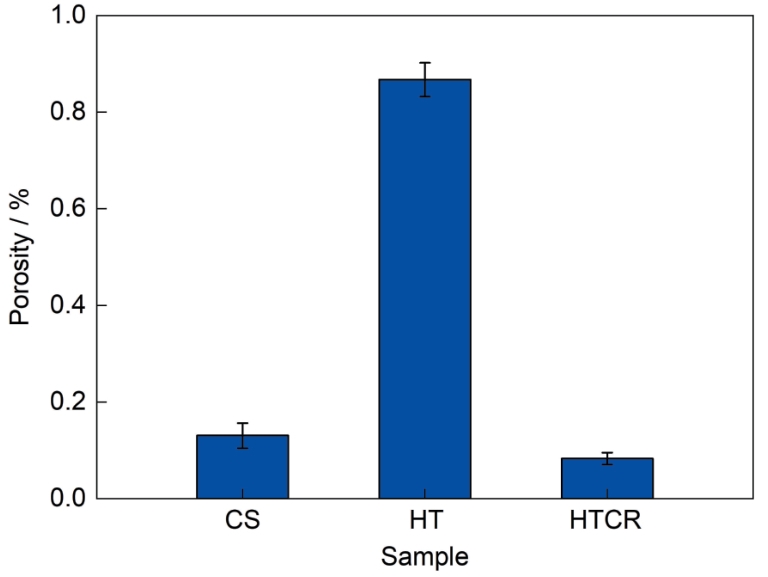
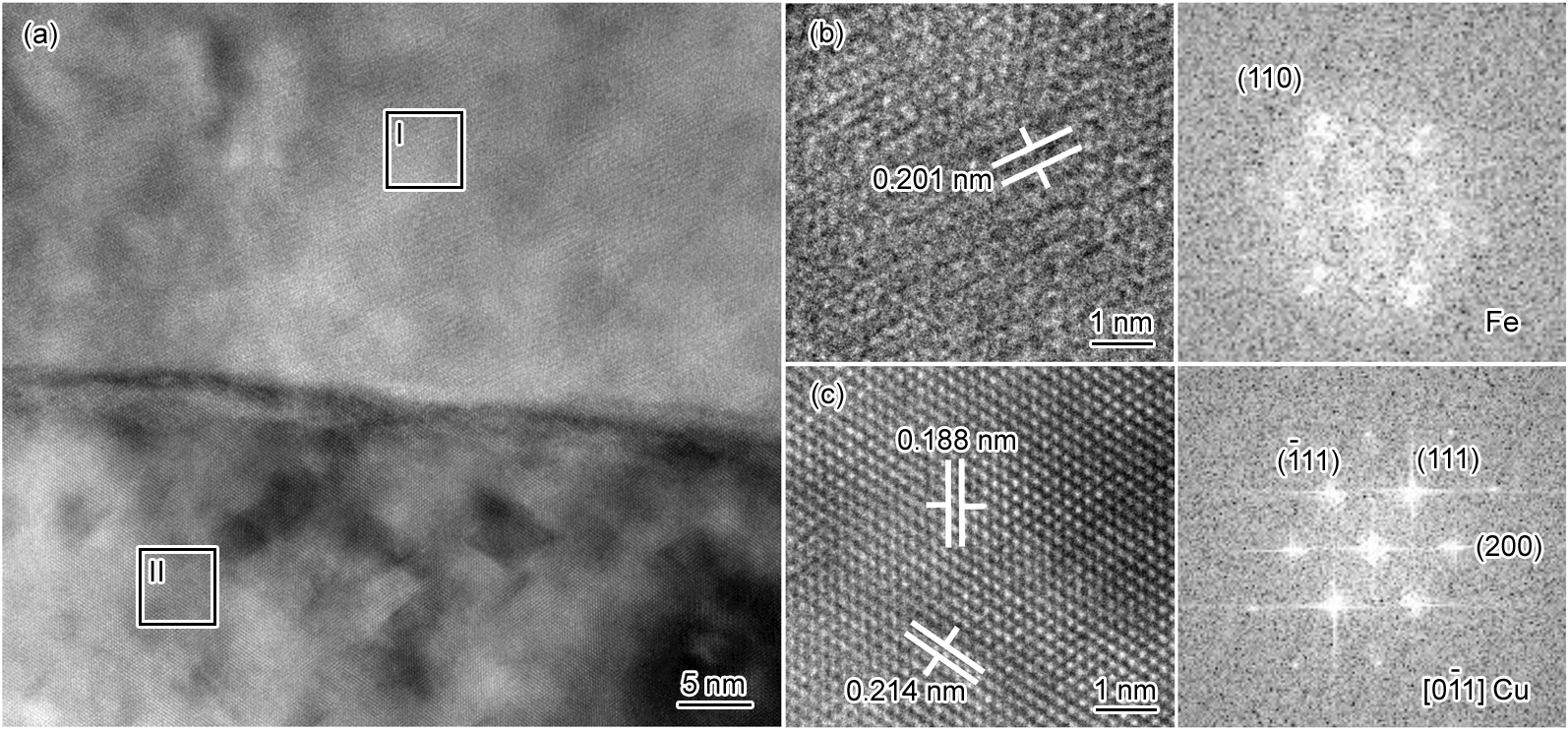
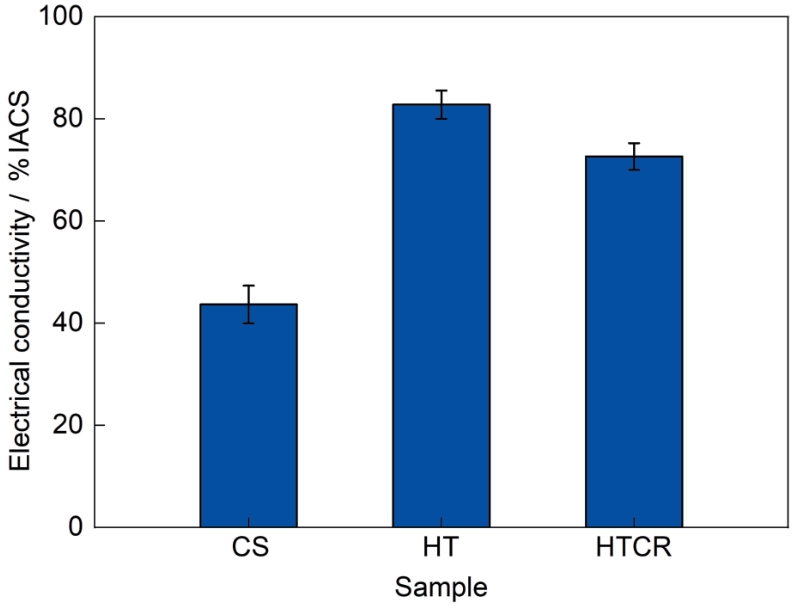
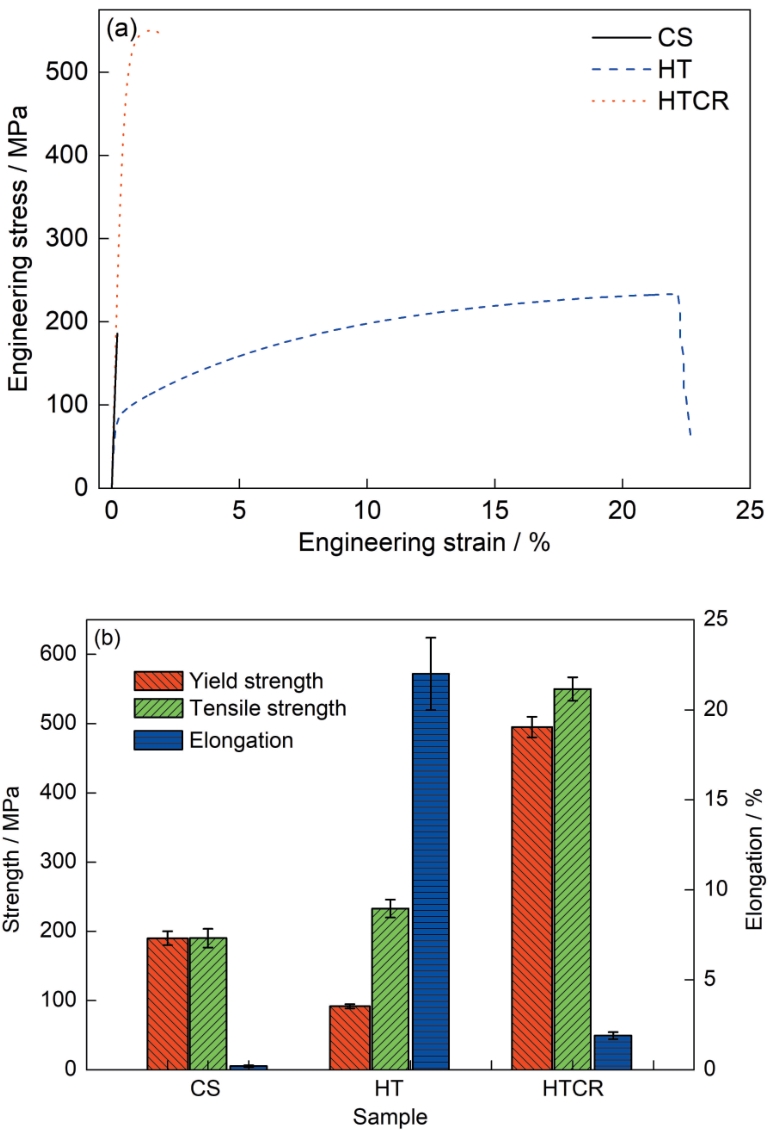
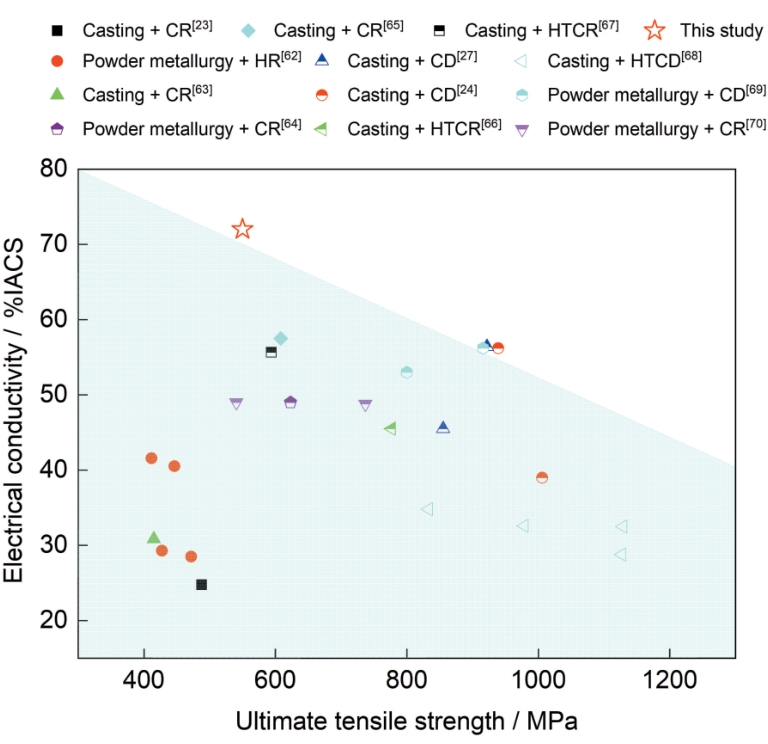
Abstract Cu-Fe alloys are promising for electrical engineering applications due to their ability to combine high strength with excellent electrical conductivity. Conventional casting, however, suffers from severe limitations: metastable liquid-phase separation during solidification causes pronounced compositional segregation, while dissolved Fe atoms scatter conduction electrons, significantly reducing the Cu matrix conductivity. To address these issues, this study employs a novel fabrication route integrating cold spraying (CS) with post-deposition heat treatment (HT) and cold rolling (CR) to produce high-performance Cu-10Fe in situ composites. Spherical gas-atomized Cu and Fe powders were mechanically mixed and deposited onto an Al substrate using nitrogen propellant gas. The CS deposits underwent vacuum annealing at 600 oC for 24 h, followed by severe CR with 99% thickness reduction. Microstructural evolution, strengthening mechanisms, and electrical conductivity were systematically characterized using SEM, EBSD, and TEM/EDS. The CS deposit exhibited a gradient nano-grained structure, comprising ultra-fine Cu nanograins (80-800 nm) surrounding deformed micron-sized Fe grains (3.5-10.0 μm) and coarser micron-sized Cu grains (1.5-10.0 μm), with low porosity (0.13%). Subsequent HT induced static recrystallization in the Cu matrix, producing equiaxed grains (~3.9 μm) and promoting recovery/recrystallization in the Fe particles. Interestingly, HT increased porosity to 0.86% and weakened some Cu/Fe interfaces, likely due to thermal expansion mismatch. Severe CR (HTCR state) markedly transformed the microstructure: equiaxed grains elongated along the rolling direction, forming Cu grains with strong <111> and <211> fiber textures and Fe fibers with a dominant <110> texture. This HTCR process enhanced interfacial bonding and reduced porosity to 0.09%, yielding a dense composite. Importantly, no mutual solid solubility between the Cu matrix and Fe fibers was observed, except for a narrow (~20 nm) atomic diffusion layer at the interfaces, as confirmed by TEM/EDS. The absence of Fe solute in Cu is critical for maintaining high electrical conductivity. The HTCR composite exhibited an exceptional combination of properties: an ultimate tensile strength of 550 MPa, far exceeding the CS (190 MPa) and HT (233 MPa) states, and a high electrical conductivity of 72%IACS. Its remarkable strength arises primarily from fine-grain strengthening, dislocation strengthening, and load transfer strengthening via Fe fibers. Notably, the experimentally measured strength (495 MPa) exceeds the calculated contribution from these mechanisms alone (367 MPa), highlighting the significant role of hetero-deformation-induced strengthening and potentially underestimated fine-grain strengthening from sub-EBSD-resolution grains. Together, these mechanisms account for the composite's ultrahigh strength. The high electrical conductivity results from the absence of Fe solute scattering in the Cu matrix, improved interfacial bonding and pore elimination during HTCR process, and the alignment of elongated Cu grains and Fe fibers along the current path, minimizing electron-scattering interfaces. Compared to conventionally fabricated Cu-Fe alloys (e.g., casting, powder metallurgy), the CS + HTCR Cu-10Fe composite exhibits a superior strength-conductivity balance. This study demonstrates that CS combined with tailored thermo-mechanical processing (HT + CR) provides an effective, industrially viable route to high-strength, high-conductivity Cu-Fe in situ composites with uniform composition and dense microstructure.
|
|
Received: 26 December 2024
|
|
|
| Fund: Jiangxi Natural Science Foundation(20242BAB25209);Jiangxi Science and Technology Major Program(20212AAE01003);Jiangxi Key Research and Development Program(20243BBG71027);Key Research and Development Program of Jiangxi Academy of Sciences(2023YSBG22020);Fundamental Research and Talent People Program of Jiangxi Academy of Sciences(2023YJC2014) |
Corresponding Authors:
CHEN Wei, associate professor, Tel: 18000212490, E-mail: chenw@alum.imr.ac.cn
|
| [1] |
Chen W, Hu X N, Zou J, et al. Refinement effect of C addition on the Cr phase in the as-cast Cu-Cr alloys[J]. Vacuum, 2020, 179: 109485
doi: 10.1016/j.vacuum.2020.109485
|
| [2] |
Mao Q Z, Liu Y F, Zhao Y H. A review on copper alloys with high strength and high electrical conductivity[J]. J. Alloys Compd., 2024, 990: 174456
doi: 10.1016/j.jallcom.2024.174456
|
| [3] |
Jamwal A, Mittal P, Agrawal R, et al. Towards sustainable copper matrix composites: Manufacturing routes with structural, mechanical, electrical and corrosion behaviour[J]. J. Compos. Mater., 2020, 54: 2635
doi: 10.1177/0021998319900655
|
| [4] |
Wang F L, Wakoh K, Li Y P, et al. Study of microstructure evolution and properties of Cu-Fe microcomposites produced by a pre-alloyed powder method[J]. Mater. Des., 2017, 126: 64
doi: 10.1016/j.matdes.2017.04.017
|
| [5] |
Verhoeven V D, Chueh S C, Gibson E D. Strength and conductivity of in situ Cu-Fe alloys[J]. J. Mater. Sci., 1989, 24: 1748
doi: 10.1007/BF01105700
|
| [6] |
Yang F, Wu C H, Li R F, et al. Strain-induced balancing of strength and electrical conductivity in Cu-20 wt% Fe alloy wires: Effect of drawing strain[J]. Acta Metall. Sin. (Engl. Lett.), 2025, 38: 1246
doi: 10.1007/s40195-025-01857-7
|
| [7] |
Xu J, Guan B, Fu R, et al. Tailoring the microstructure and mechanical properties of Cu-Fe alloy by varying the rolling path and rolling temperature[J]. J. Mater. Res. Technol., 2023, 27: 182
doi: 10.1016/j.jmrt.2023.09.273
|
| [8] |
Yang L J, Bao G, Yao C C, et al. Mitigating adverse effects of Cu-containing intrauterine devices using a highly biocompatible Cu-5Fe alloy[J]. Acta Biomater., 2024, 189: 651
doi: 10.1016/j.actbio.2024.09.022
|
| [9] |
Li Y, Yi D Q, Zhang J B. Comparative study of the influence of Ag on the microstructure and mechanical properties of Cu-10Fe in situ composites[J]. J. Alloys Compd., 2015, 647: 413
doi: 10.1016/j.jallcom.2015.05.252
|
| [10] |
Yu X Y, Ren J W, Gu K H, et al. Synergistic improvement of mechanical properties and electrical conductivity of Cu-Fe alloys by rare earth metals Sc and Y addition[J]. J. Alloys Compd., 2024, 979: 173569
doi: 10.1016/j.jallcom.2024.173569
|
| [11] |
Ding Y J, Deng Z X, Xiao Z, et al. Effect of Nb content on mechanical reinforcement of the Cu-10Fe composites[J]. J. Alloys Compd., 2023, 966: 171540
doi: 10.1016/j.jallcom.2023.171540
|
| [12] |
Chen W, Hu X N, Jiang J, et al. Ultrahigh-strength Cu-10Fe-0.2 Mg in situ composites via ultra-nano precipitation within nanolamellar architectures[J]. Vacuum, 2025, 240: 114511
doi: 10.1016/j.vacuum.2025.114511
|
| [13] |
Choi W M, Hong S I. High pressure torsioning of Cu-9Fe-1.2X (X = Co, Ni, Ag) microcomposites and their microstructural and mechanical evolution[J]. Adv. Mater. Res., 2013, 813: 87
|
| [14] |
Nakagawa Y. Liquid immiscibility in copper-iron and copper-cobalt systems in the supercooled state[J]. Acta Metall., 1958, 6: 704
doi: 10.1016/0001-6160(58)90061-0
|
| [15] |
Zhang P B, Yu Z T, Wang Y P, et al. Research progress on strengthening mechanism of copper-iron alloys with high iron concentration[J]. Chin. J. Nonferrous Met., 2023, 33(8): 2496
|
|
张鹏博, 俞志焘, 王亚平 等. 高铁含量铜铁合金强化机理的研究进展[J]. 中国有色金属学报, 2023, 33(8): 2496
|
| [16] |
Cen L, Zhou S F, Gao M. Controlling macroscopic segregation of the directed energy deposited Cu-Fe alloy by laser oscillation[J]. Mater. Sci. Eng., 2023, 886: 145637
doi: 10.1016/j.msea.2023.145637
|
| [17] |
Zhang C Z, Chen C G, Li P, et al. Microstructure and properties evolution of rolled powder metallurgy Cu-30Fe alloy[J]. J. Alloys Compd., 2022, 909: 164761
doi: 10.1016/j.jallcom.2022.164761
|
| [18] |
Zhang P, Li C, Teng J W, et al. Influence of minor Mg/Ca/Nb/Ag addition on the morphology and microstructure of Fe-rich phase in powder metallurgy Cu-10Fe alloy[J]. Mater. Charact., 2024, 214: 114065
doi: 10.1016/j.matchar.2024.114065
|
| [19] |
Zhu F, Gan X P, Liu C Q. Microstructure and properties of Cu-50Fe alloy produced by chemical co-precipitation and powder metallurgy[J]. J. Cent. South Univ., 2023, 30: 1405
doi: 10.1007/s11771-023-5314-8
|
| [20] |
Yue X Y, Peng S Y, Zhang X, et al. Distinct electrical and mechanical responses of a Cu-10Fe composite prepared by hot-pressed sintering and post treatment[J]. Acta Metall. Sin. (Engl. Lett.), 2024, 37: 255
doi: 10.1007/s40195-023-01633-5
|
| [21] |
Assadi H, Kreye H, Gärtner F, et al. Cold spraying—A materials perspective[J]. Acta Mater., 2016, 116: 382
doi: 10.1016/j.actamat.2016.06.034
|
| [22] |
Wang M, Zhang R, Xiao Z, et al. Microstructure and properties of Cu-10wt%Fe alloy produced by double melt mixed casting and multi-stage thermomechanical treatment[J]. J. Alloys Compd., 2020, 820: 153323
doi: 10.1016/j.jallcom.2019.153323
|
| [23] |
Wang M, Jiang Y B, Li Z, et al. Microstructure evolution and deformation behaviour of Cu-10wt%Fe alloy during cold rolling[J]. Mater. Sci. Eng., 2021, A801: 140379
|
| [24] |
Song J S, Hong S I, Kim H S. Heavily drawn Cu-Fe-Ag and Cu-Fe-Cr microcomposites[J]. J. Mater. Process. Technol., 2001, 113: 610
doi: 10.1016/S0924-0136(01)00665-3
|
| [25] |
Cui L, Liu G, Feng S Q, et al. Research status, application and challenges of cold spray additive manufacturing technology[J]. Rare Met. Mater. Eng., 2023, 52: 351
|
|
崔 烺, 刘 光, 冯胜强 等. 冷喷涂增材制造技术研究现状及应用与挑战[J]. 稀有金属材料与工程, 2023, 52: 351
|
| [26] |
Jasthi B K, Kuca T S, Ellingsen M D, et al. Microstructure and mechanical properties of cold spray additive manufactured Cu-Cr-Nb and Fe-Ni-Cr alloys[J]. Addit. Manuf., 2023, 61: 103354
|
| [27] |
Yang F, Dong L M, Zhou L C, et al. Excellent strength and electrical conductivity achieved by optimizing the dual-phase structure in Cu-Fe wires[J]. Mater. Sci. Eng., 2022, A849: 143484
|
| [28] |
Wei Y K, Luo X T, Ge Y, et al. Deposition of fully dense Al-based coatings via in-situ micro-forging assisted cold spray for excellent corrosion protection of AZ31B magnesium alloy[J]. J. Alloys Compd., 2019, 806: 1116
doi: 10.1016/j.jallcom.2019.07.279
|
| [29] |
Wei Y K, Luo X T, Chu X, et al. Solid-state additive manufacturing high performance aluminum alloy 6061 enabled by an in-situ micro-forging assisted cold spray[J]. Mater. Sci. Eng., 2020, A776: 139024
|
| [30] |
Zou Y, Qin W, Irissou E, et al. Dynamic recrystallization in the particle/particle interfacial region of cold-sprayed nickel coating: Electron backscatter diffraction characterization[J]. Scr. Mater., 2009, 61: 899
doi: 10.1016/j.scriptamat.2009.07.020
|
| [31] |
Meyers M A, Xu Y B, Xue Q, et al. Microstructural evolution in adiabatic shear localization in stainless steel[J]. Acta Mater., 2003, 51: 1307
doi: 10.1016/S1359-6454(02)00526-8
|
| [32] |
Chaudhuri A, Raghupathy Y, Srinivasan D, et al. Microstructural evolution of cold-sprayed Inconel 625 superalloy coatings on low alloy steel substrate[J]. Acta Mater., 2017, 129: 11
doi: 10.1016/j.actamat.2017.02.070
|
| [33] |
Zou Y, Goldbaum D, Szpunar J A, et al. Microstructure and nanohardness of cold-sprayed coatings: Electron backscattered diffraction and nanoindentation studies[J]. Scr. Mater., 2010, 62: 395
doi: 10.1016/j.scriptamat.2009.11.034
|
| [34] |
Li Y J, Luo X T, Rashid H, et al. A new approach to prepare fully dense Cu with high conductivities and anti-corrosion performance by cold spray[J]. J. Alloys Compd., 2018, 740: 406
doi: 10.1016/j.jallcom.2017.11.053
|
| [35] |
Han J C, Li S, Gao X Y, et al. Effect of annealing process on interface microstructure and mechanical property of the Cu/Al corrugated clad sheet[J]. J. Mater. Res. Technol., 2023, 23: 284
doi: 10.1016/j.jmrt.2022.12.188
|
| [36] |
Guo B J, Yang Z S, Wu Q F, et al. Multi-scale annealing twins generate superior ductility in an additively manufactured high-strength medium entropy alloy[J]. Int. J. Plast., 2024, 179: 104045
doi: 10.1016/j.ijplas.2024.104045
|
| [37] |
Koga N, Tomono S, Umezawa O. Crystallographic orientation on raft-like structure developed by tensile deformation in Cu-Fe dual phase alloy sheet[J]. IOP Conference Series: Materials Science and Engineering, 2021, 1121: 012006.
|
| [38] |
Zhang C Z, Chen C G, Li Y, et al. Effect of cold working deformation on microstructure and properties of powder metallurgy copper-iron alloys[J]. Metallic Funct. Mater., 2023, 30(6): 18
|
|
张陈增, 陈存广, 李 杨 等. 冷加工变形量对粉末冶金铜铁合金组织与性能的影响[J]. 金属功能材料, 2023, 30(6): 18
|
| [39] |
Jazaeri H, Humphreys F J. The transition from discontinuous to continuous recrystallization in some aluminium alloys: I—The deformed state[J]. Acta Mater., 2004, 52: 3239
doi: 10.1016/j.actamat.2004.03.030
|
| [40] |
Wang Q, Qiu D, Xiong Y M, et al. High resolution microstructure characterization of the interface between cold sprayed Al coating and Mg alloy substrate[J]. Appl. Surf. Sci., 2014, 289: 366
doi: 10.1016/j.apsusc.2013.10.168
|
| [41] |
Zhou K X, Zhao Y H, Dong H Z, et al. Fractal structure and nano-precipitates break comprehensive performance limits of CuCrZr alloys[J]. Nano Today, 2024, 56: 102234
doi: 10.1016/j.nantod.2024.102234
|
| [42] |
Chen X, Zhang B X, Zou Q, et al. Design of pure aluminum laminates with heterostructures for extraordinary strength-ductility synergy[J]. J. Mater. Sci. Technol., 2022, 100: 193
doi: 10.1016/j.jmst.2021.05.030
|
| [43] |
Xiong T Y, Wang J Q. Research progress of cold spray in Institute of Metal Research, Chinese Academy of Sciences[J]. Acta Metall. Sin., 2023, 59: 537
doi: 10.11900/0412.1961.2022.00552
|
|
熊天英, 王吉强. 中国科学院金属研究所冷喷涂技术研究进展[J]. 金属学报, 2023, 59: 537
doi: 10.11900/0412.1961.2022.00552
|
| [44] |
Yin S, Fan N S, Huang C J, et al. Towards high-strength cold spray additive manufactured metals: Methods, mechanisms, and properties[J]. J. Mater. Sci. Technol., 2024, 170: 47
doi: 10.1016/j.jmst.2023.05.047
|
| [45] |
Mao Q Z, Zhang Y S, Guo Y Z, et al. Enhanced electrical conductivity and mechanical properties in thermally stable fine-grained copper wire[J]. Commun. Mater., 2021, 2: 46
doi: 10.1038/s43246-021-00150-1
|
| [46] |
Mao Q Z, Wang L, Nie J F, et al. Enhancing strength and electrical conductivity of Cu-Cr composite wire by two-stage rotary swaging and aging treatments[J]. Composites, 2022, 231B: 109567
|
| [47] |
Chen S C, Chen L B. The Physical Properties of Materials[M]. Shanghai: Shanghai Jiao Tong University Press, 1998: 1
|
|
陈树川, 陈凌冰. 材料物理性能[M]. 上海: 上海交通大学出版社, 1998: 1
|
| [48] |
Biselli C, Morris D G. Microstructure and strength of Cu Fe in situ composites after very high drawing strains[J]. Acta Mater., 1996, 44: 493
doi: 10.1016/1359-6454(95)00212-X
|
| [49] |
Stepanov N D, Kuznetsov A V, Salishchev G A, et al. Evolution of microstructure and mechanical properties in Cu-14%Fe alloy during severe cold rolling[J]. Mater. Sci. Eng., 2013, A564: 264
|
| [50] |
Ran H, Ye P H, Guo F J, et al. Superior strength-ductility combination resulted from hetero-zone boundary affected region in Cu-Fe layered material[J]. J. Mater. Sci. Technol., 2024, 181: 209
doi: 10.1016/j.jmst.2023.09.027
|
| [51] |
Hong S I, Hill M A. Microstructural stability and mechanical response of Cu-Ag microcomposite wires[J]. Acta Mater., 1998, 46: 4111
doi: 10.1016/S1359-6454(98)00106-2
|
| [52] |
Wen H M, Topping T D, Isheim D, et al. Strengthening mechanisms in a high-strength bulk nanostructured Cu-Zn-Al alloy processed via cryomilling and spark plasma sintering[J]. Acta Mater., 2013, 61(8): 2769
doi: 10.1016/j.actamat.2012.09.036
|
| [53] |
He J Y, Wang H, Huang H L, et al. A precipitation-hardened high-entropy alloy with outstanding tensile properties[J]. Acta Mater., 2016, 102: 187
doi: 10.1016/j.actamat.2015.08.076
|
| [54] |
Molotnikov A, Lapovok R, Davies C H J, et al. Size effect on the tensile strength of fine-grained copper[J]. Scr. Mater., 2008, 59: 1182
doi: 10.1016/j.scriptamat.2008.08.004
|
| [55] |
Ungár T, Borbély A. The effect of dislocation contrast on X-ray line broadening: A new approach to line profile analysis[J]. Appl. Phys. Lett., 1996, 69: 3173
doi: 10.1063/1.117951
|
| [56] |
Li Y Z, Huang M X. A method to calculate the dislocation density of a TWIP steel based on neutron diffraction and synchrotron X-ray diffraction[J]. Acta Metall. Sin., 2020, 56: 487
doi: 10.11900/0412.1961.2020.00016
|
|
李亦庄, 黄明欣. 基于中子衍射和同步辐射X射线衍射的TWIP钢位错密度计算方法[J]. 金属学报, 2020, 56: 487
doi: 10.11900/0412.1961.2020.00016
|
| [57] |
Liu T, Vaudin M D, Bunn J R, et al. Quantifying dislocation density in Al-Cu coatings produced by cold spray deposition[J]. Acta Mater., 2020, 193: 115
doi: 10.1016/j.actamat.2020.04.040
|
| [58] |
Yue S P, Li G L, Qu J P, et al. Investigation on the dual-phase co-deformation behavior and strengthening mechanism in cold-drawn Cu-20Fe alloy[J]. Mater. Sci. Eng., 2023, A862: 144474
|
| [59] |
Lu X C, Xu Y L, Ran H, et al. The role of layer strength ratio in enhancing strain hardening and achieving strength-ductility synergy in heterostructured materials[J]. Acta Mater., 2025, 289: 120928
doi: 10.1016/j.actamat.2025.120928
|
| [60] |
Tian L, Anderson I, Riedemann T, et al. Modeling the electrical resistivity of deformation processed metal-metal composites[J]. Acta Mater., 2014, 77: 151
doi: 10.1016/j.actamat.2014.06.013
|
| [61] |
Zhang G P, Li M L, Wu X M, et al. Research progress on effect of length scale on electrical resistivity of metals[J]. Chin. J. Mater. Res., 2014, 28: 81
doi: 10.11901/1005.3093.2013.365
|
|
张广平, 李孟林, 吴细毛 等. 尺度对金属材料电阻率影响的研究进展[J]. 材料研究学报, 2014, 28: 81
doi: 10.11901/1005.3093.2013.365
|
| [62] |
Wang M, Yang Q R, Jiang Y B, et al. Effects of Fe content on microstructure and properties of Cu-Fe alloy[J]. Trans. Nonferrous Met. Soc. China, 2021, 31: 3039
doi: 10.1016/S1003-6326(21)65713-8
|
| [63] |
Ren L, Zhang S R, Shi J Q, et al. Grain refinement and mechanical properties enhancement of Cu-10wt%Fe alloys via Zr addition[J]. Mater. Sci. Eng., 2022, A846: 143309
|
| [64] |
Zhang C Z, Chen C G, Huang L N, et al. Microstructure and properties of Cu-Fe alloys fabricated via powder metallurgy and rolling[J]. Powder Metall., 2021, 64: 308
doi: 10.1080/00325899.2021.1890403
|
| [65] |
Ding Y J, Wang X, Xiao Z, et al. Effect of cryogenic rolling and intermediate aging on mechanical reinforcement of the Cu-Fe-Nb composites[J]. Mater. Charact., 2024, 207: 113469
doi: 10.1016/j.matchar.2023.113469
|
| [66] |
Lu Y J, Tian R M, Zhou J, et al. Influence of deformation processing on mechanical and conductivity properties of Cu-Fe composites[J]. Chin. J. Nonferrous Met., 2009, 19: 1480
|
|
陆月娇, 田若鸣, 周 健 等. Cu-Fe复合材料的形变对其力学性能及导电性能的影响[J]. 中国有色金属学报, 2009, 19: 1480
|
| [67] |
Lv X X, Cao N, He L J, et al. Effects of Si addition on mechanical, electrical and magnetic property of Cu-10Fe alloy[J]. Mater. Charact., 2023, 196: 112612
doi: 10.1016/j.matchar.2022.112612
|
| [68] |
Song J S, Hong S I, Park Y G. Deformation processing and strength/conductivity properties of Cu-Fe-Ag microcomposites[J]. J. Alloys Compd., 2005, 388: 69
doi: 10.1016/j.jallcom.2004.07.013
|
| [69] |
Zhang C Z. Preparation and properties of high strength and high conductivity copper-iron alloys[D]. Beijing: University of Science and Technology Beijing, 2023
|
|
张陈增. 高强高导铜铁合金的制备及性能研究[D]. 北京: 北京科技大学, 2023
|
| [70] |
Zhang P, Yuan X B, Zeng Z M, et al. Influence of Fe content on microstructure and performance of powder metallurgy Cu-Fe alloys[J]. Trans. Nonferrous Met. Soc. China, 2024, 34: 1571
doi: 10.1016/S1003-6326(24)66492-7
|
| No Suggested Reading articles found! |
|
|
Viewed |
|
|
|
Full text
|
|
|
|
|
Abstract
|
|
|
|
|
Cited |
|
|
|
|
| |
Shared |
|
|
|
|
| |
Discussed |
|
|
|
|