|
|
|
| Effects of Powder Morphology on Microstructure Evolution and Mechanical Properties of Laser Powder Bed Fusion Degradable Zn-Mn-Mg Alloy |
HUANG Chengcong1,2, LI Yageng1,2( ), WANG Luning1,2() |
1 Beijing Advanced Innovation Center for Materials Genome Engineering, School of Materials Science and Engineering, University of Science and Technology Beijing, Beijing 100083, China
2 Institute of Materials Intelligent Technology, Liaoning Academy of Materials, Shenyang 110004, China |
|
Cite this article:
HUANG Chengcong, LI Yageng, WANG Luning. Effects of Powder Morphology on Microstructure Evolution and Mechanical Properties of Laser Powder Bed Fusion Degradable Zn-Mn-Mg Alloy. Acta Metall Sin, 2026, 62(10): 1702-1712.
|
|
|
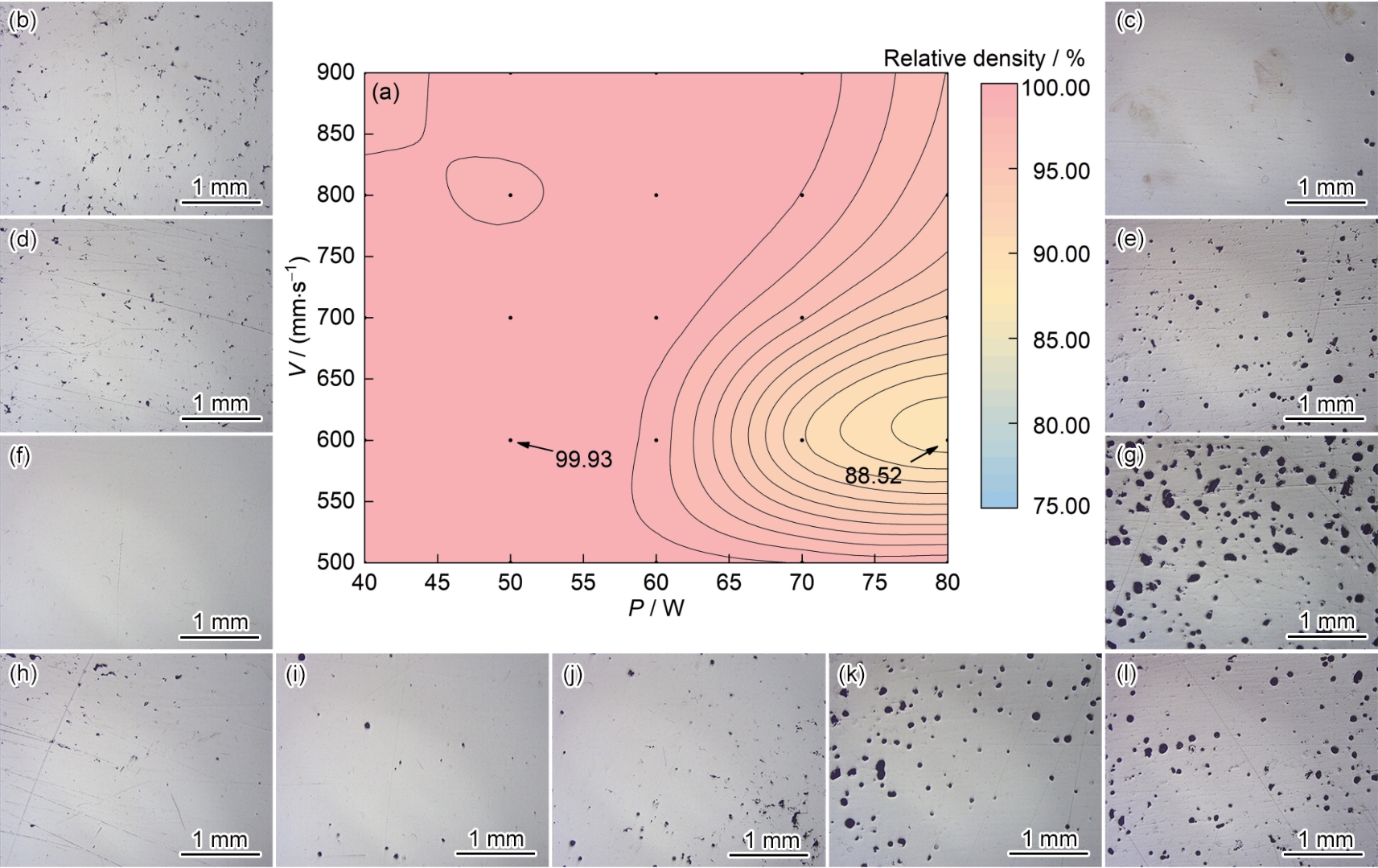
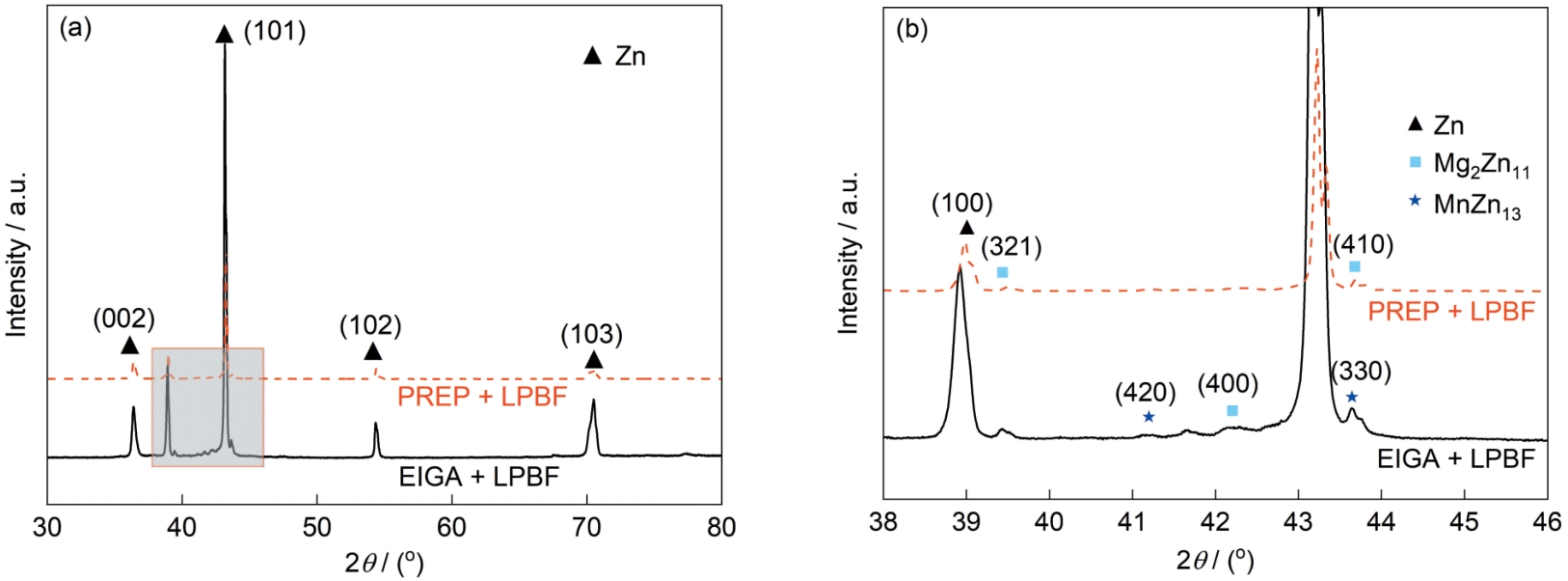
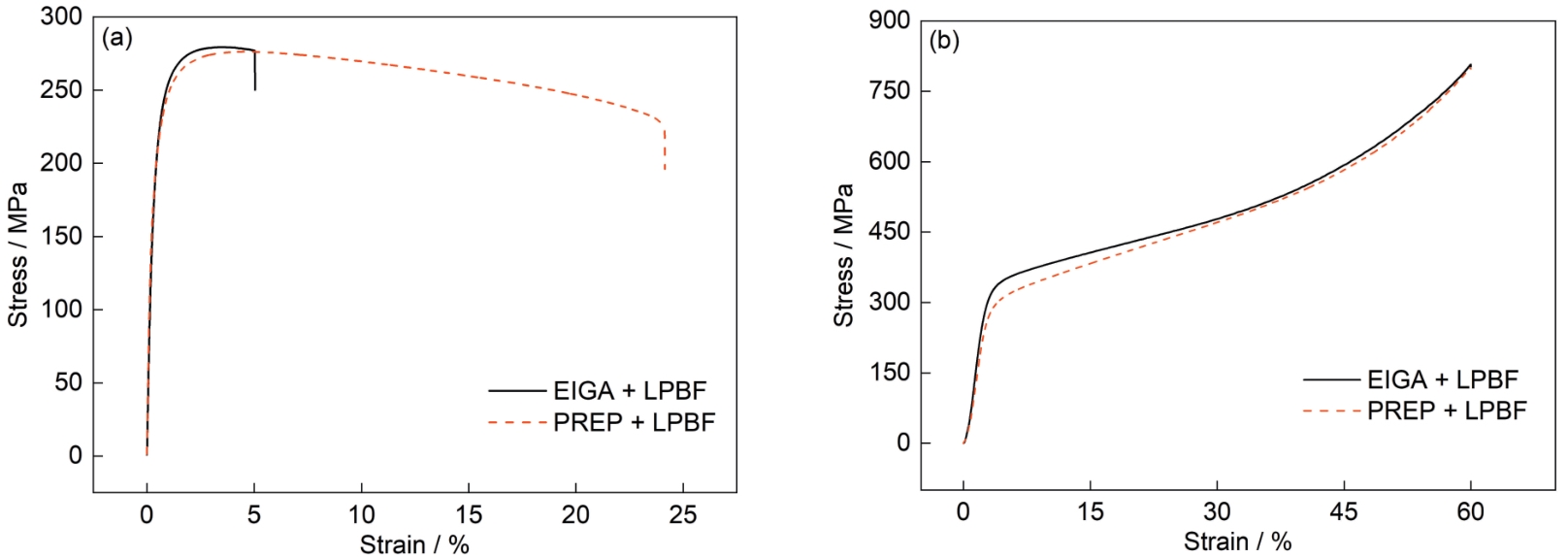
Abstract Zinc-based alloys are emerging as the next generation of degradable metals due to their favorable degradation rates. Additive manufacturing offers the capability to produce personalized structures, making it a promising method for generating biomedical metal components. However, during laser powder bed fusion (LPBF), zinc-based alloys can experience significant evaporation because of their low melting point, which often results in poor surface quality. Optimizing powder morphology and particle size present a potential strategy to enhance forming quality. In this study, two Zn-1Mn-0.4Mg (mass fraction, %) alloy powders with particle sizes of 15-53 μm and 30-75 μm were produced using electrode induction gas atomization (EIGA) and the plasma rotating electrode process (PREP), respectively. Bulk alloys were fabricated using LPBF, and the processing windows for both powders were compared to investigate the effects of powder morphology and particle size on the microstructural and mechanical properties. The results indicated that PREP powders, which exhibited better sphericity and larger particle size, had a broader and more stable LPBF processing window. This led to bulk samples with higher density and smaller grain sizes compared to those prepared with EIGA powders. Under the processing parameters of laser power P = 50 W and scanning rate V = 600 mm/s, both bulk sample types displayed similar tensile yield strength (~210 MPa) and ultimate tensile strength (~285 MPa). However, the compressive yield strength of the EIGA + LPBF samples ((288.2 ± 4.3) MPa) was slightly higher than that of the PREP + LPBF samples ((258.5 ± 3.5) MPa). By contrast, the PREP + LPBF samples demonstrated significantly greater tensile elongation (21.8% ± 2.3%) compared to the EIGA + LPBF samples (3.3% ± 0.7%). This enhanced ductility was primarily attributed to the more homogeneous thermal conductivity and strain distribution in PREP powders during the LPBF process.
|
|
Received: 28 December 2024
|
|
|
| Fund: National Key Research and Development Program of China(2023YFB3813000);National Na-tural Science Foundation of China(52471260);National Na-tural Science Foundation of China(52201294) |
Corresponding Authors:
LI Yageng, associate professor, Tel: (010)62332609, E-mail: yagengli@ustb.edu.cn;
WANG Luning, professor, Tel: (010)62332609, E-mail: luning.wang@ustb.edu.cn
|
| [1] |
Kabir H, Munir K, Wen C E, et al. Recent research and progress of biodegradable zinc alloys and composites for biomedical applications: Biomechanical and biocorrosion perspectives[J]. Bioact. Mater., 2021, 6: 836
doi: 10.1016/j.bioactmat.2020.09.013
pmid: 33024903
|
| [2] |
Li Y G, Shi Y X, Lu Y C, et al. Additive manufacturing of vascular stents[J]. Acta Biomater., 2023, 167: 16
doi: 10.1016/j.actbio.2023.06.014
pmid: 37331614
|
| [3] |
Mostaed E, Sikora-Jasinska M, Drelich J W, et al. Zinc-based alloys for degradable vascular stent applications[J]. Acta Biomater., 2018, 71: 1
doi: S1742-7061(18)30125-9
pmid: 29530821
|
| [4] |
Qi X H, Liang X K, Wang J H, et al. Microstructure tailoring in laser powder bed fusion (L-PBF): Strategies, challenges, and future outlooks[J]. J. Alloys Compd., 2024, 970: 172564
doi: 10.1016/j.jallcom.2023.172564
|
| [5] |
Clare A T, Mishra R S, Merklein M, et al. Alloy design and adaptation for additive manufacture[J]. J. Mater. Process. Technol., 2022, 299: 117358
doi: 10.1016/j.jmatprotec.2021.117358
|
| [6] |
Bose S, Ke D X, Sahasrabudhe H, et al. Additive manufacturing of biomaterials[J]. Prog. Mater. Sci., 2018, 93: 45
doi: 10.1016/j.pmatsci.2017.08.003
pmid: 31406390
|
| [7] |
Zheng Y F, Xia D D, Shen Y N, et al. Additively manufactured biodegradable metal implants[J]. Acta Metall. Sin., 2021, 57: 1499
|
|
郑玉峰, 夏丹丹, 谌雨农 等. 增材制造可降解金属医用植入物[J]. 金属学报, 2021, 57: 1499
doi: 10.11900/0412.1961.2021.00294
|
| [8] |
Li Y G, Jahr H, Zhou J, et al. Additively manufactured biodegradable porous metals[J]. Acta Biomater., 2020, 115: 29
doi: S1742-7061(20)30478-5
pmid: 32853809
|
| [9] |
Kassym K, Perveen A. Atomization processes of metal powders for 3D printing[J]. Mater. Today: Proc., 2020, 26: 1727
|
| [10] |
Zhao X M, Chen J, Lin X, et al. Study on microstructure and mechanical properties of laser rapid forming Inconel 718[J]. Mater. Sci. Eng., 2008, A478: 119
|
| [11] |
Tammas-Williams S, Withers P J, Todd I, et al. Porosity regrowth during heat treatment of hot isostatically pressed additively manufactured titanium components[J]. Scr. Mater., 2016, 122: 72
doi: 10.1016/j.scriptamat.2016.05.002
|
| [12] |
Spierings A B, Herres N, Levy G. Influence of the particle size distribution on surface quality and mechanical properties in AM steel parts[J]. Rapid Prototyping J., 2011, 17: 195
doi: 10.1108/13552541111124770
|
| [13] |
Abd-Elghany K, Bourell D L. Property evaluation of 304L stainless steel fabricated by selective laser melting[J]. Rapid Prototyping J., 2012, 18: 420
doi: 10.1108/13552541211250418
|
| [14] |
Baitimerov R, Lykov P, Zherebtsov D, et al. Influence of powder characteristics on processability of AlSi12 alloy fabricated by selective laser melting[J]. Materials, 2018, 11: 742
doi: 10.3390/ma11050742
|
| [15] |
Bi Z N, Zhang P, Zhang H P. Effect of metal powder characteristics on metallurgical quality of laser powder bed fusion additive manufacturing[J]. Powder Metall. Ind., 2024, 34(6): 1
|
|
毕中南, 张 鹏, 张浩鹏. 金属粉末特征对激光粉末床熔融成形质量的影响[J]. 粉末冶金工业, 2024, 34(6): 1
|
| [16] |
Qin F, Shi Q, Zhou G, et al. Influence of powder particle size distribution on microstructure and mechanical properties of 17-4 PH stainless steel fabricated by selective laser melting[J]. J. Mater. Res. Technol., 2023, 25: 231
doi: 10.1016/j.jmrt.2023.05.241
|
| [17] |
Shi Z Z, Yu J, Liu X F. Microalloyed Zn-Mn alloys: From extremely brittle to extraordinarily ductile at room temperature[J]. Mater. Des., 2018, 144: 343
doi: 10.1016/j.matdes.2018.02.049
|
| [18] |
Zhu X L, Ren T T, Guo P S, et al. Strengthening mechanism and biocompatibility of degradable Zn-Mn alloy with different Mn content[J]. Mater. Today Commun., 2022, 31: 103639
|
| [19] |
Zheng Y Z, Huang C C, Li Y G, et al. Mimicking the mechanical properties of cortical bone with an additively manufactured biodegradable Zn-3Mg alloy[J]. Acta Biomater., 2024, 182: 139
doi: 10.1016/j.actbio.2024.05.023
|
| [20] |
Li Z L, Zhang X L, Tian D K. Effect of multi-pass compression deformation on microstructure evolution of AZ80 magnesium alloy[J]. Acta Metall. Sin., 2024, 60: 311
doi: 10.11900/0412.1961.2022.00010
|
|
李振亮, 张欣磊, 田董扩. 多道次压缩变形对AZ80镁合金微观组织演化的影响[J]. 金属学报, 2024, 60: 311
doi: 10.11900/0412.1961.2022.00010
|
| [21] |
Sangid M D, Ezaz T, Sehitoglu H. Energetics of residual dislocations associated with slip-twin and slip-GBs interactions[J]. Mater. Sci. Eng., 2012, A542: 21
|
| [22] |
Chu F Z, Shen H P, Liu J W, et al. Improved ductility by reducing powder size in laser powder bed fusion of AlSi10Mg[J]. Addit. Manuf. Front., 2024, 3: 200122
|
| [23] |
Zhang S S, Lane B, Whiting J, et al. On thermal properties of metallic powder in laser powder bed fusion additive manufacturing[J]. J. Manuf. Process., 2019, 47: 382
doi: 10.1016/j.jmapro.2019.09.012
|
| [24] |
Gusarov A V, Yadroitsev I, Bertrand P, et al. Model of radiation and heat transfer in laser-powder interaction zone at selective laser melting[J]. J. Heat Transfer., 2009, 131: 072101
|
| [25] |
Körner C, Attar E, Heinl P. Mesoscopic simulation of selective beam melting processes[J]. J. Mater. Process. Technol., 2011, 211: 978
doi: 10.1016/j.jmatprotec.2010.12.016
|
| [26] |
Hosseini E, Popovich V A. A review of mechanical properties of additively manufactured Inconel 718[J]. Addit. Manuf., 2019, 30: 100877
|
| [27] |
Farzadfar S A, Murtagh M J, Venugopal N. Impact of IN718 bimodal powder size distribution on the performance and productivity of laser powder bed fusion additive manufacturing process[J]. Powder Technol., 2020, 375: 60
doi: 10.1016/j.powtec.2020.07.092
|
| [28] |
Coe H G, Pasebani S. Use of bimodal particle size distribution in selective laser melting of 316L stainless steel[J]. J. Manuf. Mater. Process., 2020, 4: 8
doi: 10.3390/jmmp4010008
|
| [29] |
Qin Y, Liu J G, Chen Y Z, et al. Influence of laser energy input and shielding gas flow on evaporation fume during laser powder bed fusion of Zn metal[J]. Materials, 2021, 14: 2677
doi: 10.3390/ma14102677
|
| [30] |
Ruan G, Liu C, Qu H Q, et al. A comparative study on laser powder bed fusion of IN718 powders produced by gas atomization and plasma rotating electrode process[J]. Mater. Sci. Eng., 2022, A850: 143589
|
| [31] |
Brika S E, Letenneur M, Dion C A, et al. Influence of particle morphology and size distribution on the powder flowability and laser powder bed fusion manufacturability of Ti-6Al-4V alloy[J]. Addit. Manuf., 2020, 31: 100929
|
| [32] |
Venezuela J, Dargusch M S. The influence of alloying and fabrication techniques on the mechanical properties, biodegradability and biocompatibility of zinc: A comprehensive review[J]. Acta Biomater., 2019, 87: 1
doi: S1742-7061(19)30055-8
pmid: 30660777
|
| [33] |
Wu Y, Fu Q Y, Guo B S, et al. Revealing the mechanical and degradation properties of the Zn-Cu-Ti alloy with ununiform heterostructure[J]. Mater. Sci. Eng., 2022, A853: 143775
|
| [34] |
Shi Z Z, Li X M, Yao S L, et al. 300 MPa grade biodegradable high-strength ductile low-alloy (BHSDLA) Zn-Mn-Mg alloys: An in vitro study[J]. J. Mater. Sci. Technol., 2023, 138: 233
doi: 10.1016/j.jmst.2022.08.015
|
| [35] |
Yin D D, Boehlert C J, Long L J, et al. Tension-compression asymmetry and the underlying slip/twinning activity in extruded Mg-Y sheets[J]. Int. J. Plast., 2021, 136: 102878
doi: 10.1016/j.ijplas.2020.102878
|
| [36] |
Long F, Kacher J, Yao Z W, et al. A tomographic TEM study of tension-compression asymmetry response of pyramidal dislocations in a deformed Zr-2.5Nb alloy[J]. Scr. Mater., 2018, 153: 94
doi: 10.1016/j.scriptamat.2018.04.043
|
| [37] |
Chen C, Huang H, Niu J L, et al. Origin of high tension-compression yield asymmetry in as-extruded pure zinc[J]. Scr. Mater., 2021, 200: 113922
doi: 10.1016/j.scriptamat.2021.113922
|
| [38] |
Chandra S, Wang C C, Tor S B, et al. Powder-size driven facile microstructure control in powder-fusion metal additive manufacturing processes[J]. Nat. Commun., 2024, 15: 3094
doi: 10.1038/s41467-024-47257-w
|
| No Suggested Reading articles found! |
|
|
Viewed |
|
|
|
Full text
|
|
|
|
|
Abstract
|
|
|
|
|
Cited |
|
|
|
|
| |
Shared |
|
|
|
|
| |
Discussed |
|
|
|
|