|
|
|
| Effect of Cr on the Isothermal Decomposition Behavior of Austenite in Low-Carbon Ti-Bearing Microalloyed Steel |
XIONG Jie, LAN Huifang, LI Linxian, TANG Shuai( ), LIU Zhenyu, WANG Guodong |
| State Key Laboratory of Digital Steel, Northeastern University, Shenyang 110819, China |
|
Cite this article:
XIONG Jie, LAN Huifang, LI Linxian, TANG Shuai, LIU Zhenyu, WANG Guodong. Effect of Cr on the Isothermal Decomposition Behavior of Austenite in Low-Carbon Ti-Bearing Microalloyed Steel. Acta Metall Sin, 2026, 62(10): 1773-1786.
|
|
|
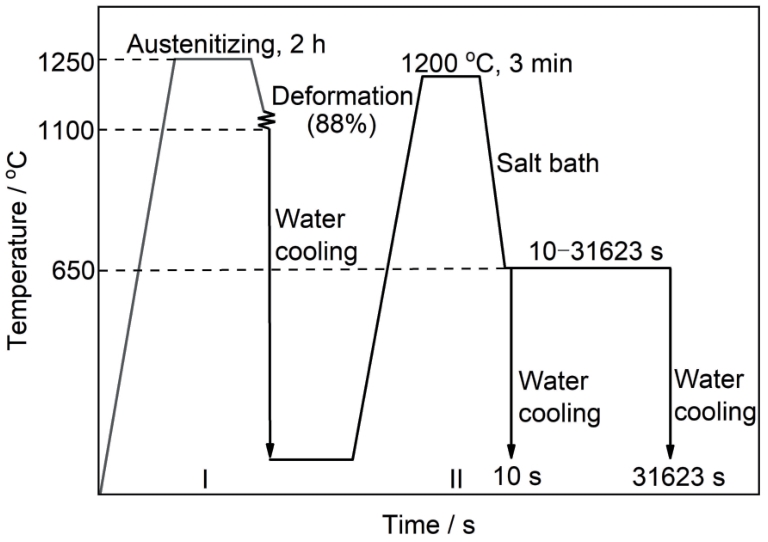
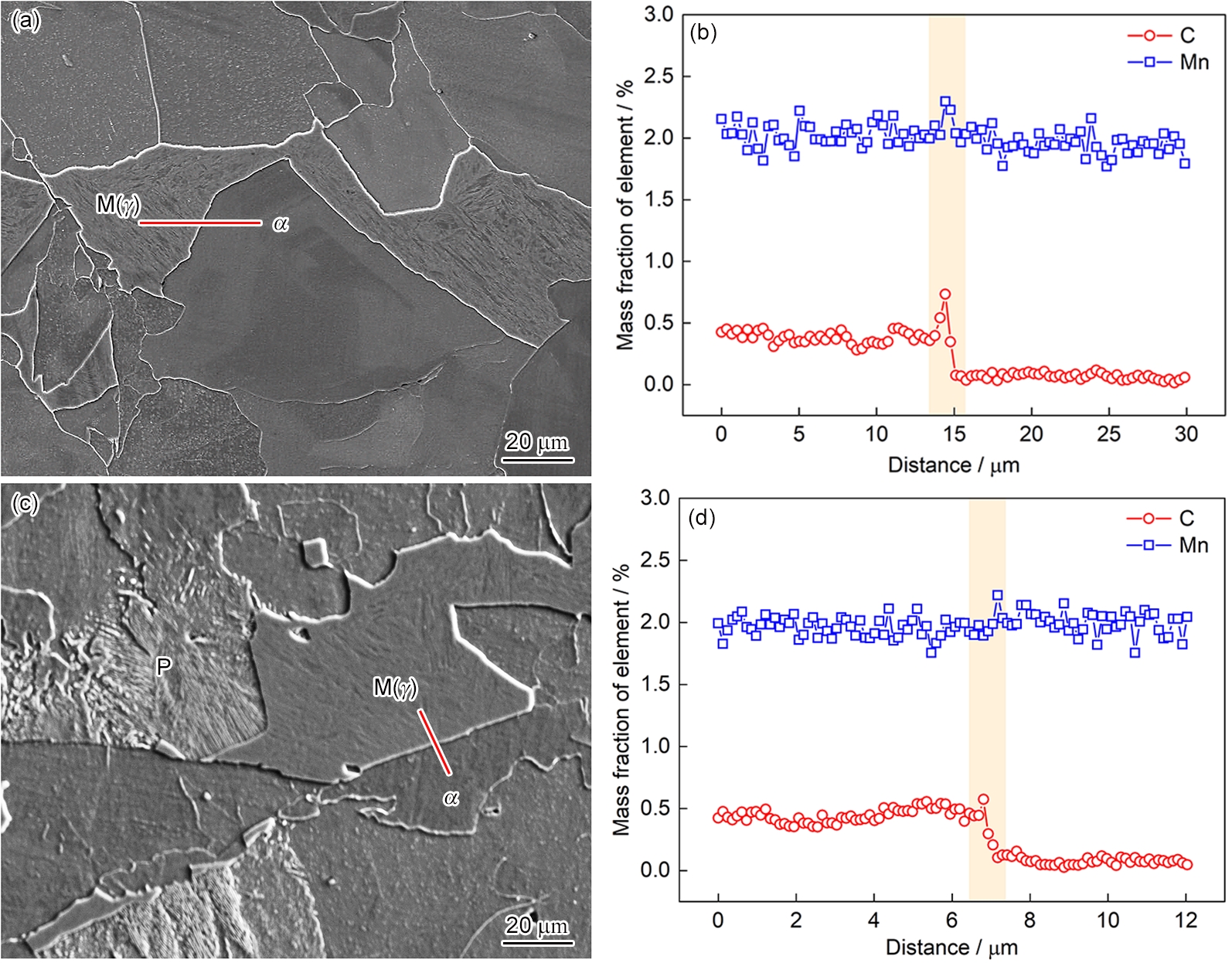
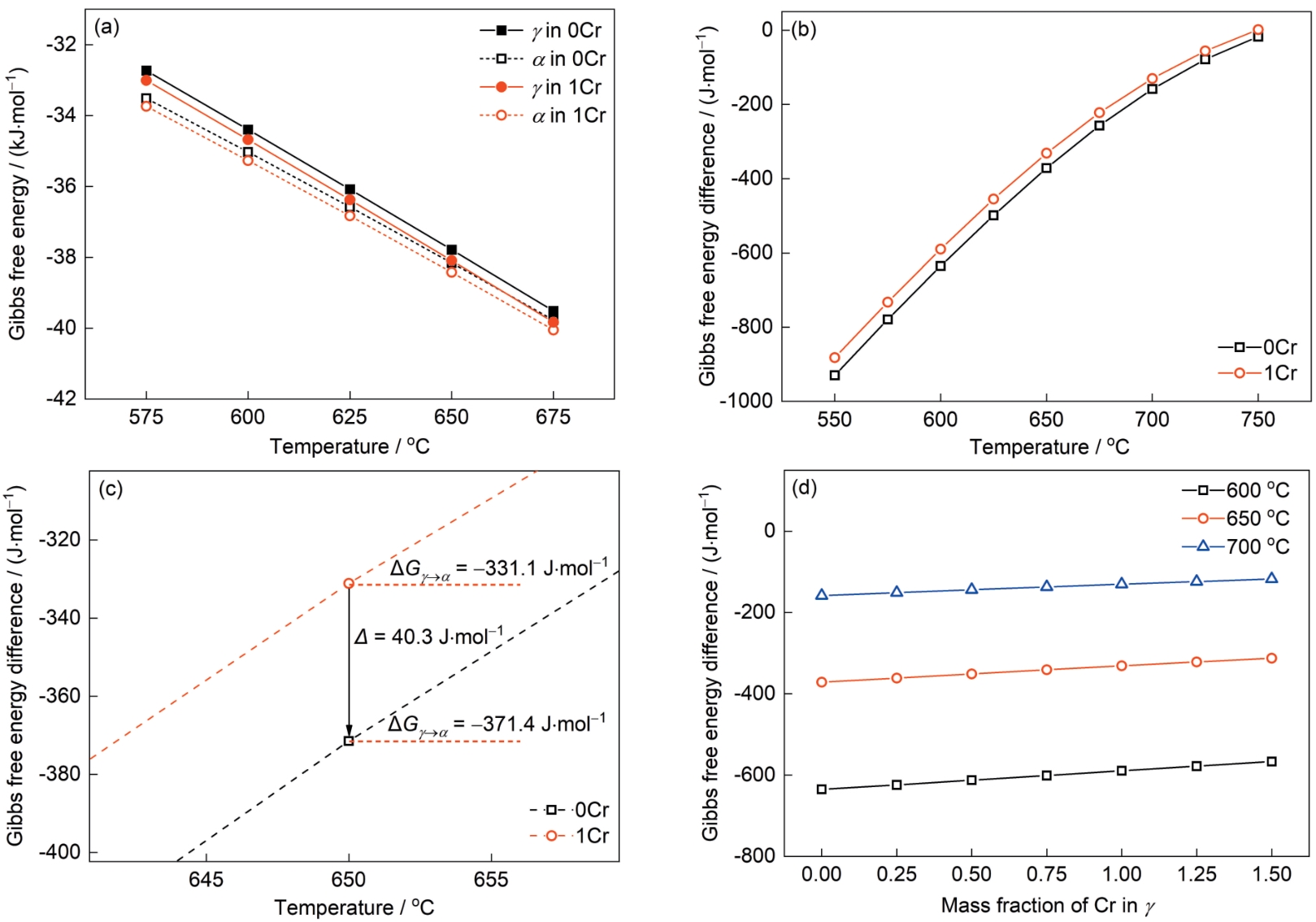
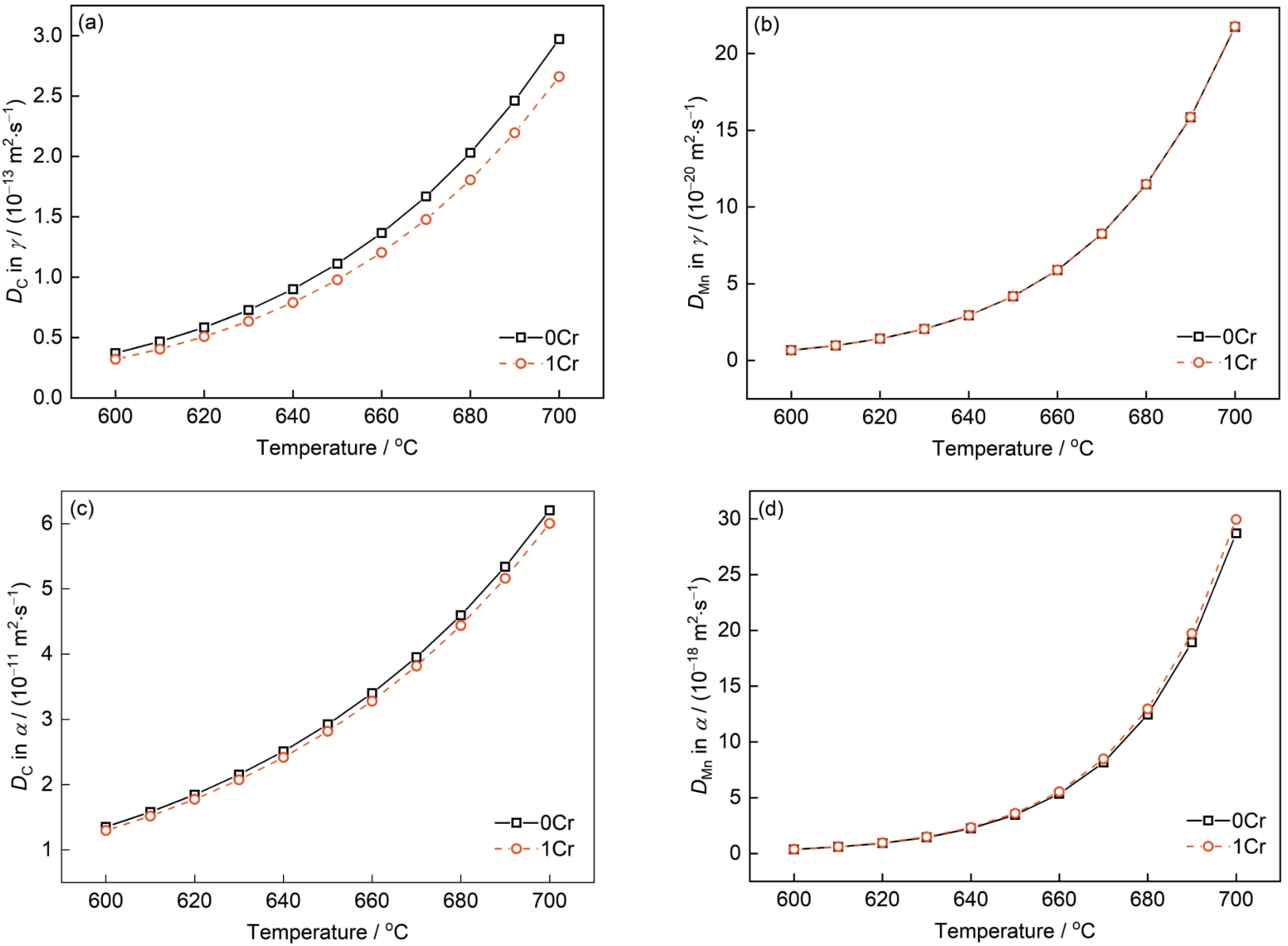
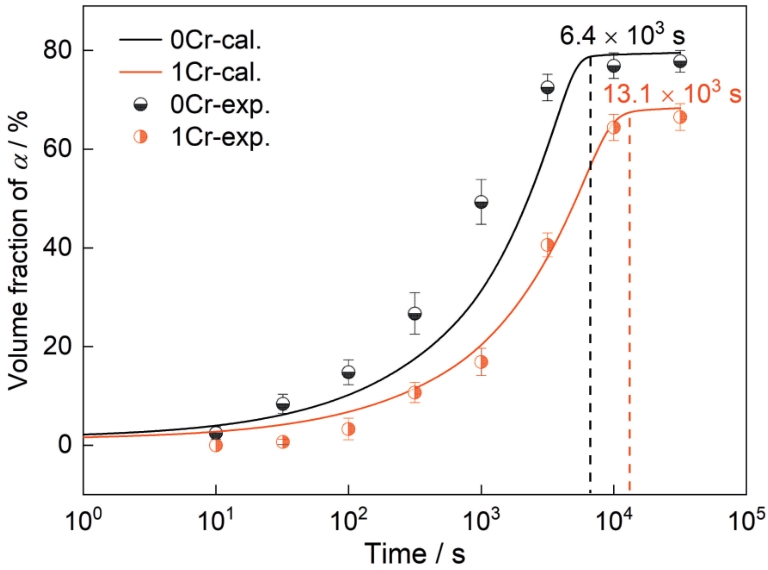
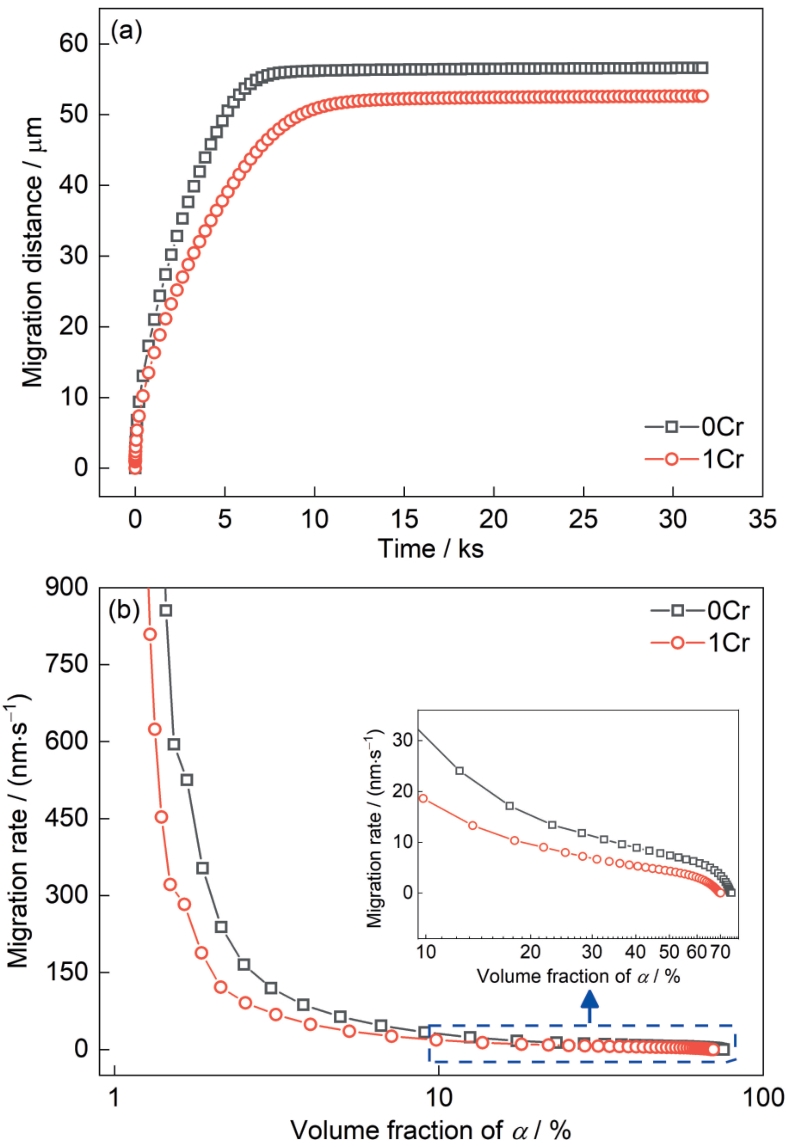
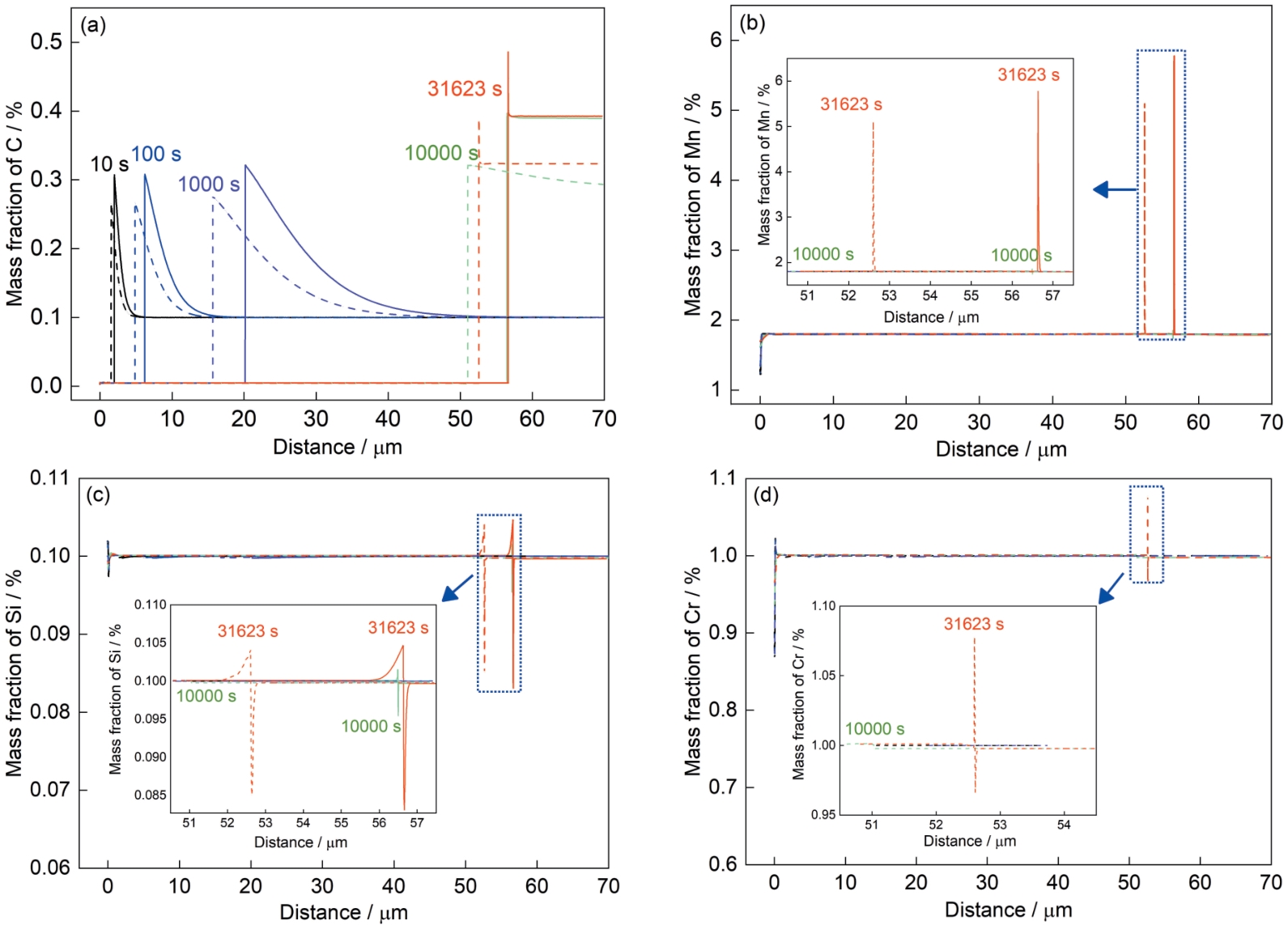
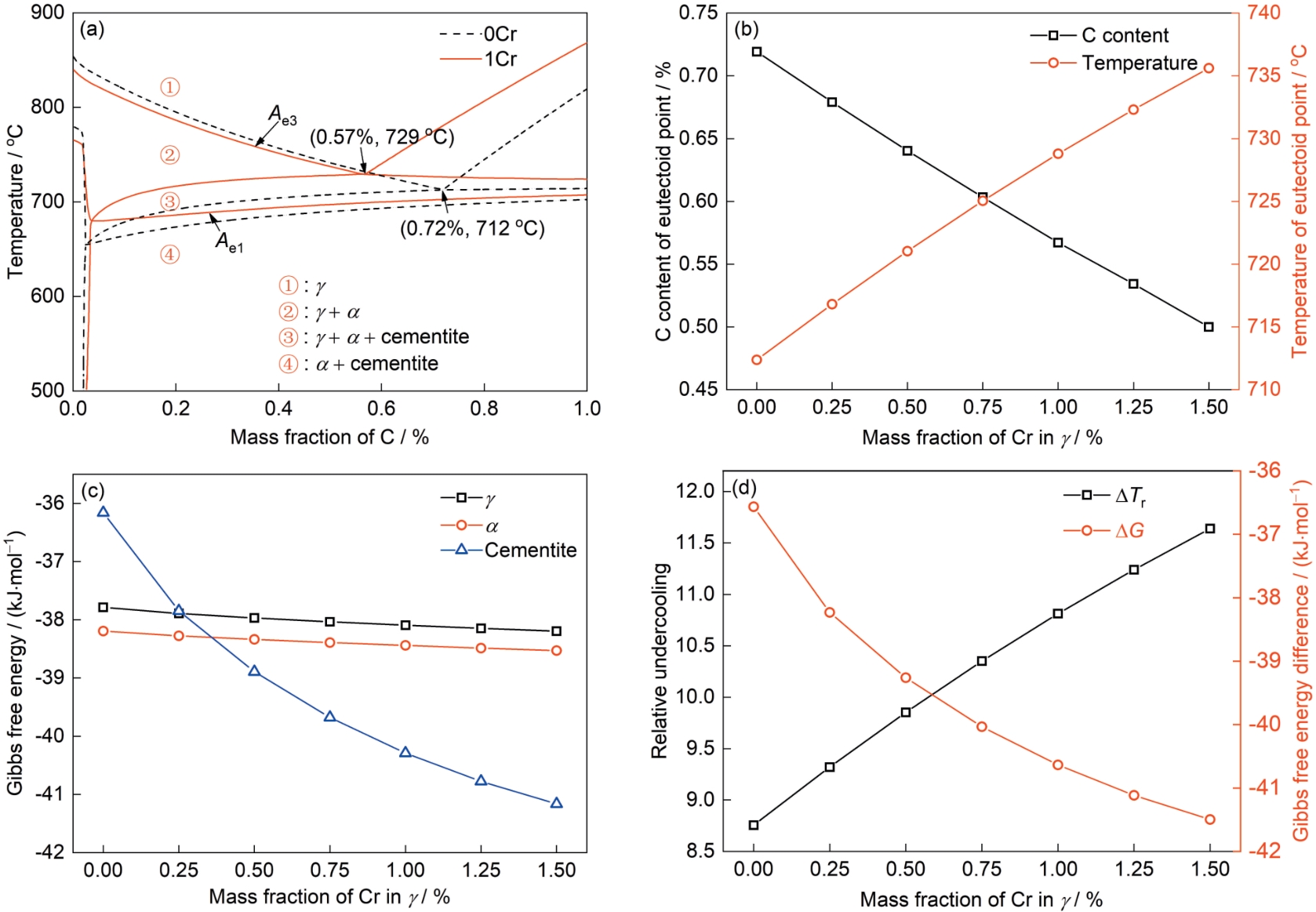
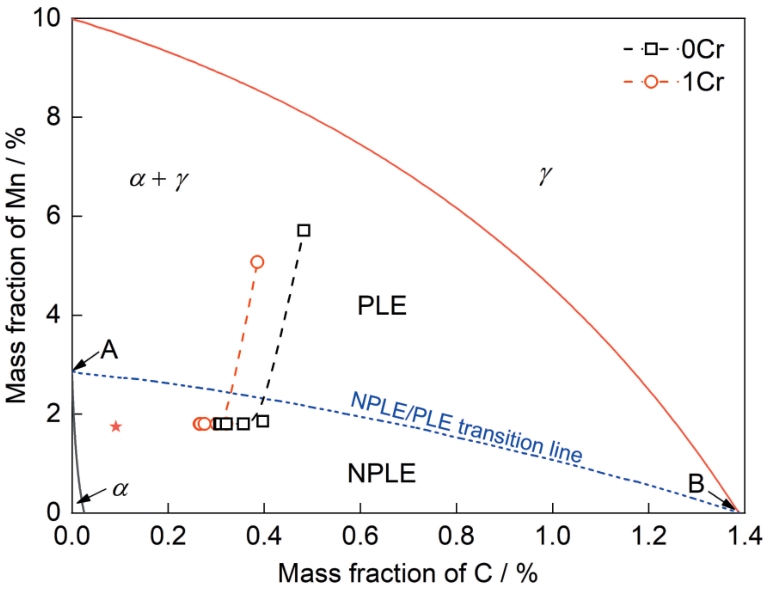
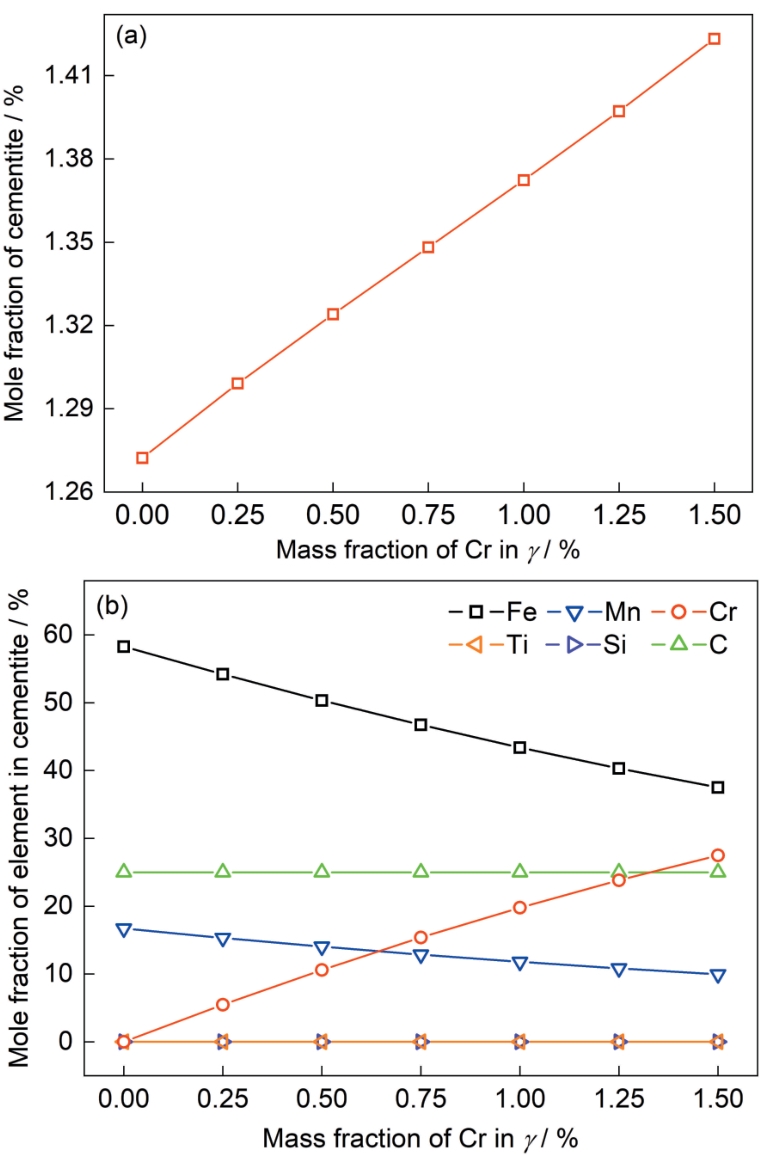
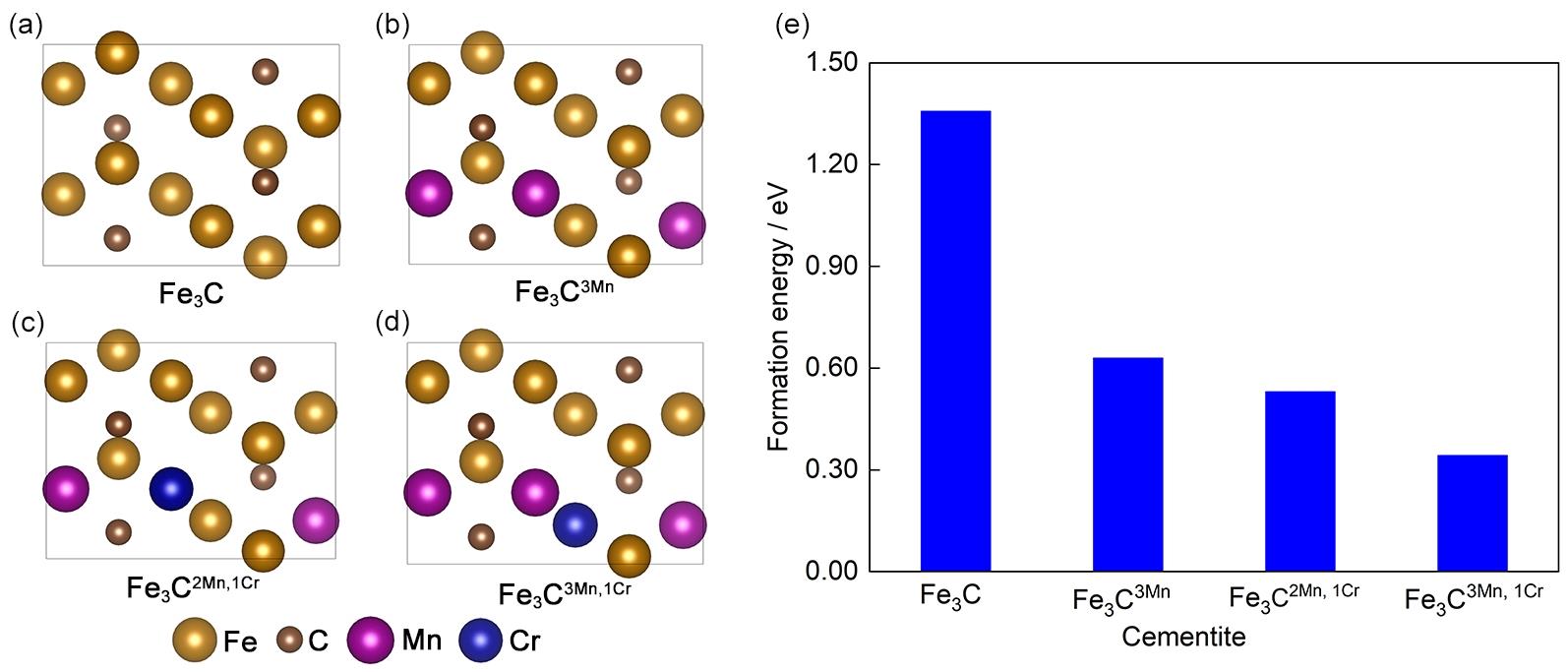
Abstract Ferrite precipitation-strengthened steel characterized by a large amount of nano-carbide precipitates has been widely used in the automotive industry to meet its growing energy-reduction requirements. Because of its high strength and excellent tensile flange properties, it has always been of great interest to researchers. Among the topics of interest, the composition of nanoscale carbides and their precipitation behavior have always been a popular subject area of research. In recent years, studies have confirmed that the addition of Cr is beneficial to the formation of nanoscale complex carbide in ferrite and can refine the size and increase the number density of precipitates, thereby enhancing the strength of the ferrite. The precipitation behavior of carbides is closely related to the phase transformation of ferrite. However, there is controversy about how Cr affects the kinetics of the ferrite phase transition. This study investigated the effect of Cr on the isothermal decomposition behavior of austenite in low-carbon Ti-bearing microalloyed steel using experimental and numerical simulation methods. The driving forces behind the transformation of ferrite and pearlite, as well as the growth kinetics of ferrite, were calculated using Thermo-Calc software for thermodynamics. The reasons for Cr promoting the formation of pearlite were elucidated through first-principles calculations. The isothermal experimental results indicate that Cr element inhibits the nucleation and growth of ferrite and promotes the decomposition of austenite into pearlite. Thermodynamic calculations show that Cr reduces the driving force behind the γ-α phase transition, which results in an increase in the critical nucleation radius (r*) and critical nucleation work (ΔG*). Moreover, Cr significantly reduces the diffusion coefficient of C in austenite and increases austenite's diffusion activation energy (QC). The combined effect of both factors leads to the slow nucleation of ferrite. During the growth of ferrite, its phase transformation under negligible-partitioned local equilibrium (NPLE) mode is controlled by C diffusion. Cr reduces the diffusion coefficient of C in austenite, thereby decreasing the growth rate of ferrite. Under partitioned local equilibrium (PLE) mode, the phase transformation is controlled by the diffusion of the alloying elements. Because the diffusion coefficients (Di ) of element i follow the order DCr < DMn < DSi, the growth rate of ferrite is slow. Furthermore, Cr element can significantly reduce the Gibbs free energy of the cementite, thereby increasing the driving force of the transformation of pearlite. According to first-principles calculations, Cr atoms tend to substitute for Fe and Mn atoms in (Fe, Mn)3C cementite. Particularly for the Fe atoms, they can markedly decrease the formation energy and promote the precipitation of cementite, thereby facilitating the transformation to pearlite.
|
|
Received: 28 August 2024
|
|
|
| Fund: National Natural Science Foundation of China(52175293);National Natural Science Foundation of China(51774083) |
Corresponding Authors:
TANG Shuai, professor, Tel: (024)83687224, E-mail: tangshuai@ral.neu.edu.cn
|
| [1] |
Funakawa Y, Shiozaki T, Tomita K, et al. Development of high strength hot-rolled sheet steel consisting of ferrite and nanometer-sized carbides[J]. ISIJ Int., 2004, 44: 1945
doi: 10.2355/isijinternational.44.1945
|
| [2] |
Funakawa Y, Fujita T, Yamada K. Metallurgical features of NANOHITENTM and application to warm stamping[J]. JFE Tech. Rep., 2013, (18): 74
|
| [3] |
Chen C Y, Chen S F, Chen C C, et al. Control of precipitation morphology in the novel HSLA steel[J]. Mater. Sci. Eng., 2015, A634: 123
|
| [4] |
Singh N, Casillas G, Wexler D, et al. Application of advanced experimental techniques to elucidate the strengthening mechanisms operating in microalloyed ferritic steels with interphase precipitation[J]. Acta Mater., 2020, 201: 386
doi: 10.1016/j.actamat.2020.10.014
|
| [5] |
Tsai S P, Jen C H, Yen H W, et al. Effects of interphase TiC precipitates on tensile properties and dislocation structures in a dual phase steel[J]. Mater. Charact., 2017, 123: 153
doi: 10.1016/j.matchar.2016.11.023
|
| [6] |
Li C N, Li X L, Yuan G, et al. Precipitation behavior and mechanical properties of a hot rolled Ti-bearing dual phase steel[J]. Mater. Sci. Eng., 2016, A673: 213
|
| [7] |
Tsai S P, Su T C, Yang J R, et al. Effect of Cr and Al additions on the development of interphase-precipitated carbides strengthened dual-phase Ti-bearing steels[J]. Mater. Des., 2017, 119: 319
doi: 10.1016/j.matdes.2017.01.071
|
| [8] |
Kostryzhev A, Killmore C, Pereloma E. Effect of processing parameters on interphase precipitation and mechanical properties in novel CrVNb microalloyed steel[J]. Metals, 2021, 11: 107
doi: 10.3390/met11010107
|
| [9] |
Xu S, Cao R, Gao J H, et al. Effect of Cr on the phase transformation and interphase nanoprecipitation behaviours of high-strength microalloyed steels[J]. Mater. Charact., 2024, 207: 113504
doi: 10.1016/j.matchar.2023.113504
|
| [10] |
Rodriguez-Galeano K F, Nutter J, Azakli Y, et al. Influence of Cr and Cr + Nb on the interphase precipitation and mechanical properties of V-Mo microalloyed steels[J]. Mater. Sci. Eng., 2024, A893: 146140
|
| [11] |
Suh D W, Park S J, Kim S J. Influence of Cr and Ni on microstructural evolution during heat treatment of low-carbon transformation induced plasticity steels[J]. Metall. Mater. Trans., 2008, 39A: 2015
|
| [12] |
Ali M, Nyo T, Kaijalainen A, et al. Influence of chromium content on the microstructure and mechanical properties of thermomechanically hot-rolled low-carbon bainitic steels containing niobium[J]. Appl. Sci., 2020, 10: 344
doi: 10.3390/app10010344
|
| [13] |
Huang B, Guo Z B, Shuai L T, et al. Control of ferrite content in 1Cr17Ni2 and its effect on mechanical properties[J]. Failure Anal. Prev., 2021, 16: 398
|
|
黄 蓓, 郭占兵, 帅林涛 等. 1Cr17Ni2铁素体含量的控制及其对性能的影响[J]. 失效分析与预防, 2021, 16: 398
|
| [14] |
Oñoro J. Martensite microstructure of 9-12% Cr steels weld metals[J]. J. Mater. Process. Technol., 2006, 180: 137
doi: 10.1016/j.jmatprotec.2006.05.014
|
| [15] |
Gouné M, Danoix F, Ågren J, et al. Overview of the current issues in austenite to ferrite transformation and the role of migrating interfaces therein for low alloyed steels[J]. Mater. Sci. Eng., 2015, R92: 1
|
| [16] |
Purdy G, Ågren J, Borgenstam A, et al. ALEMI: A ten-year history of discussions of alloying-element interactions with migrating interfaces[J]. Metall. Mater. Trans., 2011, 42A: 3703
|
| [17] |
Van der Ven A, Delaey L. Models for precipitate growth during the γ → α + γ transformation in Fe-C and Fe-C-M alloys[J]. Prog. Mater. Sci., 1996, 40: 181
doi: 10.1016/0079-6425(96)00002-3
|
| [18] |
Militzer M, Hutchinson C, Zurob H, et al. Modelling of the diffusional austenite-ferrite transformation[J]. Int. Mater. Rev., 2023, 68: 725
doi: 10.1080/09506608.2022.2126257
|
| [19] |
Gamsjäger E, Svoboda J, Fischer F D. Austenite-to-ferrite phase transformation in low-alloyed steels[J]. Comput. Mater. Sci., 2005, 32: 360
doi: 10.1016/j.commatsci.2004.09.031
|
| [20] |
Lv S J, Wu H H, Wang K Y, et al. The austenite to polygonal ferrite transformation in low-alloy steel: Multi-phase-field simulation[J]. J. Mater. Res. Technol., 2023, 24: 9630
doi: 10.1016/j.jmrt.2023.05.192
|
| [21] |
Chen H, Zhang C Y, Zhu J N, et al. Austenite/ferrite interface migration and alloying elements partitioning: An overview[J]. Acta Metall. Sin., 2018, 54: 217
doi: 10.11900/0412.1961.2017.00465
|
|
陈 浩, 张璁雨, 朱加宁 等. 奥氏体/铁素体界面迁移与元素配分的研究进展[J]. 金属学报, 2018, 54: 217
|
| [22] |
Crusius S, Höglund L, Knoop U, et al. On the growth of ferrite allotriomorphs in Fe-C alloys/das wachstum von allotriomorphem ferrit in Fe-C-legierungen: Dedicated to professor Dr. rer. nat. Wolfgang pitsch on the occasion of his 65th birthday[J]. Int. J. Mater. Res., 1992, 83: 729
doi: 10.1515/ijmr-1992-831004
|
| [23] |
Krielaart G P, Sietsma J, van der Zwaag S. Ferrite formation in Fe-C alloys during austenite decomposition under non-equilibrium interface conditions[J]. Mater. Sci. Eng., 1997, A237: 216
|
| [24] |
Xia Y. Effects of Mn, Mo and other alloying elements on the formation and decomposition of austenite in steels[D]. Beijing: Tsinghua University, 2015
|
|
夏 苑. Mn、Mo等合金元素对钢中奥氏体形成及分解动力学的影响[D]. 北京: 清华大学, 2015
|
| [25] |
Hillert M. Paraequilibrium and other Restricted Equilibria[J]. MRS Online Proc. Libr., 1982, 19: 295
doi: 10.1557/PROC-19-295
|
| [26] |
Coates D E. Diffusion-controlled precipitate growth in ternary systems I[J]. Metall. Trans., 1972, 3: 1203
|
| [27] |
Coates D E. Diffusion controlled precipitate growth in ternary systems: II[J]. Metall. Trans., 1973, 4: 1077
|
| [28] |
Enomoto M, Aaronson H I. Derivation of general conditions for paraequilibrium in multi-component systems[J]. Scr. Metall., 1985, 19: 1
doi: 10.1016/0036-9748(85)90254-6
|
| [29] |
Liu Z Q, Miyamoto G, Yang Z G, et al. Direct measurement of carbon enrichment during austenite to ferrite transformation in hypoeutectoid Fe-2Mn-C alloys[J]. Acta Mater., 2013, 61: 3120
doi: 10.1016/j.actamat.2013.02.003
|
| [30] |
Xia Y, Miyamoto G, Yang Z G, et al. Effects of Mo on carbon enrichment during proeutectoid ferrite transformation in hypoeutectoid Fe-C-Mn alloys[J]. Metall. Mater. Trans., 2015, 46A: 2347
|
| [31] |
Zhang C Y, Yang Z G, Enomoto M, et al. Prediction of Ar3 during very slow cooling in low alloy steels[J]. ISIJ Int., 2016, 56: 678
doi: 10.2355/isijinternational.ISIJINT-2015-602
|
| [32] |
Liu Z Y, Yang Z G, Li Z D, et al. PLE/NPLE transition temperature of γ→α transformation in Fe-C-X alloy steel under hot deformation condition[J]. Acta Metall. Sin., 2008, 44: 703
|
|
刘志远, 杨志刚, 李昭东 等. 热变形条件下Fe-C-X合金钢γ→α相变的PLE/NPLE转变温度[J]. 金属学报, 2008, 44: 703
|
| [33] |
Van Landeghem H P, Langelier B, Gault B, et al. Investigation of solute/interphase interaction during ferrite growth[J]. Acta Mater., 2017, 124: 536
doi: 10.1016/j.actamat.2016.11.035
|
| [34] |
Béché A, Zurob H S, Hutchinson C R. Quantifying the solute drag effect of Cr on ferrite growth using controlled decarburization experiments[J]. Metall. Mater. Trans., 2007, 38A: 2950
|
| [35] |
Wang M M, Zhang F C, Yang Z N. Effects of alloying elements and cooling rates on the high-strength pearlite steels[J]. Mater. Sci. Technol., 2017, 33: 1673
doi: 10.1080/02670836.2017.1312209
|
| [36] |
Honjo M, Kimura T, Hase K. Effect of Cr on lamellar spacing and high-temperature stability in eutectoid steels[J]. Tetsu-To-Hagańe, 2015, 101: 221
|
| [37] |
Chen C Y, Liao M H. Synergistic effects of carbon content and Ti/Mo ratio on precipitation behavior of HSLA steel: Insights from experiment and critical patent analysis[J]. Mater. Des., 2020, 186: 108361
doi: 10.1016/j.matdes.2019.108361
|
| [38] |
Dong Y, Xiang L Y, Zhu C J, et al. Analysis of phase transformation thermodynamics and kinetics and its relationship to structure-mechanical properties in a medium-Mn high strength steel[J]. J. Mater. Res. Technol., 2023, 27: 5411
doi: 10.1016/j.jmrt.2023.10.231
|
| [39] |
Nakada N, Mizutani K, Tsuchiyama T, et al. Difference in transformation behavior between ferrite and austenite formations in medium manganese steel[J]. Acta Mater., 2014, 65: 251
doi: 10.1016/j.actamat.2013.10.067
|
| [40] |
Dong H K, Chen H, Wang W, et al. Analysis of the interaction between moving α/γ interfaces and interphase precipitated carbides during cyclic phase transformations in a Nb-containing Fe-C-Mn alloy[J]. Acta Mater., 2018, 158: 167
doi: 10.1016/j.actamat.2018.07.052
|
| [41] |
Dong H K, Zhang Y J, Miyamoto G, et al. Unraveling the effects of Nb interface segregation on ferrite transformation kinetics in low carbon steels[J]. Acta Mater., 2021, 215: 117081
doi: 10.1016/j.actamat.2021.117081
|
| [42] |
Lin G Q, Lan H F, Du L X. Modelling and experimental validation of austenite growth from as-quenched martensite during intercritical annealing of a medium-Mn steel[J]. J. Mater. Sci., 2021, 56: 19165
doi: 10.1007/s10853-021-06482-0
|
| [43] |
Kresse G, Furthmüller J. Efficiency of ab-initio total energy calculations for metals and semiconductors using a plane-wave basis set[J]. Comput. Mater. Sci., 1996, 6: 15
doi: 10.1016/0927-0256(96)00008-0
|
| [44] |
Enkovaara J, Rostgaard C, Mortensen J J, et al. Electronic structure calculations with GPAW: A real-space implementation of the projector augmented-wave method[J]. J. Phys.: Condens. Matter, 2010, 22: 253202
doi: 10.1088/0953-8984/22/25/253202
|
| [45] |
Perdew J P, Chevary J A, Vosko S H, et al. Atoms, molecules, solids, and surfaces: Applications of the generalized gradient approximation for exchange and correlation[J]. Phys. Rev., 1992, 46B: 6671
|
| [46] |
Perdew J P, Burke K, Ernzerhof M. Generalized gradient approximation made simple[J]. Phys. Rev. Lett., 1996, 77: 3865
doi: 10.1103/PhysRevLett.77.3865
pmid: 10062328
|
| [47] |
Chadi D J. Special points for Brillouin-zone integrations[J]. Phys. Rev., 1977, 16: 1746
doi: 10.1103/PhysRevB.16.1746
|
| [48] |
Herbstein F H, Smuts J. Comparison of X-ray and neutron-diffraction refinements of the structure of cementite Fe3C[J]. Acta Crystallogr., 1964, 17: 1331
doi: 10.1107/S0365110X64003346
|
| [49] |
He B L, Ping D H, Geng W T. First-principles study of helium trapping in cementite Fe3C[J]. J. Nucl. Mater., 2014, 444: 368
doi: 10.1016/j.jnucmat.2013.10.023
|
| [50] |
Wu K M. Growth kinetics of the ferrites formed in grains and at boundaries in a low carbon microalloyed steel[J]. Acta Metall. Sin., 2006, 42: 572
|
|
吴开明. 低碳微合金钢中晶内和晶界铁素体长大动力学[J]. 金属学报, 2006, 42: 572
|
| [51] |
Yong Q L. Secondary Phases in Steels[M]. Beijing: Metallurgical Industry Press, 2006: 280
|
|
雍岐龙. 钢铁材料中的第二相[M]. 北京: 冶金工业出版社, 2006: 280
|
| [52] |
Sheng G, Yang Z G. A calculation of partitional local equilibrium/negligible partitional local equilibrium boundaries in Fe-C-X systems[J]. Mater. Lett., 2008, 62: 1933
doi: 10.1016/j.matlet.2007.10.060
|
| [53] |
Dai Z B, Chen H, Ding R, et al. Fundamentals and application of solid-state phase transformations for advanced high strength steels containing metastable retained austenite[J]. Mater. Sci. Eng., 2021, R143: 100590
|
| [54] |
Wei R, Enomoto M, Hadian R, et al. Growth of austenite from as-quenched martensite during intercritical annealing in an Fe-0.1C-3Mn-1.5Si alloy[J]. Acta Mater., 2013, 61: 697
doi: 10.1016/j.actamat.2012.10.019
|
| No Suggested Reading articles found! |
|
|
Viewed |
|
|
|
Full text
|
|
|
|
|
Abstract
|
|
|
|
|
Cited |
|
|
|
|
| |
Shared |
|
|
|
|
| |
Discussed |
|
|
|
|