|
|
|
| Microstructural Characteristics and Electrochemical Behavior of a Mg-0.1Sn Anode for Magnesium-Ion Batteries |
LI Yu1, CHENG Weili1,2( ), MU Yingzhou2, WANG Lifei1, WANG Hongxia1, CUI Zeqin1, ZHANG Quanfu2, SONG Lei2, YU Hui3 |
1 School of Materials Science and Engineering, Taiyuan University of Technology, Taiyuan 030024, China
2 Technology Innovation Center of Forming in Multifunctional Mg Alloys of Shanxi Province, Xiaoyi Dongyi Magnesium Industry Co. Ltd., Xiaoyi 032308, China
3 School of Materials Science and Engineering, Hebei University of Technology, Tianjin 300132, China |
|
Cite this article:
LI Yu, CHENG Weili, MU Yingzhou, WANG Lifei, WANG Hongxia, CUI Zeqin, ZHANG Quanfu, SONG Lei, YU Hui. Microstructural Characteristics and Electrochemical Behavior of a Mg-0.1Sn Anode for Magnesium-Ion Batteries. Acta Metall Sin, 2026, 62(10): 1737-1748.
|
|
|
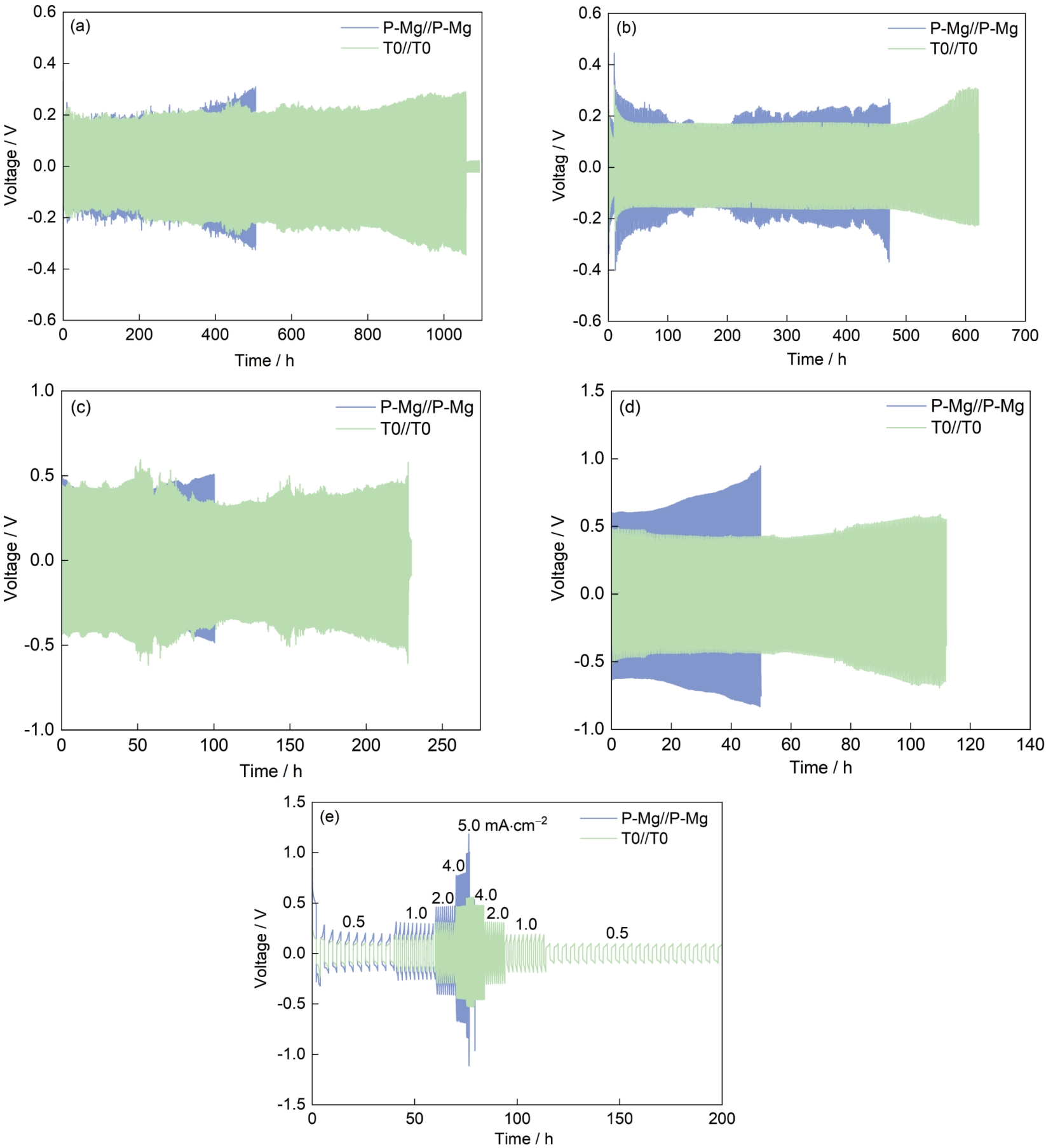
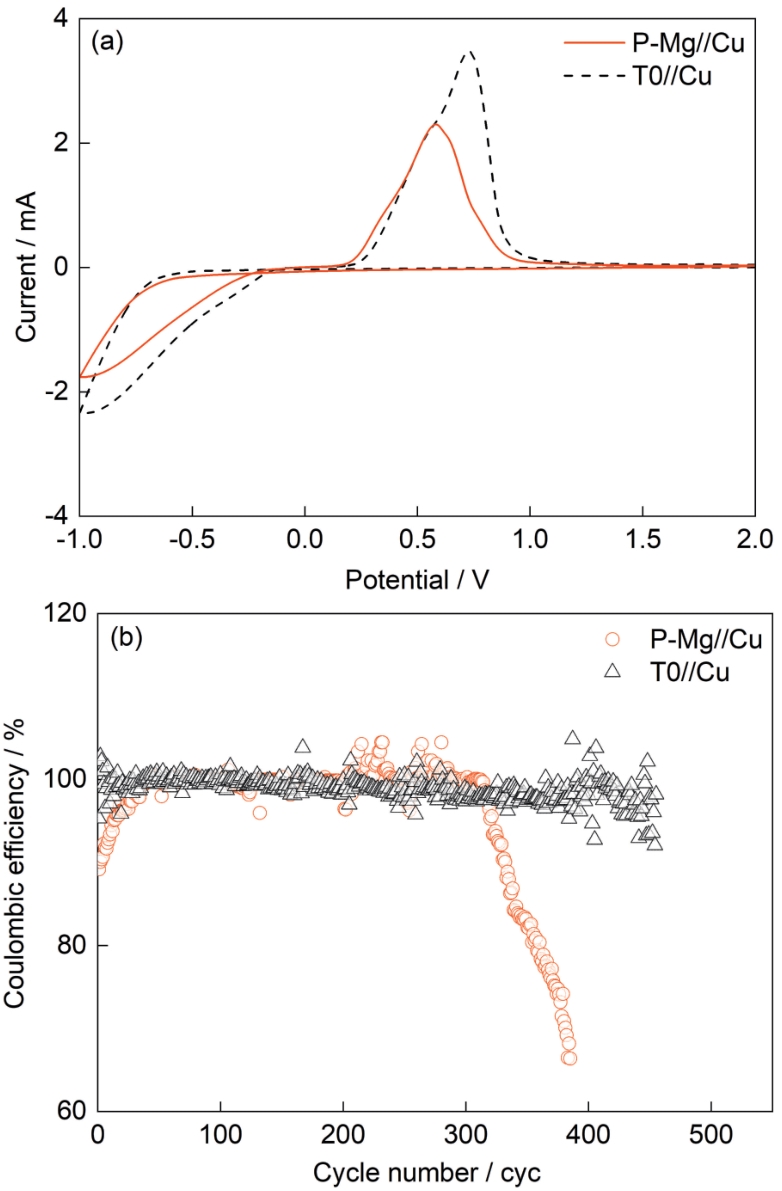
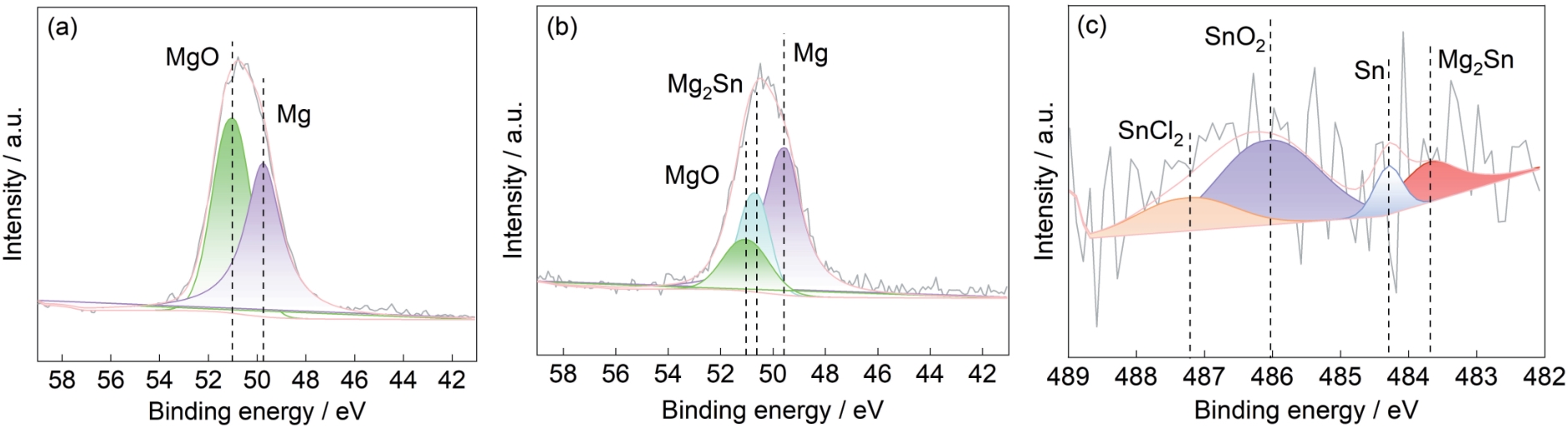
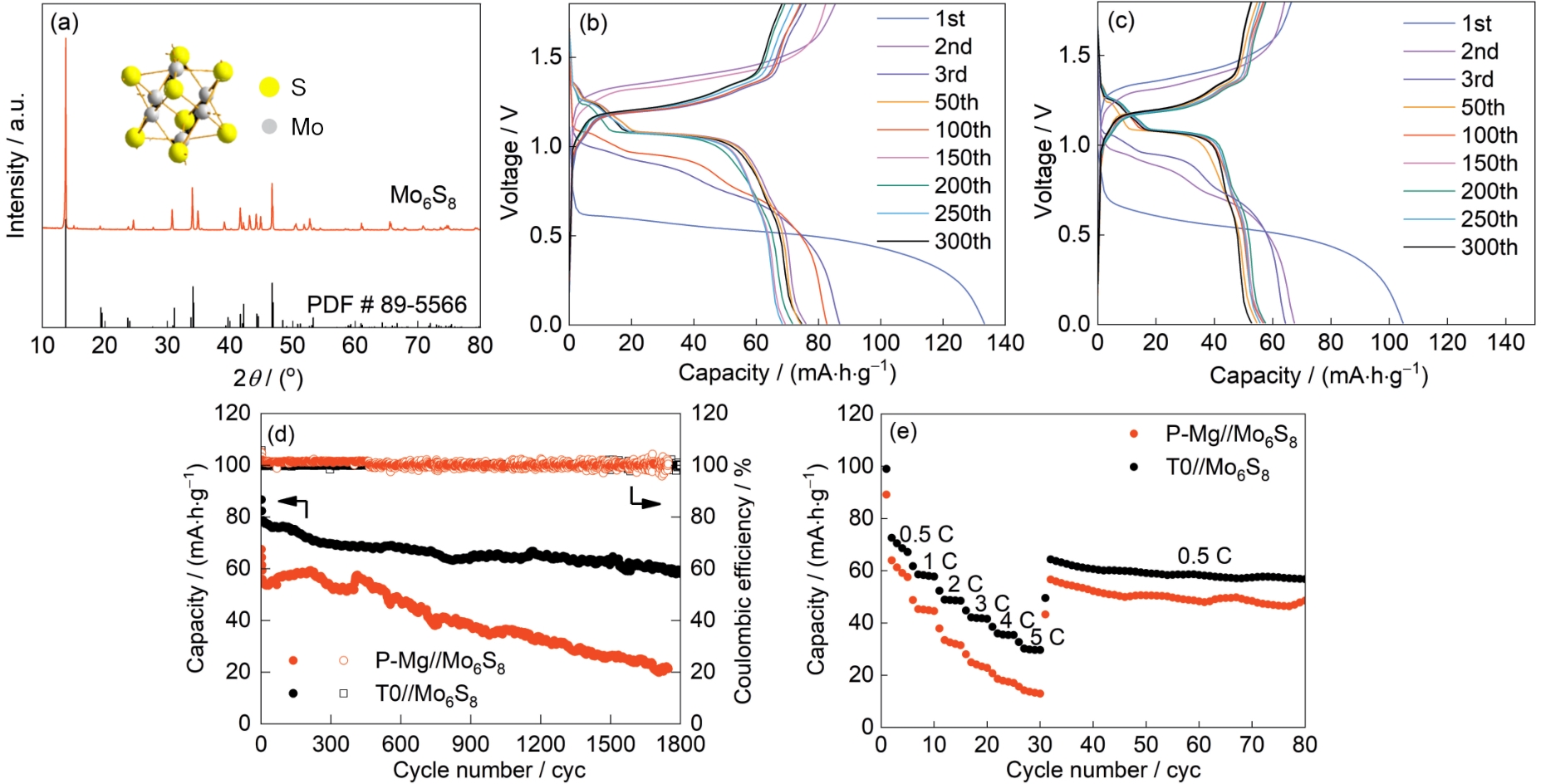
Abstract With the global emphasis on renewable energy, the development of large-scale energy storage technologies has become essential for achieving carbon neutrality. Lithium-ion batteries (LIBs) are currently the most widely used and technologically mature energy storage systems; however, resources such as Li, Co, and Ni are scarce in China, resulting in high production costs. Moreover, the growth of lithium dendrites poses serious safety risks, as these structures can penetrate the separator, cause short circuits, and potentially lead to thermal runaway, fires, or explosions. In light of these challenges, while significant progress has been made in developing protection strategies for LIBs, researchers are increasingly exploring alternative metal-ion battery systems, including magnesium-ion, sodium-ion, and zinc-ion batteries. Among these, rechargeable magnesium-ion batteries (MIBs) are considered one of the most promising next-generation energy storage technologies. Compared with metallic Li, metallic Mg offers a higher volumetric capacity and a relatively low reduction potential. In addition, Mg is more abundant in the Earth's crust and theoretically resistant to dendrite formation under appropriate conditions due to its low self-diffusion barrier. Its chemical stability in air and lower flammability also contribute to improved operational safety. MIBs thus present a promising route toward safe, high-capacity energy storage. However, challenges such as uneven stripping and high overpotential at the Mg anode lead to pitting corrosion and premature failure. To address these issues, a Mg-0.1Sn (mass fraction, %) anode material with a homogeneous equiaxed structure was prepared via extrusion, yielding an average grain size of (15.6 ± 2.4) μm and a texture strength of 17.40 MRD. The electrochemical performance of this alloy was compared with that of a pure Mg anode to achieve more uniform and rapid Mg deposition/stripping behavior. At a current density of 1.0 mA/cm2 and a deposition capacity of 0.5 mA⋅h/cm2, the overpotential of the T0//T0 symmetric cell was only 0.21 V, maintaining stable operation for up to 1000 cyc, whereas the P-Mg//P-Mg cell sustained only 505 cyc. The T0//Cu half-cell also exhibited excellent cycling stability for over 450 cyc with an average coulombic efficiency of 98.88%. In contrast, after 230 cyc, the coulombic efficiency of the P-Mg//Cu cell fluctuated significantly and remained comparatively low. Furthermore, when paired with a Mo6S8 cathode, the T0//Mo6S8 full cell maintained good cycling stability for over 1800 cyc at a rate of 1 C. The superior cycling performance of the Mg-0.1Sn anode is attributed primarily to the uniform solid solution of Sn within the Mg matrix. Furthermore, the Sn component participates in the charge-discharge processes, effectively mitigating volume expansion and suppressing microcrack propagation. Meanwhile, the formation of SnCl2 on the anode surface reduces the local Cl- concentration, thereby slowing electrolyte corrosion and enhancing overall electrode stability.
|
|
Received: 17 January 2025
|
|
|
| Fund: National Natural Science Foundation of China(52375370);Natural Science Foundation of Shanxi Province(202103021224049);Shanxi-Zhejiang University New Materials and Chemical Resear-ch Institute Scientific Research Project(2022SX-TD025);Lvliang City University-Local Government Cooperation Key Research and Development Project(2023XDHZ09) |
Corresponding Authors:
CHENG Weili, professor, Tel: (0351)6010021, E-mail: chengweili7@126.com
|
| [1] |
Hu D N, Huang S, Wen Z, et al. A review on thermal runaway warning technology for lithium-ion batteries[J]. Renew. Sustain. Energy Rev., 2024, 206: 114882
doi: 10.1016/j.rser.2024.114882
|
| [2] |
Jia Z Z, Jin K Q, Mei W X, et al. Advances and perspectives in fire safety of lithium-ion battery energy storage systems[J]. eTransportation, 2025, 24: 100390
doi: 10.1016/j.etran.2024.100390
|
| [3] |
Sun J L, Zhou H H, Huang Z H. The future nickel metal supply for lithium-ion batteries[J]. Green Chem., 2024, 26: 6926
doi: 10.1039/D4GC01980F
|
| [4] |
Zhang J Y, Huang H N, Zhang G Q, et al. Cycle life studies of lithium-ion power batteries for electric vehicles: A review[J]. J. Energy Storage, 2024, 93: 112231
doi: 10.1016/j.est.2024.112231
|
| [5] |
Luo Z H, Zhang D, Guo J X, et al. Recent progress on the materials design towards thermally safe sodium-ion batteries[J]. J. Energy Chem., 2025, 102: 555
doi: 10.1016/j.jechem.2024.11.014
|
| [6] |
You C L, Wu X W, Yuan X H, et al. Advances in rechargeable Mg batteries[J]. J. Mater. Chem., 2020, 8A: 25601
|
| [7] |
Zhang H, Zhang M, Xu T, et al. Ions and electrons dual transport channels regulated by nanocellulose for mitigating dendrite growth of zinc-ion batteries[J]. Chem. Eng. J., 2025, 505: 159476
doi: 10.1016/j.cej.2025.159476
|
| [8] |
Mohtadi R, Tutusaus O, Arthur T S, et al. The metamorphosis of rechargeable magnesium batteries[J]. Joule, 2021, 5: 581
doi: 10.1016/j.joule.2020.12.021
|
| [9] |
Tan S S, Xiong F Y, Wang J J, et al. Crystal regulation towards rechargeable magnesium battery cathode materials[J]. Mater. Horiz., 2020, 7: 1971
doi: 10.1039/D0MH00315H
|
| [10] |
Wan B X, Dou H L, Zhao X L, et al. Three-dimensional magnesiophilic scaffolds for reduced passivation toward high-rate mg metal anodes in a noncorrosive electrolyte[J]. ACS Appl. Mater. Interfaces, 2020, 12: 28298
doi: 10.1021/acsami.0c07213
|
| [11] |
Wen T T, Xiao H, Tan S S, et al. Interfacial chemistry of anode/electrolyte interface for rechargeable magnesium batteries[J]. J. Magnes. Alloy., 2024, 12: 2647
doi: 10.1016/j.jma.2024.04.010
|
| [12] |
Xu R J, Gao X, Chen Y, et al. Research advances of the electrolytes for rechargeable magnesium ion batteries[J]. Mater. Today Phys., 2023, 36: 101186
|
| [13] |
Setiawan D, Lee H, Pyun J, et al. Magnesium alloys as alternative anode materials for rechargeable magnesium-ion batteries: Review on the alloying phase and reaction mechanisms[J]. J. Magnes. Alloy., 2024, 12: 3476
doi: 10.1016/j.jma.2024.09.018
|
| [14] |
Song M J, Wang Y, Yu B, et al. A high-performance room-temperature magnesium ion battery with self-healing liquid alloy anode mediated with a bifunctional intermetallic compound[J]. Chem. Eng. J., 2022, 450: 138176
doi: 10.1016/j.cej.2022.138176
|
| [15] |
Tan Y H, Yao W T, Zhang T W, et al. High voltage magnesium-ion battery enabled by nanocluster Mg3Bi2 alloy anode in noncorrosive electrolyte[J]. ACS Nano, 2018, 12: 5856
doi: 10.1021/acsnano.8b01847
|
| [16] |
Zheng K, Yu B, Ma W S, et al. Dealloying induced porous Bi anodes for rechargeable magnesium-ion batteries[J]. J. Power Sources, 2024, 613: 234943
doi: 10.1016/j.jpowsour.2024.234943
|
| [17] |
Zheng X W, Song C, Yuan Y, et al. High stability In-Sn-Bi multi-element alloy anode for Mg ion batteries[J]. J. Power Sources, 2023, 575: 233141
doi: 10.1016/j.jpowsour.2023.233141
|
| [18] |
Gu D C, Yuan Y, Liu J W, et al. The electrochemical properties of bismuth-antimony-tin alloy anodes for magnesium ion batteries[J]. J. Power Sources, 2022, 548: 232076
doi: 10.1016/j.jpowsour.2022.232076
|
| [19] |
Liu H, Tan S S, Wang Z T, et al. Binary Mg-1 at%Gd alloy anode for high-performance rechargeable magnesium batteries[J]. ChemSusChem 2024, 17: e202301589
doi: 10.1002/cssc.v17.4
|
| [20] |
Chen X Z, Wei S H, Tong F L, et al. Electrochemical performance of Mg-Sn alloy anodes for magnesium rechargeable battery[J]. Electrochim. Acta, 2021, 398: 139336
doi: 10.1016/j.electacta.2021.139336
|
| [21] |
Chen X Z, Wei S H, Yan Y G, et al. Dissolution mechanism of eutectic and hypereutectic Mg-Sn alloy anodes for magnesium rechargeable batteries[J]. ACS Appl. Mater. Interfaces, 2023, 15: 33065
doi: 10.1021/acsami.3c03591
|
| [22] |
Mandai T, Somekawa H. Metallurgical approach to enhance the electrochemical activity of magnesium anodes for magnesium rechargeable batteries[J]. Chem. Comm., 2020, 56: 12122
doi: 10.1039/D0CC05373B
|
| [23] |
Chen Y H, Shen X, Wang J F, et al. Insights into hyper-efficient construction of compact artificial SEI for highly reversible Mg metal anode[J]. ACS Energy Lett., 2024, 9: 5616
doi: 10.1021/acsenergylett.4c02123
|
| [24] |
Eaves-Rathert J, Moyer K, Zohair M, et al. Kinetic- versus diffusion-driven three-dimensional growth in magnesium metal battery anodes[J]. Joule, 2020, 4: 1324
doi: 10.1016/j.joule.2020.05.007
|
| [25] |
Nguyen D T, Tran X M, Kang J, et al. Magnesium storage performance and surface film formation behavior of tin anode material[J]. ChemElectroChem, 2016, 3: 1813
doi: 10.1002/celc.v3.11
|
| [26] |
Claus P, Raif F, Cavet S, et al. From molecule to material: Mg2Sn as hydrogenation catalyst[J]. Catal. Commun., 2006, 7: 618
doi: 10.1016/j.catcom.2006.01.027
|
| [27] |
Chen X Z, Bleken F L, Løvvik O M, et al. Comparing electrochemical performance of transition metal silicate cathodes and chevrel phase Mo6S8 in the analogous rechargeable Mg-ion battery system[J]. J. Power Sources, 2016, 321: 76
doi: 10.1016/j.jpowsour.2016.04.094
|
| [28] |
Mao M L, Lin Z J, Tong Y X, et al. Iodine vapor transport-triggered preferential growth of chevrel Mo6S8 nanosheets for advanced multivalent batteries[J]. ACS Nano, 2020, 14: 1102
doi: 10.1021/acsnano.9b08848
|
| [29] |
Li W Z, Huang C D. Transition metal oxides and transition metal sulfides as cathodes for magnesium-ion batteries: Current status and modification strategies[J]. Mater. Today Energy, 2024, 40: 101510
|
| [30] |
Sun Q, Luo S H, Huang R, et al. Recent progress of magnesium electrolytes for rechargeable magnesium batteries[J]. Coord. Chem. Rev., 2024, 515: 215956
doi: 10.1016/j.ccr.2024.215956
|
| No Suggested Reading articles found! |
|
|
Viewed |
|
|
|
Full text
|
|
|
|
|
Abstract
|
|
|
|
|
Cited |
|
|
|
|
| |
Shared |
|
|
|
|
| |
Discussed |
|
|
|
|