Research on microhardness prediction of 304 stainless steel turning based on dislocation density
1
2022
... 304不锈钢作为常用的结构材料,在石化、核电、海洋工程、生物能源和食品医疗等领域应用广泛.为了满足不同工况对304不锈钢性能的要求,其力学性能和耐腐蚀性能一直是关注的重点.除了强度、塑性和疲劳寿命等参数以外,显微硬度也是力学性能的一个重要参数[1].表面处理工艺能够改变304不锈钢的力学(显微硬度)性能和耐腐蚀性能.渗硼处理的AISI304L不锈钢,由于表面形成新相FeB和Fe2B,显微硬度达到1316.1 HV0.1,在10%H2SO4 (体积分数)溶液(50 ℃)中的耐腐蚀性能提高(硼化层的溶解速率低于304不锈钢)[2].低能氮离子注入304不锈钢,形成的亚稳相使得304不锈钢的显微硬度显著提高(700 HV0.15,未经处理的304不锈钢的显微硬度约为200 HV0.15);随着氮离子束注入剂量增加,304不锈钢的耐腐蚀性能提高或者降低[3].渗硼处理能够提高304不锈钢的显微硬度,但是对于提高耐腐蚀性能具有不确定性.304不锈钢经离子渗氮后,形成的新相CrN虽然使其显微硬度提高6倍,但是在室温3.5%NaCl (质量分数)溶液中的耐腐蚀性能降低[4].离子渗氮难以兼顾304不锈钢的显微硬度与耐腐蚀性能.经470 ℃气体渗碳后,304不锈钢获得耐蚀强化层Cr3C2,硬度提高4~5倍,但在室温3.5%NaCl溶液中的耐腐蚀性能未降低[5].在304不锈钢服役过程中,腐蚀和力学等因素容易导致Cr3C2层脱落,进而影响304不锈钢的服役寿命.经激光表面强化的304不锈钢,其表面晶粒细化,产生表面压应力、形变孪晶和马氏体;表面硬度从225.0 HV提高到322.5 HV;细化晶粒和表面压应力提高了腐蚀阻力,形变马氏体则减小了腐蚀阻力[6].经表面激光处理后的304不锈钢,其表面显微硬度从185 HV提高到248.9 HV.随着激光扫描速率增加,304不锈钢的显微硬度、自腐蚀电位和电流密度先增加后减小[7].经激光抛光的304不锈钢,其抛光层中C和Cr含量(质量分数)分别降低约2.44%和3.20%;表面浅层金属发生软化,显微硬度降低;Cr含量减少弱化了不锈钢钝化能力,晶粒细化与残余拉应力为Cl-提供快速扩散路径,自腐蚀电流密度明显提高[8].表面激光处理虽然能够提高304不锈钢的显微硬度,但是对提高其耐腐蚀性能具有不确定性.几十微米量级的加工层腐蚀和脱落后,力学性能(显微硬度)和耐腐蚀性能明显降低. ...
Effect of powder-pack boronizing on the microhardness, wear and corrosion behaviors of AISI 304L steel
1
2024
... 304不锈钢作为常用的结构材料,在石化、核电、海洋工程、生物能源和食品医疗等领域应用广泛.为了满足不同工况对304不锈钢性能的要求,其力学性能和耐腐蚀性能一直是关注的重点.除了强度、塑性和疲劳寿命等参数以外,显微硬度也是力学性能的一个重要参数[1].表面处理工艺能够改变304不锈钢的力学(显微硬度)性能和耐腐蚀性能.渗硼处理的AISI304L不锈钢,由于表面形成新相FeB和Fe2B,显微硬度达到1316.1 HV0.1,在10%H2SO4 (体积分数)溶液(50 ℃)中的耐腐蚀性能提高(硼化层的溶解速率低于304不锈钢)[2].低能氮离子注入304不锈钢,形成的亚稳相使得304不锈钢的显微硬度显著提高(700 HV0.15,未经处理的304不锈钢的显微硬度约为200 HV0.15);随着氮离子束注入剂量增加,304不锈钢的耐腐蚀性能提高或者降低[3].渗硼处理能够提高304不锈钢的显微硬度,但是对于提高耐腐蚀性能具有不确定性.304不锈钢经离子渗氮后,形成的新相CrN虽然使其显微硬度提高6倍,但是在室温3.5%NaCl (质量分数)溶液中的耐腐蚀性能降低[4].离子渗氮难以兼顾304不锈钢的显微硬度与耐腐蚀性能.经470 ℃气体渗碳后,304不锈钢获得耐蚀强化层Cr3C2,硬度提高4~5倍,但在室温3.5%NaCl溶液中的耐腐蚀性能未降低[5].在304不锈钢服役过程中,腐蚀和力学等因素容易导致Cr3C2层脱落,进而影响304不锈钢的服役寿命.经激光表面强化的304不锈钢,其表面晶粒细化,产生表面压应力、形变孪晶和马氏体;表面硬度从225.0 HV提高到322.5 HV;细化晶粒和表面压应力提高了腐蚀阻力,形变马氏体则减小了腐蚀阻力[6].经表面激光处理后的304不锈钢,其表面显微硬度从185 HV提高到248.9 HV.随着激光扫描速率增加,304不锈钢的显微硬度、自腐蚀电位和电流密度先增加后减小[7].经激光抛光的304不锈钢,其抛光层中C和Cr含量(质量分数)分别降低约2.44%和3.20%;表面浅层金属发生软化,显微硬度降低;Cr含量减少弱化了不锈钢钝化能力,晶粒细化与残余拉应力为Cl-提供快速扩散路径,自腐蚀电流密度明显提高[8].表面激光处理虽然能够提高304不锈钢的显微硬度,但是对提高其耐腐蚀性能具有不确定性.几十微米量级的加工层腐蚀和脱落后,力学性能(显微硬度)和耐腐蚀性能明显降低. ...
Corrosion behaviour, microhardness and surface characterization of low energy, high current ion implanted austenitic stainless steel
1
2001
... 304不锈钢作为常用的结构材料,在石化、核电、海洋工程、生物能源和食品医疗等领域应用广泛.为了满足不同工况对304不锈钢性能的要求,其力学性能和耐腐蚀性能一直是关注的重点.除了强度、塑性和疲劳寿命等参数以外,显微硬度也是力学性能的一个重要参数[1].表面处理工艺能够改变304不锈钢的力学(显微硬度)性能和耐腐蚀性能.渗硼处理的AISI304L不锈钢,由于表面形成新相FeB和Fe2B,显微硬度达到1316.1 HV0.1,在10%H2SO4 (体积分数)溶液(50 ℃)中的耐腐蚀性能提高(硼化层的溶解速率低于304不锈钢)[2].低能氮离子注入304不锈钢,形成的亚稳相使得304不锈钢的显微硬度显著提高(700 HV0.15,未经处理的304不锈钢的显微硬度约为200 HV0.15);随着氮离子束注入剂量增加,304不锈钢的耐腐蚀性能提高或者降低[3].渗硼处理能够提高304不锈钢的显微硬度,但是对于提高耐腐蚀性能具有不确定性.304不锈钢经离子渗氮后,形成的新相CrN虽然使其显微硬度提高6倍,但是在室温3.5%NaCl (质量分数)溶液中的耐腐蚀性能降低[4].离子渗氮难以兼顾304不锈钢的显微硬度与耐腐蚀性能.经470 ℃气体渗碳后,304不锈钢获得耐蚀强化层Cr3C2,硬度提高4~5倍,但在室温3.5%NaCl溶液中的耐腐蚀性能未降低[5].在304不锈钢服役过程中,腐蚀和力学等因素容易导致Cr3C2层脱落,进而影响304不锈钢的服役寿命.经激光表面强化的304不锈钢,其表面晶粒细化,产生表面压应力、形变孪晶和马氏体;表面硬度从225.0 HV提高到322.5 HV;细化晶粒和表面压应力提高了腐蚀阻力,形变马氏体则减小了腐蚀阻力[6].经表面激光处理后的304不锈钢,其表面显微硬度从185 HV提高到248.9 HV.随着激光扫描速率增加,304不锈钢的显微硬度、自腐蚀电位和电流密度先增加后减小[7].经激光抛光的304不锈钢,其抛光层中C和Cr含量(质量分数)分别降低约2.44%和3.20%;表面浅层金属发生软化,显微硬度降低;Cr含量减少弱化了不锈钢钝化能力,晶粒细化与残余拉应力为Cl-提供快速扩散路径,自腐蚀电流密度明显提高[8].表面激光处理虽然能够提高304不锈钢的显微硬度,但是对提高其耐腐蚀性能具有不确定性.几十微米量级的加工层腐蚀和脱落后,力学性能(显微硬度)和耐腐蚀性能明显降低. ...
Study on organization and performance of nitrogen ion implantation layer of 304 austenitic stainless steel
1
2011
... 304不锈钢作为常用的结构材料,在石化、核电、海洋工程、生物能源和食品医疗等领域应用广泛.为了满足不同工况对304不锈钢性能的要求,其力学性能和耐腐蚀性能一直是关注的重点.除了强度、塑性和疲劳寿命等参数以外,显微硬度也是力学性能的一个重要参数[1].表面处理工艺能够改变304不锈钢的力学(显微硬度)性能和耐腐蚀性能.渗硼处理的AISI304L不锈钢,由于表面形成新相FeB和Fe2B,显微硬度达到1316.1 HV0.1,在10%H2SO4 (体积分数)溶液(50 ℃)中的耐腐蚀性能提高(硼化层的溶解速率低于304不锈钢)[2].低能氮离子注入304不锈钢,形成的亚稳相使得304不锈钢的显微硬度显著提高(700 HV0.15,未经处理的304不锈钢的显微硬度约为200 HV0.15);随着氮离子束注入剂量增加,304不锈钢的耐腐蚀性能提高或者降低[3].渗硼处理能够提高304不锈钢的显微硬度,但是对于提高耐腐蚀性能具有不确定性.304不锈钢经离子渗氮后,形成的新相CrN虽然使其显微硬度提高6倍,但是在室温3.5%NaCl (质量分数)溶液中的耐腐蚀性能降低[4].离子渗氮难以兼顾304不锈钢的显微硬度与耐腐蚀性能.经470 ℃气体渗碳后,304不锈钢获得耐蚀强化层Cr3C2,硬度提高4~5倍,但在室温3.5%NaCl溶液中的耐腐蚀性能未降低[5].在304不锈钢服役过程中,腐蚀和力学等因素容易导致Cr3C2层脱落,进而影响304不锈钢的服役寿命.经激光表面强化的304不锈钢,其表面晶粒细化,产生表面压应力、形变孪晶和马氏体;表面硬度从225.0 HV提高到322.5 HV;细化晶粒和表面压应力提高了腐蚀阻力,形变马氏体则减小了腐蚀阻力[6].经表面激光处理后的304不锈钢,其表面显微硬度从185 HV提高到248.9 HV.随着激光扫描速率增加,304不锈钢的显微硬度、自腐蚀电位和电流密度先增加后减小[7].经激光抛光的304不锈钢,其抛光层中C和Cr含量(质量分数)分别降低约2.44%和3.20%;表面浅层金属发生软化,显微硬度降低;Cr含量减少弱化了不锈钢钝化能力,晶粒细化与残余拉应力为Cl-提供快速扩散路径,自腐蚀电流密度明显提高[8].表面激光处理虽然能够提高304不锈钢的显微硬度,但是对提高其耐腐蚀性能具有不确定性.几十微米量级的加工层腐蚀和脱落后,力学性能(显微硬度)和耐腐蚀性能明显降低. ...
304奥氏体不锈钢氮离子注入层的组织与性能研究
1
2011
... 304不锈钢作为常用的结构材料,在石化、核电、海洋工程、生物能源和食品医疗等领域应用广泛.为了满足不同工况对304不锈钢性能的要求,其力学性能和耐腐蚀性能一直是关注的重点.除了强度、塑性和疲劳寿命等参数以外,显微硬度也是力学性能的一个重要参数[1].表面处理工艺能够改变304不锈钢的力学(显微硬度)性能和耐腐蚀性能.渗硼处理的AISI304L不锈钢,由于表面形成新相FeB和Fe2B,显微硬度达到1316.1 HV0.1,在10%H2SO4 (体积分数)溶液(50 ℃)中的耐腐蚀性能提高(硼化层的溶解速率低于304不锈钢)[2].低能氮离子注入304不锈钢,形成的亚稳相使得304不锈钢的显微硬度显著提高(700 HV0.15,未经处理的304不锈钢的显微硬度约为200 HV0.15);随着氮离子束注入剂量增加,304不锈钢的耐腐蚀性能提高或者降低[3].渗硼处理能够提高304不锈钢的显微硬度,但是对于提高耐腐蚀性能具有不确定性.304不锈钢经离子渗氮后,形成的新相CrN虽然使其显微硬度提高6倍,但是在室温3.5%NaCl (质量分数)溶液中的耐腐蚀性能降低[4].离子渗氮难以兼顾304不锈钢的显微硬度与耐腐蚀性能.经470 ℃气体渗碳后,304不锈钢获得耐蚀强化层Cr3C2,硬度提高4~5倍,但在室温3.5%NaCl溶液中的耐腐蚀性能未降低[5].在304不锈钢服役过程中,腐蚀和力学等因素容易导致Cr3C2层脱落,进而影响304不锈钢的服役寿命.经激光表面强化的304不锈钢,其表面晶粒细化,产生表面压应力、形变孪晶和马氏体;表面硬度从225.0 HV提高到322.5 HV;细化晶粒和表面压应力提高了腐蚀阻力,形变马氏体则减小了腐蚀阻力[6].经表面激光处理后的304不锈钢,其表面显微硬度从185 HV提高到248.9 HV.随着激光扫描速率增加,304不锈钢的显微硬度、自腐蚀电位和电流密度先增加后减小[7].经激光抛光的304不锈钢,其抛光层中C和Cr含量(质量分数)分别降低约2.44%和3.20%;表面浅层金属发生软化,显微硬度降低;Cr含量减少弱化了不锈钢钝化能力,晶粒细化与残余拉应力为Cl-提供快速扩散路径,自腐蚀电流密度明显提高[8].表面激光处理虽然能够提高304不锈钢的显微硬度,但是对提高其耐腐蚀性能具有不确定性.几十微米量级的加工层腐蚀和脱落后,力学性能(显微硬度)和耐腐蚀性能明显降低. ...
Surface microstructure, hardness and corrosion resistance of austenitic stainless after gas carburizing at low temperature
1
2014
... 304不锈钢作为常用的结构材料,在石化、核电、海洋工程、生物能源和食品医疗等领域应用广泛.为了满足不同工况对304不锈钢性能的要求,其力学性能和耐腐蚀性能一直是关注的重点.除了强度、塑性和疲劳寿命等参数以外,显微硬度也是力学性能的一个重要参数[1].表面处理工艺能够改变304不锈钢的力学(显微硬度)性能和耐腐蚀性能.渗硼处理的AISI304L不锈钢,由于表面形成新相FeB和Fe2B,显微硬度达到1316.1 HV0.1,在10%H2SO4 (体积分数)溶液(50 ℃)中的耐腐蚀性能提高(硼化层的溶解速率低于304不锈钢)[2].低能氮离子注入304不锈钢,形成的亚稳相使得304不锈钢的显微硬度显著提高(700 HV0.15,未经处理的304不锈钢的显微硬度约为200 HV0.15);随着氮离子束注入剂量增加,304不锈钢的耐腐蚀性能提高或者降低[3].渗硼处理能够提高304不锈钢的显微硬度,但是对于提高耐腐蚀性能具有不确定性.304不锈钢经离子渗氮后,形成的新相CrN虽然使其显微硬度提高6倍,但是在室温3.5%NaCl (质量分数)溶液中的耐腐蚀性能降低[4].离子渗氮难以兼顾304不锈钢的显微硬度与耐腐蚀性能.经470 ℃气体渗碳后,304不锈钢获得耐蚀强化层Cr3C2,硬度提高4~5倍,但在室温3.5%NaCl溶液中的耐腐蚀性能未降低[5].在304不锈钢服役过程中,腐蚀和力学等因素容易导致Cr3C2层脱落,进而影响304不锈钢的服役寿命.经激光表面强化的304不锈钢,其表面晶粒细化,产生表面压应力、形变孪晶和马氏体;表面硬度从225.0 HV提高到322.5 HV;细化晶粒和表面压应力提高了腐蚀阻力,形变马氏体则减小了腐蚀阻力[6].经表面激光处理后的304不锈钢,其表面显微硬度从185 HV提高到248.9 HV.随着激光扫描速率增加,304不锈钢的显微硬度、自腐蚀电位和电流密度先增加后减小[7].经激光抛光的304不锈钢,其抛光层中C和Cr含量(质量分数)分别降低约2.44%和3.20%;表面浅层金属发生软化,显微硬度降低;Cr含量减少弱化了不锈钢钝化能力,晶粒细化与残余拉应力为Cl-提供快速扩散路径,自腐蚀电流密度明显提高[8].表面激光处理虽然能够提高304不锈钢的显微硬度,但是对提高其耐腐蚀性能具有不确定性.几十微米量级的加工层腐蚀和脱落后,力学性能(显微硬度)和耐腐蚀性能明显降低. ...
奥氏体不锈钢低温气体渗碳后的表面组织、硬度与耐蚀性能
1
2014
... 304不锈钢作为常用的结构材料,在石化、核电、海洋工程、生物能源和食品医疗等领域应用广泛.为了满足不同工况对304不锈钢性能的要求,其力学性能和耐腐蚀性能一直是关注的重点.除了强度、塑性和疲劳寿命等参数以外,显微硬度也是力学性能的一个重要参数[1].表面处理工艺能够改变304不锈钢的力学(显微硬度)性能和耐腐蚀性能.渗硼处理的AISI304L不锈钢,由于表面形成新相FeB和Fe2B,显微硬度达到1316.1 HV0.1,在10%H2SO4 (体积分数)溶液(50 ℃)中的耐腐蚀性能提高(硼化层的溶解速率低于304不锈钢)[2].低能氮离子注入304不锈钢,形成的亚稳相使得304不锈钢的显微硬度显著提高(700 HV0.15,未经处理的304不锈钢的显微硬度约为200 HV0.15);随着氮离子束注入剂量增加,304不锈钢的耐腐蚀性能提高或者降低[3].渗硼处理能够提高304不锈钢的显微硬度,但是对于提高耐腐蚀性能具有不确定性.304不锈钢经离子渗氮后,形成的新相CrN虽然使其显微硬度提高6倍,但是在室温3.5%NaCl (质量分数)溶液中的耐腐蚀性能降低[4].离子渗氮难以兼顾304不锈钢的显微硬度与耐腐蚀性能.经470 ℃气体渗碳后,304不锈钢获得耐蚀强化层Cr3C2,硬度提高4~5倍,但在室温3.5%NaCl溶液中的耐腐蚀性能未降低[5].在304不锈钢服役过程中,腐蚀和力学等因素容易导致Cr3C2层脱落,进而影响304不锈钢的服役寿命.经激光表面强化的304不锈钢,其表面晶粒细化,产生表面压应力、形变孪晶和马氏体;表面硬度从225.0 HV提高到322.5 HV;细化晶粒和表面压应力提高了腐蚀阻力,形变马氏体则减小了腐蚀阻力[6].经表面激光处理后的304不锈钢,其表面显微硬度从185 HV提高到248.9 HV.随着激光扫描速率增加,304不锈钢的显微硬度、自腐蚀电位和电流密度先增加后减小[7].经激光抛光的304不锈钢,其抛光层中C和Cr含量(质量分数)分别降低约2.44%和3.20%;表面浅层金属发生软化,显微硬度降低;Cr含量减少弱化了不锈钢钝化能力,晶粒细化与残余拉应力为Cl-提供快速扩散路径,自腐蚀电流密度明显提高[8].表面激光处理虽然能够提高304不锈钢的显微硬度,但是对提高其耐腐蚀性能具有不确定性.几十微米量级的加工层腐蚀和脱落后,力学性能(显微硬度)和耐腐蚀性能明显降低. ...
Effects of laser shock processing on corrosion resistance of AISI 304 stainless steel in acid chloride solution
1
2017
... 304不锈钢作为常用的结构材料,在石化、核电、海洋工程、生物能源和食品医疗等领域应用广泛.为了满足不同工况对304不锈钢性能的要求,其力学性能和耐腐蚀性能一直是关注的重点.除了强度、塑性和疲劳寿命等参数以外,显微硬度也是力学性能的一个重要参数[1].表面处理工艺能够改变304不锈钢的力学(显微硬度)性能和耐腐蚀性能.渗硼处理的AISI304L不锈钢,由于表面形成新相FeB和Fe2B,显微硬度达到1316.1 HV0.1,在10%H2SO4 (体积分数)溶液(50 ℃)中的耐腐蚀性能提高(硼化层的溶解速率低于304不锈钢)[2].低能氮离子注入304不锈钢,形成的亚稳相使得304不锈钢的显微硬度显著提高(700 HV0.15,未经处理的304不锈钢的显微硬度约为200 HV0.15);随着氮离子束注入剂量增加,304不锈钢的耐腐蚀性能提高或者降低[3].渗硼处理能够提高304不锈钢的显微硬度,但是对于提高耐腐蚀性能具有不确定性.304不锈钢经离子渗氮后,形成的新相CrN虽然使其显微硬度提高6倍,但是在室温3.5%NaCl (质量分数)溶液中的耐腐蚀性能降低[4].离子渗氮难以兼顾304不锈钢的显微硬度与耐腐蚀性能.经470 ℃气体渗碳后,304不锈钢获得耐蚀强化层Cr3C2,硬度提高4~5倍,但在室温3.5%NaCl溶液中的耐腐蚀性能未降低[5].在304不锈钢服役过程中,腐蚀和力学等因素容易导致Cr3C2层脱落,进而影响304不锈钢的服役寿命.经激光表面强化的304不锈钢,其表面晶粒细化,产生表面压应力、形变孪晶和马氏体;表面硬度从225.0 HV提高到322.5 HV;细化晶粒和表面压应力提高了腐蚀阻力,形变马氏体则减小了腐蚀阻力[6].经表面激光处理后的304不锈钢,其表面显微硬度从185 HV提高到248.9 HV.随着激光扫描速率增加,304不锈钢的显微硬度、自腐蚀电位和电流密度先增加后减小[7].经激光抛光的304不锈钢,其抛光层中C和Cr含量(质量分数)分别降低约2.44%和3.20%;表面浅层金属发生软化,显微硬度降低;Cr含量减少弱化了不锈钢钝化能力,晶粒细化与残余拉应力为Cl-提供快速扩散路径,自腐蚀电流密度明显提高[8].表面激光处理虽然能够提高304不锈钢的显微硬度,但是对提高其耐腐蚀性能具有不确定性.几十微米量级的加工层腐蚀和脱落后,力学性能(显微硬度)和耐腐蚀性能明显降低. ...
Effect of laser surface remelting of 304stainless steel
1
2023
... 304不锈钢作为常用的结构材料,在石化、核电、海洋工程、生物能源和食品医疗等领域应用广泛.为了满足不同工况对304不锈钢性能的要求,其力学性能和耐腐蚀性能一直是关注的重点.除了强度、塑性和疲劳寿命等参数以外,显微硬度也是力学性能的一个重要参数[1].表面处理工艺能够改变304不锈钢的力学(显微硬度)性能和耐腐蚀性能.渗硼处理的AISI304L不锈钢,由于表面形成新相FeB和Fe2B,显微硬度达到1316.1 HV0.1,在10%H2SO4 (体积分数)溶液(50 ℃)中的耐腐蚀性能提高(硼化层的溶解速率低于304不锈钢)[2].低能氮离子注入304不锈钢,形成的亚稳相使得304不锈钢的显微硬度显著提高(700 HV0.15,未经处理的304不锈钢的显微硬度约为200 HV0.15);随着氮离子束注入剂量增加,304不锈钢的耐腐蚀性能提高或者降低[3].渗硼处理能够提高304不锈钢的显微硬度,但是对于提高耐腐蚀性能具有不确定性.304不锈钢经离子渗氮后,形成的新相CrN虽然使其显微硬度提高6倍,但是在室温3.5%NaCl (质量分数)溶液中的耐腐蚀性能降低[4].离子渗氮难以兼顾304不锈钢的显微硬度与耐腐蚀性能.经470 ℃气体渗碳后,304不锈钢获得耐蚀强化层Cr3C2,硬度提高4~5倍,但在室温3.5%NaCl溶液中的耐腐蚀性能未降低[5].在304不锈钢服役过程中,腐蚀和力学等因素容易导致Cr3C2层脱落,进而影响304不锈钢的服役寿命.经激光表面强化的304不锈钢,其表面晶粒细化,产生表面压应力、形变孪晶和马氏体;表面硬度从225.0 HV提高到322.5 HV;细化晶粒和表面压应力提高了腐蚀阻力,形变马氏体则减小了腐蚀阻力[6].经表面激光处理后的304不锈钢,其表面显微硬度从185 HV提高到248.9 HV.随着激光扫描速率增加,304不锈钢的显微硬度、自腐蚀电位和电流密度先增加后减小[7].经激光抛光的304不锈钢,其抛光层中C和Cr含量(质量分数)分别降低约2.44%和3.20%;表面浅层金属发生软化,显微硬度降低;Cr含量减少弱化了不锈钢钝化能力,晶粒细化与残余拉应力为Cl-提供快速扩散路径,自腐蚀电流密度明显提高[8].表面激光处理虽然能够提高304不锈钢的显微硬度,但是对提高其耐腐蚀性能具有不确定性.几十微米量级的加工层腐蚀和脱落后,力学性能(显微硬度)和耐腐蚀性能明显降低. ...
Optimization of laser polishing parameters of 304 stainless steel and performance analysis of polishing layer
1
2023
... 304不锈钢作为常用的结构材料,在石化、核电、海洋工程、生物能源和食品医疗等领域应用广泛.为了满足不同工况对304不锈钢性能的要求,其力学性能和耐腐蚀性能一直是关注的重点.除了强度、塑性和疲劳寿命等参数以外,显微硬度也是力学性能的一个重要参数[1].表面处理工艺能够改变304不锈钢的力学(显微硬度)性能和耐腐蚀性能.渗硼处理的AISI304L不锈钢,由于表面形成新相FeB和Fe2B,显微硬度达到1316.1 HV0.1,在10%H2SO4 (体积分数)溶液(50 ℃)中的耐腐蚀性能提高(硼化层的溶解速率低于304不锈钢)[2].低能氮离子注入304不锈钢,形成的亚稳相使得304不锈钢的显微硬度显著提高(700 HV0.15,未经处理的304不锈钢的显微硬度约为200 HV0.15);随着氮离子束注入剂量增加,304不锈钢的耐腐蚀性能提高或者降低[3].渗硼处理能够提高304不锈钢的显微硬度,但是对于提高耐腐蚀性能具有不确定性.304不锈钢经离子渗氮后,形成的新相CrN虽然使其显微硬度提高6倍,但是在室温3.5%NaCl (质量分数)溶液中的耐腐蚀性能降低[4].离子渗氮难以兼顾304不锈钢的显微硬度与耐腐蚀性能.经470 ℃气体渗碳后,304不锈钢获得耐蚀强化层Cr3C2,硬度提高4~5倍,但在室温3.5%NaCl溶液中的耐腐蚀性能未降低[5].在304不锈钢服役过程中,腐蚀和力学等因素容易导致Cr3C2层脱落,进而影响304不锈钢的服役寿命.经激光表面强化的304不锈钢,其表面晶粒细化,产生表面压应力、形变孪晶和马氏体;表面硬度从225.0 HV提高到322.5 HV;细化晶粒和表面压应力提高了腐蚀阻力,形变马氏体则减小了腐蚀阻力[6].经表面激光处理后的304不锈钢,其表面显微硬度从185 HV提高到248.9 HV.随着激光扫描速率增加,304不锈钢的显微硬度、自腐蚀电位和电流密度先增加后减小[7].经激光抛光的304不锈钢,其抛光层中C和Cr含量(质量分数)分别降低约2.44%和3.20%;表面浅层金属发生软化,显微硬度降低;Cr含量减少弱化了不锈钢钝化能力,晶粒细化与残余拉应力为Cl-提供快速扩散路径,自腐蚀电流密度明显提高[8].表面激光处理虽然能够提高304不锈钢的显微硬度,但是对提高其耐腐蚀性能具有不确定性.几十微米量级的加工层腐蚀和脱落后,力学性能(显微硬度)和耐腐蚀性能明显降低. ...
(李道齐, 王 涛, 杨紫璠
1
2023
... 304不锈钢作为常用的结构材料,在石化、核电、海洋工程、生物能源和食品医疗等领域应用广泛.为了满足不同工况对304不锈钢性能的要求,其力学性能和耐腐蚀性能一直是关注的重点.除了强度、塑性和疲劳寿命等参数以外,显微硬度也是力学性能的一个重要参数[1].表面处理工艺能够改变304不锈钢的力学(显微硬度)性能和耐腐蚀性能.渗硼处理的AISI304L不锈钢,由于表面形成新相FeB和Fe2B,显微硬度达到1316.1 HV0.1,在10%H2SO4 (体积分数)溶液(50 ℃)中的耐腐蚀性能提高(硼化层的溶解速率低于304不锈钢)[2].低能氮离子注入304不锈钢,形成的亚稳相使得304不锈钢的显微硬度显著提高(700 HV0.15,未经处理的304不锈钢的显微硬度约为200 HV0.15);随着氮离子束注入剂量增加,304不锈钢的耐腐蚀性能提高或者降低[3].渗硼处理能够提高304不锈钢的显微硬度,但是对于提高耐腐蚀性能具有不确定性.304不锈钢经离子渗氮后,形成的新相CrN虽然使其显微硬度提高6倍,但是在室温3.5%NaCl (质量分数)溶液中的耐腐蚀性能降低[4].离子渗氮难以兼顾304不锈钢的显微硬度与耐腐蚀性能.经470 ℃气体渗碳后,304不锈钢获得耐蚀强化层Cr3C2,硬度提高4~5倍,但在室温3.5%NaCl溶液中的耐腐蚀性能未降低[5].在304不锈钢服役过程中,腐蚀和力学等因素容易导致Cr3C2层脱落,进而影响304不锈钢的服役寿命.经激光表面强化的304不锈钢,其表面晶粒细化,产生表面压应力、形变孪晶和马氏体;表面硬度从225.0 HV提高到322.5 HV;细化晶粒和表面压应力提高了腐蚀阻力,形变马氏体则减小了腐蚀阻力[6].经表面激光处理后的304不锈钢,其表面显微硬度从185 HV提高到248.9 HV.随着激光扫描速率增加,304不锈钢的显微硬度、自腐蚀电位和电流密度先增加后减小[7].经激光抛光的304不锈钢,其抛光层中C和Cr含量(质量分数)分别降低约2.44%和3.20%;表面浅层金属发生软化,显微硬度降低;Cr含量减少弱化了不锈钢钝化能力,晶粒细化与残余拉应力为Cl-提供快速扩散路径,自腐蚀电流密度明显提高[8].表面激光处理虽然能够提高304不锈钢的显微硬度,但是对提高其耐腐蚀性能具有不确定性.几十微米量级的加工层腐蚀和脱落后,力学性能(显微硬度)和耐腐蚀性能明显降低. ...
Inconsistent evolvement of micro-structures and corrosion behaviors in cold/warm deformed austenitic stainless steel
1
2022
... 压力加工能够改变304不锈钢的力学性能(显微硬度)和耐腐蚀性能.304不锈钢冷轧后,形变诱导马氏体和高密度位错导致304不锈钢的耐腐蚀性能降低和显微硬度提高;然而温轧304不锈钢(无形变马氏体)后,其细小晶粒、小角度晶界和任意取向的晶界提高了钢的腐蚀阻力和显微硬度[9].冷轧304不锈钢显微硬度的提高是因为形变马氏体、孪晶和高密度位错的形成.然而,冷轧的304不锈钢经脉冲电子束表面处理后,耐均匀腐蚀和点腐蚀性能降低;由于马氏体含量减少和超细晶粒的形成,其表面显微硬度低于冷轧304不锈钢[10].与普通304不锈钢相比,表面纳米化的304不锈钢显微硬度提高2~3倍,适当的表面纳米化工艺(经高碳钢AISI 52100/EN31球冲击,直径4 mm,冲击速率1.2 m/s)能够提高304不锈钢的耐均匀腐蚀和点腐蚀性能(室温,0.6 mol/L NaCl溶液)[11].采用等通道角挤压技术制备的纳米晶304不锈钢(平均晶粒尺寸100 nm,显微硬度约475 HV),经800 ℃热处理30 min后,晶粒尺寸变大(平均晶粒尺寸为2.5 µm),显微硬度降低(约为260 HV)[12].在316L不锈钢表面纳米化过程中,动态再结晶引起的晶粒细化(65 µm→28 nm)和马氏体相变导致其显微硬度提高(165 HV→460 HV)[13].经搅拌摩擦处理的304/304L不锈钢,其晶粒尺寸与显微硬度符合Hall-Petch关系,显微硬度增加(最高295 HV)主要由晶粒细化而非相变引起[14].普通304不锈钢(显微硬度为166 HV)经过8道次等通道角挤压制成纳米晶304不锈钢后,其显微硬度提高到419 HV,晶粒尺寸减小(45 µm→15~300 nm),马氏体体积分数增加22%[15].压力加工工艺会导致304不锈钢产生形变马氏体,这不利于提高耐腐蚀性能. ...
Effect of high current pulsed electron beam on surface microstructure and properties of cold-rolled austenitic stainless steel
1
2024
... 压力加工能够改变304不锈钢的力学性能(显微硬度)和耐腐蚀性能.304不锈钢冷轧后,形变诱导马氏体和高密度位错导致304不锈钢的耐腐蚀性能降低和显微硬度提高;然而温轧304不锈钢(无形变马氏体)后,其细小晶粒、小角度晶界和任意取向的晶界提高了钢的腐蚀阻力和显微硬度[9].冷轧304不锈钢显微硬度的提高是因为形变马氏体、孪晶和高密度位错的形成.然而,冷轧的304不锈钢经脉冲电子束表面处理后,耐均匀腐蚀和点腐蚀性能降低;由于马氏体含量减少和超细晶粒的形成,其表面显微硬度低于冷轧304不锈钢[10].与普通304不锈钢相比,表面纳米化的304不锈钢显微硬度提高2~3倍,适当的表面纳米化工艺(经高碳钢AISI 52100/EN31球冲击,直径4 mm,冲击速率1.2 m/s)能够提高304不锈钢的耐均匀腐蚀和点腐蚀性能(室温,0.6 mol/L NaCl溶液)[11].采用等通道角挤压技术制备的纳米晶304不锈钢(平均晶粒尺寸100 nm,显微硬度约475 HV),经800 ℃热处理30 min后,晶粒尺寸变大(平均晶粒尺寸为2.5 µm),显微硬度降低(约为260 HV)[12].在316L不锈钢表面纳米化过程中,动态再结晶引起的晶粒细化(65 µm→28 nm)和马氏体相变导致其显微硬度提高(165 HV→460 HV)[13].经搅拌摩擦处理的304/304L不锈钢,其晶粒尺寸与显微硬度符合Hall-Petch关系,显微硬度增加(最高295 HV)主要由晶粒细化而非相变引起[14].普通304不锈钢(显微硬度为166 HV)经过8道次等通道角挤压制成纳米晶304不锈钢后,其显微硬度提高到419 HV,晶粒尺寸减小(45 µm→15~300 nm),马氏体体积分数增加22%[15].压力加工工艺会导致304不锈钢产生形变马氏体,这不利于提高耐腐蚀性能. ...
Microstructural and passivation response of severely deformed AISI 304 steel surface: The role of surface mechanical attrition treatment
1
2020
... 压力加工能够改变304不锈钢的力学性能(显微硬度)和耐腐蚀性能.304不锈钢冷轧后,形变诱导马氏体和高密度位错导致304不锈钢的耐腐蚀性能降低和显微硬度提高;然而温轧304不锈钢(无形变马氏体)后,其细小晶粒、小角度晶界和任意取向的晶界提高了钢的腐蚀阻力和显微硬度[9].冷轧304不锈钢显微硬度的提高是因为形变马氏体、孪晶和高密度位错的形成.然而,冷轧的304不锈钢经脉冲电子束表面处理后,耐均匀腐蚀和点腐蚀性能降低;由于马氏体含量减少和超细晶粒的形成,其表面显微硬度低于冷轧304不锈钢[10].与普通304不锈钢相比,表面纳米化的304不锈钢显微硬度提高2~3倍,适当的表面纳米化工艺(经高碳钢AISI 52100/EN31球冲击,直径4 mm,冲击速率1.2 m/s)能够提高304不锈钢的耐均匀腐蚀和点腐蚀性能(室温,0.6 mol/L NaCl溶液)[11].采用等通道角挤压技术制备的纳米晶304不锈钢(平均晶粒尺寸100 nm,显微硬度约475 HV),经800 ℃热处理30 min后,晶粒尺寸变大(平均晶粒尺寸为2.5 µm),显微硬度降低(约为260 HV)[12].在316L不锈钢表面纳米化过程中,动态再结晶引起的晶粒细化(65 µm→28 nm)和马氏体相变导致其显微硬度提高(165 HV→460 HV)[13].经搅拌摩擦处理的304/304L不锈钢,其晶粒尺寸与显微硬度符合Hall-Petch关系,显微硬度增加(最高295 HV)主要由晶粒细化而非相变引起[14].普通304不锈钢(显微硬度为166 HV)经过8道次等通道角挤压制成纳米晶304不锈钢后,其显微硬度提高到419 HV,晶粒尺寸减小(45 µm→15~300 nm),马氏体体积分数增加22%[15].压力加工工艺会导致304不锈钢产生形变马氏体,这不利于提高耐腐蚀性能. ...
Achieving high strength and high ductility in 304 stainless steel through bimodal microstructure prepared by post-ECAP annealing
1
2017
... 压力加工能够改变304不锈钢的力学性能(显微硬度)和耐腐蚀性能.304不锈钢冷轧后,形变诱导马氏体和高密度位错导致304不锈钢的耐腐蚀性能降低和显微硬度提高;然而温轧304不锈钢(无形变马氏体)后,其细小晶粒、小角度晶界和任意取向的晶界提高了钢的腐蚀阻力和显微硬度[9].冷轧304不锈钢显微硬度的提高是因为形变马氏体、孪晶和高密度位错的形成.然而,冷轧的304不锈钢经脉冲电子束表面处理后,耐均匀腐蚀和点腐蚀性能降低;由于马氏体含量减少和超细晶粒的形成,其表面显微硬度低于冷轧304不锈钢[10].与普通304不锈钢相比,表面纳米化的304不锈钢显微硬度提高2~3倍,适当的表面纳米化工艺(经高碳钢AISI 52100/EN31球冲击,直径4 mm,冲击速率1.2 m/s)能够提高304不锈钢的耐均匀腐蚀和点腐蚀性能(室温,0.6 mol/L NaCl溶液)[11].采用等通道角挤压技术制备的纳米晶304不锈钢(平均晶粒尺寸100 nm,显微硬度约475 HV),经800 ℃热处理30 min后,晶粒尺寸变大(平均晶粒尺寸为2.5 µm),显微硬度降低(约为260 HV)[12].在316L不锈钢表面纳米化过程中,动态再结晶引起的晶粒细化(65 µm→28 nm)和马氏体相变导致其显微硬度提高(165 HV→460 HV)[13].经搅拌摩擦处理的304/304L不锈钢,其晶粒尺寸与显微硬度符合Hall-Petch关系,显微硬度增加(最高295 HV)主要由晶粒细化而非相变引起[14].普通304不锈钢(显微硬度为166 HV)经过8道次等通道角挤压制成纳米晶304不锈钢后,其显微硬度提高到419 HV,晶粒尺寸减小(45 µm→15~300 nm),马氏体体积分数增加22%[15].压力加工工艺会导致304不锈钢产生形变马氏体,这不利于提高耐腐蚀性能. ...
Prediction of surface microstructure, grain size,martensite content, and microhardness of 316L austenitic stainless steel in surface mechanical grinding treatment process
1
2024
... 压力加工能够改变304不锈钢的力学性能(显微硬度)和耐腐蚀性能.304不锈钢冷轧后,形变诱导马氏体和高密度位错导致304不锈钢的耐腐蚀性能降低和显微硬度提高;然而温轧304不锈钢(无形变马氏体)后,其细小晶粒、小角度晶界和任意取向的晶界提高了钢的腐蚀阻力和显微硬度[9].冷轧304不锈钢显微硬度的提高是因为形变马氏体、孪晶和高密度位错的形成.然而,冷轧的304不锈钢经脉冲电子束表面处理后,耐均匀腐蚀和点腐蚀性能降低;由于马氏体含量减少和超细晶粒的形成,其表面显微硬度低于冷轧304不锈钢[10].与普通304不锈钢相比,表面纳米化的304不锈钢显微硬度提高2~3倍,适当的表面纳米化工艺(经高碳钢AISI 52100/EN31球冲击,直径4 mm,冲击速率1.2 m/s)能够提高304不锈钢的耐均匀腐蚀和点腐蚀性能(室温,0.6 mol/L NaCl溶液)[11].采用等通道角挤压技术制备的纳米晶304不锈钢(平均晶粒尺寸100 nm,显微硬度约475 HV),经800 ℃热处理30 min后,晶粒尺寸变大(平均晶粒尺寸为2.5 µm),显微硬度降低(约为260 HV)[12].在316L不锈钢表面纳米化过程中,动态再结晶引起的晶粒细化(65 µm→28 nm)和马氏体相变导致其显微硬度提高(165 HV→460 HV)[13].经搅拌摩擦处理的304/304L不锈钢,其晶粒尺寸与显微硬度符合Hall-Petch关系,显微硬度增加(最高295 HV)主要由晶粒细化而非相变引起[14].普通304不锈钢(显微硬度为166 HV)经过8道次等通道角挤压制成纳米晶304不锈钢后,其显微硬度提高到419 HV,晶粒尺寸减小(45 µm→15~300 nm),马氏体体积分数增加22%[15].压力加工工艺会导致304不锈钢产生形变马氏体,这不利于提高耐腐蚀性能. ...
In-situ measurement and control of the tool-workpiece interface temperature during friction stir processing of 304/304L stainless steel
1
2024
... 压力加工能够改变304不锈钢的力学性能(显微硬度)和耐腐蚀性能.304不锈钢冷轧后,形变诱导马氏体和高密度位错导致304不锈钢的耐腐蚀性能降低和显微硬度提高;然而温轧304不锈钢(无形变马氏体)后,其细小晶粒、小角度晶界和任意取向的晶界提高了钢的腐蚀阻力和显微硬度[9].冷轧304不锈钢显微硬度的提高是因为形变马氏体、孪晶和高密度位错的形成.然而,冷轧的304不锈钢经脉冲电子束表面处理后,耐均匀腐蚀和点腐蚀性能降低;由于马氏体含量减少和超细晶粒的形成,其表面显微硬度低于冷轧304不锈钢[10].与普通304不锈钢相比,表面纳米化的304不锈钢显微硬度提高2~3倍,适当的表面纳米化工艺(经高碳钢AISI 52100/EN31球冲击,直径4 mm,冲击速率1.2 m/s)能够提高304不锈钢的耐均匀腐蚀和点腐蚀性能(室温,0.6 mol/L NaCl溶液)[11].采用等通道角挤压技术制备的纳米晶304不锈钢(平均晶粒尺寸100 nm,显微硬度约475 HV),经800 ℃热处理30 min后,晶粒尺寸变大(平均晶粒尺寸为2.5 µm),显微硬度降低(约为260 HV)[12].在316L不锈钢表面纳米化过程中,动态再结晶引起的晶粒细化(65 µm→28 nm)和马氏体相变导致其显微硬度提高(165 HV→460 HV)[13].经搅拌摩擦处理的304/304L不锈钢,其晶粒尺寸与显微硬度符合Hall-Petch关系,显微硬度增加(最高295 HV)主要由晶粒细化而非相变引起[14].普通304不锈钢(显微硬度为166 HV)经过8道次等通道角挤压制成纳米晶304不锈钢后,其显微硬度提高到419 HV,晶粒尺寸减小(45 µm→15~300 nm),马氏体体积分数增加22%[15].压力加工工艺会导致304不锈钢产生形变马氏体,这不利于提高耐腐蚀性能. ...
On the possibility of fabricating fully austenitic sub-micron grained AISI 304 stainless steel via equal channel angular pressing
1
2023
... 压力加工能够改变304不锈钢的力学性能(显微硬度)和耐腐蚀性能.304不锈钢冷轧后,形变诱导马氏体和高密度位错导致304不锈钢的耐腐蚀性能降低和显微硬度提高;然而温轧304不锈钢(无形变马氏体)后,其细小晶粒、小角度晶界和任意取向的晶界提高了钢的腐蚀阻力和显微硬度[9].冷轧304不锈钢显微硬度的提高是因为形变马氏体、孪晶和高密度位错的形成.然而,冷轧的304不锈钢经脉冲电子束表面处理后,耐均匀腐蚀和点腐蚀性能降低;由于马氏体含量减少和超细晶粒的形成,其表面显微硬度低于冷轧304不锈钢[10].与普通304不锈钢相比,表面纳米化的304不锈钢显微硬度提高2~3倍,适当的表面纳米化工艺(经高碳钢AISI 52100/EN31球冲击,直径4 mm,冲击速率1.2 m/s)能够提高304不锈钢的耐均匀腐蚀和点腐蚀性能(室温,0.6 mol/L NaCl溶液)[11].采用等通道角挤压技术制备的纳米晶304不锈钢(平均晶粒尺寸100 nm,显微硬度约475 HV),经800 ℃热处理30 min后,晶粒尺寸变大(平均晶粒尺寸为2.5 µm),显微硬度降低(约为260 HV)[12].在316L不锈钢表面纳米化过程中,动态再结晶引起的晶粒细化(65 µm→28 nm)和马氏体相变导致其显微硬度提高(165 HV→460 HV)[13].经搅拌摩擦处理的304/304L不锈钢,其晶粒尺寸与显微硬度符合Hall-Petch关系,显微硬度增加(最高295 HV)主要由晶粒细化而非相变引起[14].普通304不锈钢(显微硬度为166 HV)经过8道次等通道角挤压制成纳米晶304不锈钢后,其显微硬度提高到419 HV,晶粒尺寸减小(45 µm→15~300 nm),马氏体体积分数增加22%[15].压力加工工艺会导致304不锈钢产生形变马氏体,这不利于提高耐腐蚀性能. ...
Enhanced localized and uniform corrosion resistances of bulk nanocrystalline 304 stainless steel in high-concentration HCl solutions at room temperature
10
2018
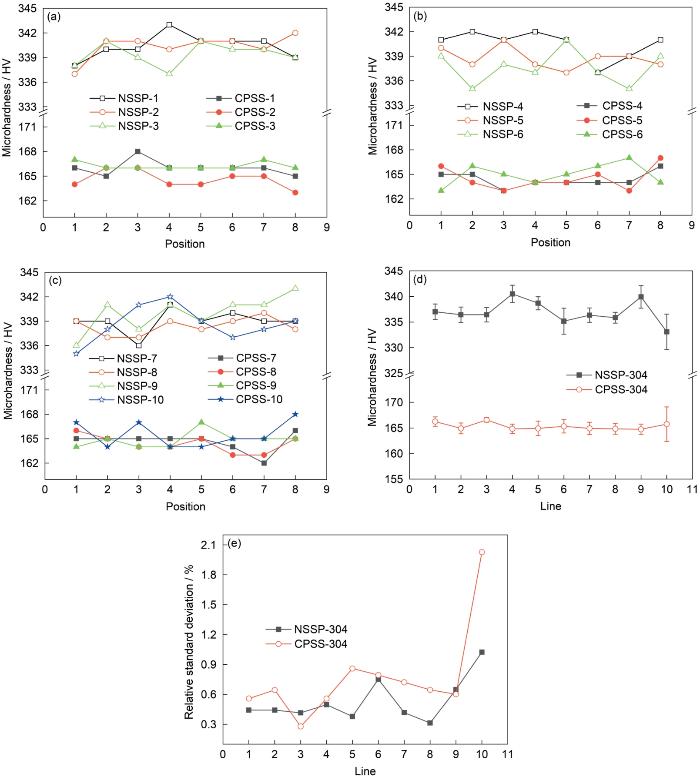
... 以CPSS-304 (热轧态圆棒材,直径35 mm)为原料,利用深度轧制技术制备NSSP-304的轧制工艺主要包括均匀化热处理(1000 ℃,5 h)、热轧(980~600 ℃)和空冷等.经过上述工艺制备的NSSP-304板材尺寸为2500 mm × 120 mm × 2.8 mm,具体步骤参见本文作者前期工作[16].NSSP-304与CPSS-304的化学成分(原子分数,%)为:C 0.0020,Si 0.85,Mn 1.85,P 0.045,S 0.028,Ni 9.03,Cr 18.24,Fe余量.NSSP-304和CPSS-304的晶粒尺寸分别为86~175 nm和80~130 µm[16].用于显微硬度测量的NSSP-304和CPSS-304试样的尺寸为15 mm ×11 mm × 2.0 mm.NSSP-304试样的15 mm × 11 mm面为其轧制面,CPSS-304试样的15 mm × 11 mm面平行于圆棒材轴向.测量显微硬度时,试样先依次用240、400、800、1200、2000号SiC砂纸研磨抛光,再采用颗粒度为1.5 µm的金刚石磨膏抛光.抛光后样品用蒸馏水清洗,丙酮脱脂,再用吹风机吹干.利用KB30SRFA自动显微Vickers硬度计测量样品显微硬度,载荷5 kg,停留时间15 s.本工作测量NSSP-304和CPSS-304相互垂直的三个面不同方向的显微硬度.三个面分别为RD-TD、RD-ND和ND-TD面(RD:轧制方向,TD:横向,ND:法向).在RD-TD面沿着10条线,在TD-ND和RD-ND面沿着两条线,测量各面的显微硬度,如图1所示. ...
... [16].用于显微硬度测量的NSSP-304和CPSS-304试样的尺寸为15 mm ×11 mm × 2.0 mm.NSSP-304试样的15 mm × 11 mm面为其轧制面,CPSS-304试样的15 mm × 11 mm面平行于圆棒材轴向.测量显微硬度时,试样先依次用240、400、800、1200、2000号SiC砂纸研磨抛光,再采用颗粒度为1.5 µm的金刚石磨膏抛光.抛光后样品用蒸馏水清洗,丙酮脱脂,再用吹风机吹干.利用KB30SRFA自动显微Vickers硬度计测量样品显微硬度,载荷5 kg,停留时间15 s.本工作测量NSSP-304和CPSS-304相互垂直的三个面不同方向的显微硬度.三个面分别为RD-TD、RD-ND和ND-TD面(RD:轧制方向,TD:横向,ND:法向).在RD-TD面沿着10条线,在TD-ND和RD-ND面沿着两条线,测量各面的显微硬度,如图1所示. ...
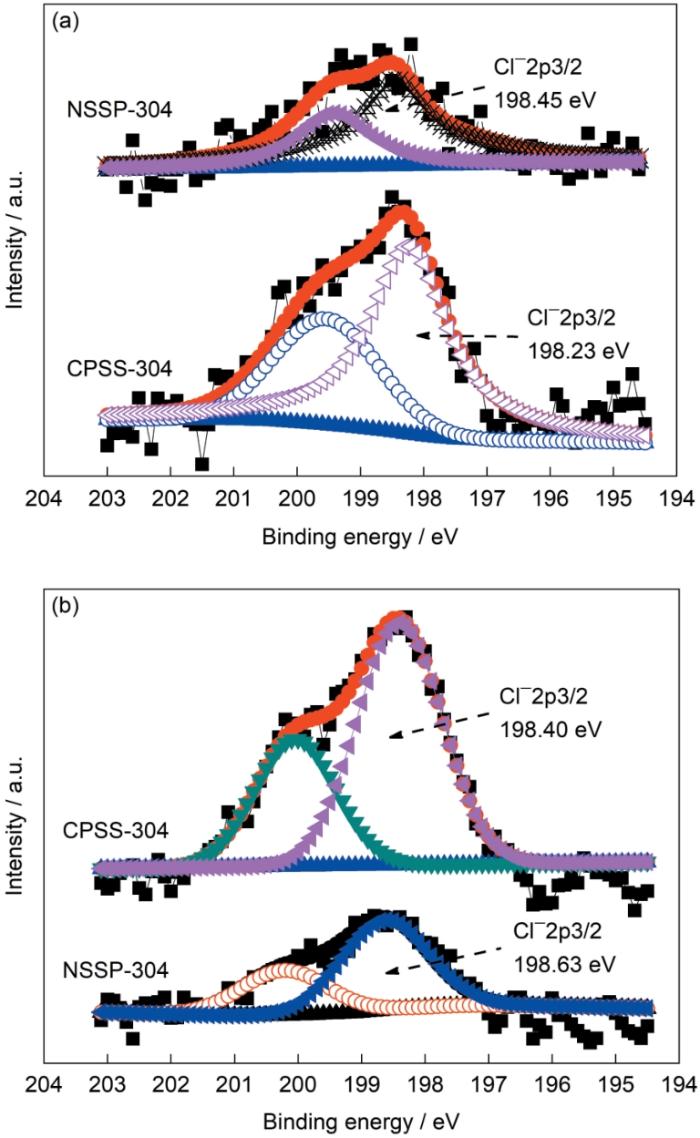
... 从图4d NSSP-304和CPSS-304样品在6%FeCl3溶液中浸泡的失重结果来看,CPSS-304样品单位面积失重随浸泡时间延长,斜率(即腐蚀速率,k1~k5)发生变化.这意味着其腐蚀速率随浸泡时间从k1 (3.42 mg/(h·cm2),0~3 h)、k2 (6.91 mg/(h·cm2),3~12 h)变化到k3 (11.50 mg/(h·cm2),12~18 h).随着浸泡时间延长,NSSP-304样品单位面积失重增加.0~3 h内,腐蚀速率k4为1.81 mg/(h·cm2);3~18 h内,腐蚀速率k5为4.13 mg/(h·cm2).由于k4和k5小于k1、k2和k3,而且从k4 k5的增量(2.32 mg/(h·cm2))明显小于从k1k2和从k2k3的增量(分别为3.49和4.59 mg/(h·cm2)),这说明NSSP-304样品均匀腐蚀的稳定性(腐蚀速率变化)和耐均匀腐蚀性能(腐蚀速率减小)同时提高.35 ℃浸泡18 h后,NSSP-304样品表面出现浅的点腐蚀孔洞(图4e).CPSS-304样品表面出现一条长而深的腐蚀沟槽,这是由许多沿同一方向且相邻点腐蚀孔洞演化而成的(图4f).因此,与CPSS-304样品相比,在6%FeCl3溶液中,NSSP-304样品的耐点蚀性能提高.304不锈钢的点腐蚀通常与其腐蚀表面Cl-吸附能力和化学活性有关[16].图5为恒电位极化(图5a)和浸泡实验(图5b)后,NSSP-304和CPSS-304样品腐蚀表面氧化膜的高分辨Cl-2p XPS.恒电位极化和浸泡实验后,NSSP-304样品腐蚀表面的Cl-2p3/2结合能分别比CPSS-304样品高0.22和0.23 eV.恒电位极化后,NSSP-304样品腐蚀表面Cl-的原子分数比CPSS-304样品低19.43%;浸泡实验后,NSSP-304样品腐蚀表面Cl-的原子分数比CPSS-304样品低6.73%.Cl-2p3/2结合能越大(Cl-的化学活性越低),Cl-的原子分数越低(腐蚀表面Cl-吸附能力越弱),点腐蚀阻力越高[16].两种溶液中,Cl-在NSSP-304样品腐蚀表面的吸附能力和化学活性都比Cl-在CPSS-304样品腐蚀表面弱.图5中氧化膜的Cl- XPS结果与图4b、c及图4e、f点腐蚀性能结果一致. ...
... [16].两种溶液中,Cl-在NSSP-304样品腐蚀表面的吸附能力和化学活性都比Cl-在CPSS-304样品腐蚀表面弱.图5中氧化膜的Cl- XPS结果与图4b、c及图4e、f点腐蚀性能结果一致. ...
... 大量研究表明,晶粒细化、高位错密度和形变孪晶不利于[32~34]或者有利于[35~37]材料显微硬度、力学性能和耐腐蚀性能的提高.因此,通过传统的微观结构参量(如晶粒尺寸、位错和孪晶等)理解力学(显微硬度)和耐腐蚀性能遇到困难,对于不同材料和实验条件会得出相互矛盾的结论.因此,304不锈钢传统的微观结构参量与硬度和耐腐蚀性能之间存在关联(能够影响显微硬度和耐腐蚀性能),但不是一一对应的本征关系.为了解决这个问题,需要采用新的材料微观结构参量代替传统的微观结构参量来理解和表征材料这两种性能[38].从材料原子尺度的角度,显微硬度与材料中原子之间的相互作用有关,这种相互作用本质上是金属材料中原子价电子之间的相互作用.材料的腐蚀过程涉及材料中原子的价电子与腐蚀介质中腐蚀性离子或者原子的价电子交换过程(通过电化学反应,材料中的原子变为离子,腐蚀介质中离子或者原子变成新的原子或者离子)[16,38].NSSP-304和CPSS-304紫外光电子能谱的结果[16]表明,与CPSS-304钢相比,NSSP-304功函数变大,金属原子(304不锈钢为Fe、Cr和Ni)的价电子结合能变大,高能级价电子的含量提高,低能级价电子的含量降低.因此,NSSP-304钢价电子结构意味着其原子间的相互作用更强,这表明NSSP-304钢具有更大的变形抗力和更高的显微硬度[39].同样,NSSP-304钢的价电子结构表明其价电子与腐蚀介质中离子或者原子的价电子交换阻力提高,即更大的金属原子转变为金属离子的阻力(耐腐蚀性能提高[16,38,40,41]).此外,如图4和5所示,NSSP-304样品在两种溶液中耐点腐蚀性能的提高也与Cl-在其腐蚀表面的吸附能力变弱、化学活性较低有关[16,38].材料在点腐蚀过程中,除了涉及氧化膜形成与破裂过程外,还涉及氧化膜破裂后的金属基体与腐蚀介质发生的电化学反应过程.因此,NSSP-304钢显微硬度和耐腐蚀性能的提高可以通过其价电子结构得到合理解释.从NSSP-304和CPSS-304钢微观组织以及两种材料的价电子结构[16]的角度,NSSP-304钢不同的微观组织(晶粒细化、形变孪晶、高密度位错和高LAGBs晶粒含量)导致其价电子结构不同于CPSS-304钢.本文作者前期研究了耐腐蚀性能(高温氧化、热腐蚀和电化学腐蚀)与材料(工业纯Fe、304不锈钢和纯Al)价电子结构之间的关系;并研究了304不锈钢价电子结构与其力学性能(拉伸和疲劳)之间的关系[16,44,40~43].结合这些前期工作及本工作结果,金属材料的价电子结构(功函数、价电子的结合能和不同能级价电子的含量等)有可能作为材料力学和耐腐蚀性能的本征参量,材料力学性能和耐腐蚀性能与其价电子结构可能存在相应的一一对应关系,避免通过传统的微观结构参量理解力学性能和耐腐蚀性能得出相互矛盾的结论[44].本文作者提出的材料价电子结构表征方法和相关观点已被用来理解其他金属材料的耐腐蚀性能(电化学腐蚀和高温氧化)及其机理[44~46]. ...
... [16]表明,与CPSS-304钢相比,NSSP-304功函数变大,金属原子(304不锈钢为Fe、Cr和Ni)的价电子结合能变大,高能级价电子的含量提高,低能级价电子的含量降低.因此,NSSP-304钢价电子结构意味着其原子间的相互作用更强,这表明NSSP-304钢具有更大的变形抗力和更高的显微硬度[39].同样,NSSP-304钢的价电子结构表明其价电子与腐蚀介质中离子或者原子的价电子交换阻力提高,即更大的金属原子转变为金属离子的阻力(耐腐蚀性能提高[16,38,40,41]).此外,如图4和5所示,NSSP-304样品在两种溶液中耐点腐蚀性能的提高也与Cl-在其腐蚀表面的吸附能力变弱、化学活性较低有关[16,38].材料在点腐蚀过程中,除了涉及氧化膜形成与破裂过程外,还涉及氧化膜破裂后的金属基体与腐蚀介质发生的电化学反应过程.因此,NSSP-304钢显微硬度和耐腐蚀性能的提高可以通过其价电子结构得到合理解释.从NSSP-304和CPSS-304钢微观组织以及两种材料的价电子结构[16]的角度,NSSP-304钢不同的微观组织(晶粒细化、形变孪晶、高密度位错和高LAGBs晶粒含量)导致其价电子结构不同于CPSS-304钢.本文作者前期研究了耐腐蚀性能(高温氧化、热腐蚀和电化学腐蚀)与材料(工业纯Fe、304不锈钢和纯Al)价电子结构之间的关系;并研究了304不锈钢价电子结构与其力学性能(拉伸和疲劳)之间的关系[16,44,40~43].结合这些前期工作及本工作结果,金属材料的价电子结构(功函数、价电子的结合能和不同能级价电子的含量等)有可能作为材料力学和耐腐蚀性能的本征参量,材料力学性能和耐腐蚀性能与其价电子结构可能存在相应的一一对应关系,避免通过传统的微观结构参量理解力学性能和耐腐蚀性能得出相互矛盾的结论[44].本文作者提出的材料价电子结构表征方法和相关观点已被用来理解其他金属材料的耐腐蚀性能(电化学腐蚀和高温氧化)及其机理[44~46]. ...
... [16,38,40,41]).此外,如图4和5所示,NSSP-304样品在两种溶液中耐点腐蚀性能的提高也与Cl-在其腐蚀表面的吸附能力变弱、化学活性较低有关[16,38].材料在点腐蚀过程中,除了涉及氧化膜形成与破裂过程外,还涉及氧化膜破裂后的金属基体与腐蚀介质发生的电化学反应过程.因此,NSSP-304钢显微硬度和耐腐蚀性能的提高可以通过其价电子结构得到合理解释.从NSSP-304和CPSS-304钢微观组织以及两种材料的价电子结构[16]的角度,NSSP-304钢不同的微观组织(晶粒细化、形变孪晶、高密度位错和高LAGBs晶粒含量)导致其价电子结构不同于CPSS-304钢.本文作者前期研究了耐腐蚀性能(高温氧化、热腐蚀和电化学腐蚀)与材料(工业纯Fe、304不锈钢和纯Al)价电子结构之间的关系;并研究了304不锈钢价电子结构与其力学性能(拉伸和疲劳)之间的关系[16,44,40~43].结合这些前期工作及本工作结果,金属材料的价电子结构(功函数、价电子的结合能和不同能级价电子的含量等)有可能作为材料力学和耐腐蚀性能的本征参量,材料力学性能和耐腐蚀性能与其价电子结构可能存在相应的一一对应关系,避免通过传统的微观结构参量理解力学性能和耐腐蚀性能得出相互矛盾的结论[44].本文作者提出的材料价电子结构表征方法和相关观点已被用来理解其他金属材料的耐腐蚀性能(电化学腐蚀和高温氧化)及其机理[44~46]. ...
... [16,38].材料在点腐蚀过程中,除了涉及氧化膜形成与破裂过程外,还涉及氧化膜破裂后的金属基体与腐蚀介质发生的电化学反应过程.因此,NSSP-304钢显微硬度和耐腐蚀性能的提高可以通过其价电子结构得到合理解释.从NSSP-304和CPSS-304钢微观组织以及两种材料的价电子结构[16]的角度,NSSP-304钢不同的微观组织(晶粒细化、形变孪晶、高密度位错和高LAGBs晶粒含量)导致其价电子结构不同于CPSS-304钢.本文作者前期研究了耐腐蚀性能(高温氧化、热腐蚀和电化学腐蚀)与材料(工业纯Fe、304不锈钢和纯Al)价电子结构之间的关系;并研究了304不锈钢价电子结构与其力学性能(拉伸和疲劳)之间的关系[16,44,40~43].结合这些前期工作及本工作结果,金属材料的价电子结构(功函数、价电子的结合能和不同能级价电子的含量等)有可能作为材料力学和耐腐蚀性能的本征参量,材料力学性能和耐腐蚀性能与其价电子结构可能存在相应的一一对应关系,避免通过传统的微观结构参量理解力学性能和耐腐蚀性能得出相互矛盾的结论[44].本文作者提出的材料价电子结构表征方法和相关观点已被用来理解其他金属材料的耐腐蚀性能(电化学腐蚀和高温氧化)及其机理[44~46]. ...
... [16]的角度,NSSP-304钢不同的微观组织(晶粒细化、形变孪晶、高密度位错和高LAGBs晶粒含量)导致其价电子结构不同于CPSS-304钢.本文作者前期研究了耐腐蚀性能(高温氧化、热腐蚀和电化学腐蚀)与材料(工业纯Fe、304不锈钢和纯Al)价电子结构之间的关系;并研究了304不锈钢价电子结构与其力学性能(拉伸和疲劳)之间的关系[16,44,40~43].结合这些前期工作及本工作结果,金属材料的价电子结构(功函数、价电子的结合能和不同能级价电子的含量等)有可能作为材料力学和耐腐蚀性能的本征参量,材料力学性能和耐腐蚀性能与其价电子结构可能存在相应的一一对应关系,避免通过传统的微观结构参量理解力学性能和耐腐蚀性能得出相互矛盾的结论[44].本文作者提出的材料价电子结构表征方法和相关观点已被用来理解其他金属材料的耐腐蚀性能(电化学腐蚀和高温氧化)及其机理[44~46]. ...
... [16,44,40~43].结合这些前期工作及本工作结果,金属材料的价电子结构(功函数、价电子的结合能和不同能级价电子的含量等)有可能作为材料力学和耐腐蚀性能的本征参量,材料力学性能和耐腐蚀性能与其价电子结构可能存在相应的一一对应关系,避免通过传统的微观结构参量理解力学性能和耐腐蚀性能得出相互矛盾的结论[44].本文作者提出的材料价电子结构表征方法和相关观点已被用来理解其他金属材料的耐腐蚀性能(电化学腐蚀和高温氧化)及其机理[44~46]. ...
Study of cold rolling on the transformation mechanism, microstructure, and properties of 304 austenitic stainless steel
1
2022
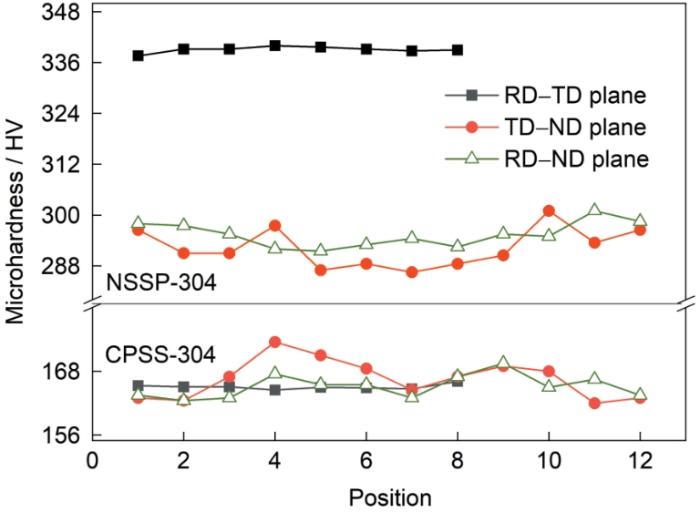
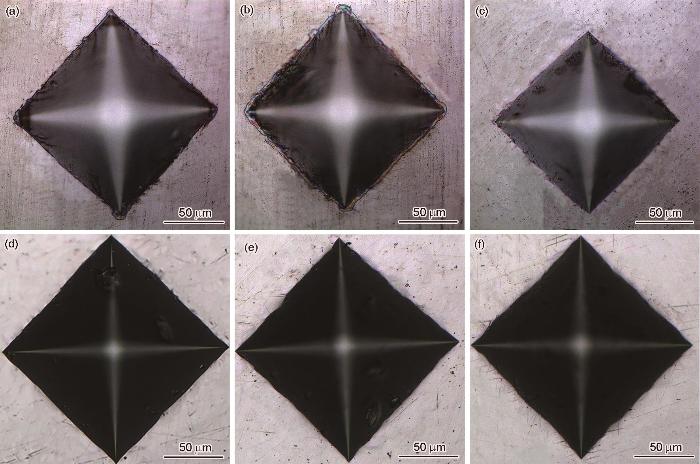
... 为了进一步理解NSSP-304和CPSS-304样品的显微硬度分布,图6给出两种材料RD-TD面10条线和另外两个面两条线上相同测量编号的显微硬度平均值(例如,图1a中10条线上编号为1的显微硬度平均值;图1b和c中两条线上相同编号的显微硬度平均值).从图2、3和6可以看出,NSSP-304样品RD-TD面不同方向的显微硬度平均值基本相同,没有明显波动,CPSS-304样品也是如此.NSSP-304和CPSS-304样品其他两个面硬度的RDV和RSD值分别大于各自RD-TD面的RDV和RSD值.因此,NSSP-304样品除了轧制面显微硬度分布均匀性提高外,其他两个面的显微硬度分布均匀性没有恶化.NSSP-304样品三个面的显微硬度平均值均大于CPSS-304样品.CPSS-304样品三个面的显微硬度平均值基本相同(分别为165、166和167 HV),NSSP-304样品ND-RD和TD-ND面的显微硬度平均值接近相同(292和296 HV).NSSP-304样品RD-TD面的平均显微硬度比其他两个面高约40 HV.由于NSSP-304样品两个面显微硬度的RSD和RDV变小,且范围变窄,其三个面的显微硬度分布比CPSS-304更均匀[17].图7为NSSP-304和CPSS-304样品三个面显微硬度测量时的压痕形貌.NSSP-304样品三个压痕对角线长度分别为180和178 µm (图7a,TD-ND面),177和178 µm (图7b,RD-ND面),及163和161 µm (图7c,RD-TD面).CPSS-304样品三个压痕对角线长度分别为216和218 µm (图7d,TD-ND面),219和217 µm (图7e,RD-ND面),及214和216 µm (图7f, RD-TD面).RD-TD面压痕直径低于其他两个面14~19 µm之间,其他两个面的压痕直径差在1~3 µm.CPSS-304样品三个面压痕直径差在1~3 µm之间,NSSP-304样品三个面压痕的对角线长度小于CPSS-304样品34~58 µm.NSSP-304和CPSS-304样品压痕对角线长度与显微硬度测量结果一致. ...
Effect of ECAP die angle on mechanical properties and biocompatibility of SS316L
1
2021
... 显微硬度分布的均匀性有利于材料的力学性能和耐腐蚀性能.其他纳米/超微晶材料,经两种不同模角(120°和126°)等通道角挤压后,SS316L不锈钢显微硬度的σ值分别为16和19 HV,RSD值分别为3.64%和4.28%[18].等通道角挤压后Ti-13Nb-13Zr合金的σ和RSD值分别为26.5 HV和9.74%[19].旋压法制备的纳米多层0.08C-18Cr-0.5Ti钢/V-10Ti-5Cr合金/0.08C-18Cr-0.5Ti钢复合材料,两个钢层的显微硬度为5.7~6.3 GPa,中间层的显微硬度为4.4~5.2 GPa[20].利用等通道角挤压技术制备的亚微米晶粒304不锈钢显微硬度的σ值约为20 HV[21].本工作中,NSSP-304样品三个面显微硬度的σ和RSD值均小于这些等通道角挤压和旋压技术制备的合金.因此,与其他压力加工技术相比,深度轧制技术能够提高NSSP-304样品三个相互垂直面显微硬度分布的均匀性.这是深度轧制技术与其他块体纳米晶金属材料制备技术的不同之处. ...
Microstructure and mechanical properties evolution of Ti-13Nb-13Zr alloy processed by ECAP-conform and rotary swaging
1
2023
... 显微硬度分布的均匀性有利于材料的力学性能和耐腐蚀性能.其他纳米/超微晶材料,经两种不同模角(120°和126°)等通道角挤压后,SS316L不锈钢显微硬度的σ值分别为16和19 HV,RSD值分别为3.64%和4.28%[18].等通道角挤压后Ti-13Nb-13Zr合金的σ和RSD值分别为26.5 HV和9.74%[19].旋压法制备的纳米多层0.08C-18Cr-0.5Ti钢/V-10Ti-5Cr合金/0.08C-18Cr-0.5Ti钢复合材料,两个钢层的显微硬度为5.7~6.3 GPa,中间层的显微硬度为4.4~5.2 GPa[20].利用等通道角挤压技术制备的亚微米晶粒304不锈钢显微硬度的σ值约为20 HV[21].本工作中,NSSP-304样品三个面显微硬度的σ和RSD值均小于这些等通道角挤压和旋压技术制备的合金.因此,与其他压力加工技术相比,深度轧制技术能够提高NSSP-304样品三个相互垂直面显微硬度分布的均匀性.这是深度轧制技术与其他块体纳米晶金属材料制备技术的不同之处. ...
Multilayer “steel/vanadium alloy/steel” hybrid material obtained by high-pressure torsion at different temperatures
1
2017
... 显微硬度分布的均匀性有利于材料的力学性能和耐腐蚀性能.其他纳米/超微晶材料,经两种不同模角(120°和126°)等通道角挤压后,SS316L不锈钢显微硬度的σ值分别为16和19 HV,RSD值分别为3.64%和4.28%[18].等通道角挤压后Ti-13Nb-13Zr合金的σ和RSD值分别为26.5 HV和9.74%[19].旋压法制备的纳米多层0.08C-18Cr-0.5Ti钢/V-10Ti-5Cr合金/0.08C-18Cr-0.5Ti钢复合材料,两个钢层的显微硬度为5.7~6.3 GPa,中间层的显微硬度为4.4~5.2 GPa[20].利用等通道角挤压技术制备的亚微米晶粒304不锈钢显微硬度的σ值约为20 HV[21].本工作中,NSSP-304样品三个面显微硬度的σ和RSD值均小于这些等通道角挤压和旋压技术制备的合金.因此,与其他压力加工技术相比,深度轧制技术能够提高NSSP-304样品三个相互垂直面显微硬度分布的均匀性.这是深度轧制技术与其他块体纳米晶金属材料制备技术的不同之处. ...
Interrelationship between hydrogen and α′-martensite of SUS 304 austenitic stainless steel revealed by tensile tests
1
2022
... 显微硬度分布的均匀性有利于材料的力学性能和耐腐蚀性能.其他纳米/超微晶材料,经两种不同模角(120°和126°)等通道角挤压后,SS316L不锈钢显微硬度的σ值分别为16和19 HV,RSD值分别为3.64%和4.28%[18].等通道角挤压后Ti-13Nb-13Zr合金的σ和RSD值分别为26.5 HV和9.74%[19].旋压法制备的纳米多层0.08C-18Cr-0.5Ti钢/V-10Ti-5Cr合金/0.08C-18Cr-0.5Ti钢复合材料,两个钢层的显微硬度为5.7~6.3 GPa,中间层的显微硬度为4.4~5.2 GPa[20].利用等通道角挤压技术制备的亚微米晶粒304不锈钢显微硬度的σ值约为20 HV[21].本工作中,NSSP-304样品三个面显微硬度的σ和RSD值均小于这些等通道角挤压和旋压技术制备的合金.因此,与其他压力加工技术相比,深度轧制技术能够提高NSSP-304样品三个相互垂直面显微硬度分布的均匀性.这是深度轧制技术与其他块体纳米晶金属材料制备技术的不同之处. ...
Predictive modelling of microstructure changes, micro-hardness and residual stress in machining of 304 austenitic stainless steel
1
2018
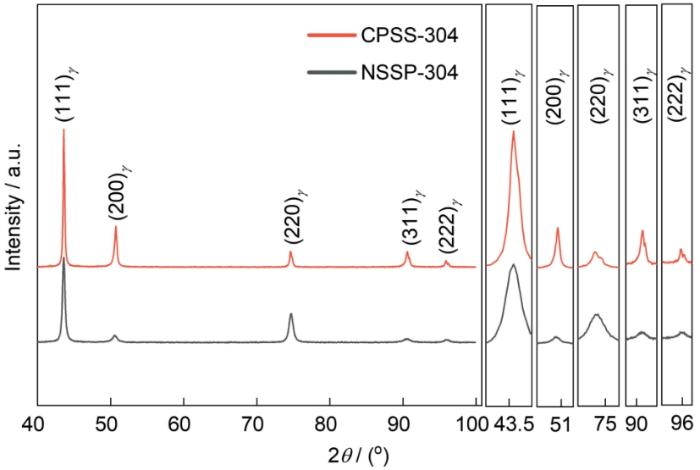
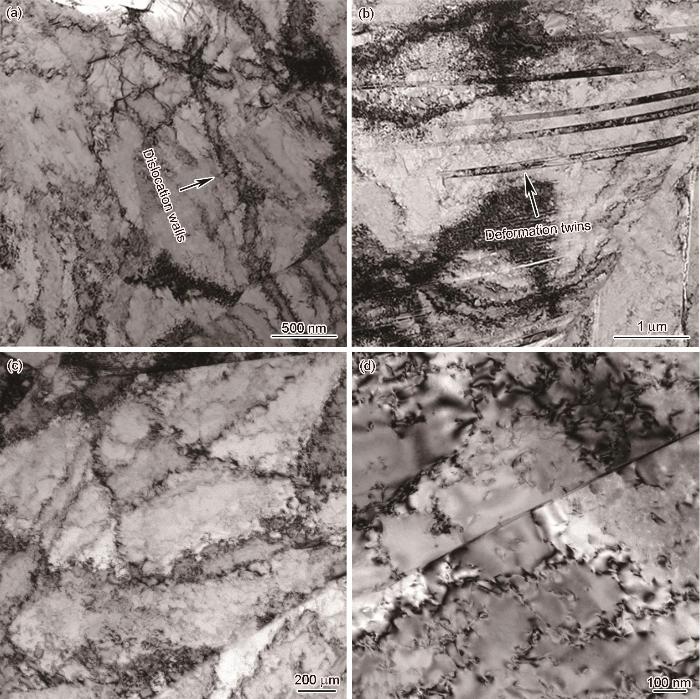
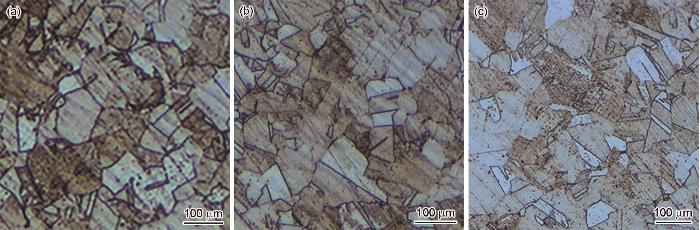
... Zhang等[22]研究表明,304不锈钢中马氏体相和奥氏体相的显微硬度分别约为571和190 HV.304不锈钢通常含有奥氏体相,在形变和其他工艺处理后含有奥氏体和马氏体相[23].严重塑性形变技术制备的块体纳米/超微晶304不锈钢通常会产生马氏体.虽然马氏体有利于提高材料的强度和硬度,但不利于材料的耐腐蚀性能和塑性.多数块体纳米/超微晶304不锈钢需要相应的热处理以兼顾强度与塑性.深度轧制后的NSSP-304板材无后续热处理.本工作的所有实验样品都是从NSSP-304板材切割后,直接进行相关表征和测量.NSSP-304和CPSS-304样品的XRD结果(图8)表明,NSSP-304和CPSS-304样品中只有奥氏体相,没有马氏体相.因此,NSSP-304样品显微硬度的提高与马氏体相无关.这是深度轧制技术与其他严重塑性形变技术制备纳米/超微晶304不锈钢的不同之处.NSSP-304样品的RD-TD面存在高密度位错墙和形变孪晶(图9a和b).图9c和d分别为NSSP-304样品RD-ND面和TD-ND面的TEM像.在NSSP-304样品的RD-ND面和TD-ND面没有观察到孪晶,多数为细长晶粒,两个面的晶粒尺寸均大于RD-TD面的晶粒尺寸.图10为CPSS-304样品RD-TD面、RD-ND面和TD-ND面显微组织的OM像.可见,CPSS-304样品的平均晶粒尺寸相同,晶粒形貌相同.三个面(图10)没有孪晶和高密度位错.这是因为CPSS-304圆棒材通过850 ℃热轧后空冷获得.图8~10中,NSSP-304和CPSS-304样品只含有奥氏体组织,没有观察和测量到马氏体组织和析出相.因此,通过XRD (图8)、TEM (图9)和OM (图10)表征,NSSP-304样品三个面微观组织存在差别,但是CPSS-304样品三个面微观组织无差别.NSSP-304样品三个面的微观结构不同于CPSS-304样品相应三个面的微观结构. ...
Improvement of strength-ductility balance of SAE 304 stainless steel by asymmetric cross rolling
1
2020
... Zhang等[22]研究表明,304不锈钢中马氏体相和奥氏体相的显微硬度分别约为571和190 HV.304不锈钢通常含有奥氏体相,在形变和其他工艺处理后含有奥氏体和马氏体相[23].严重塑性形变技术制备的块体纳米/超微晶304不锈钢通常会产生马氏体.虽然马氏体有利于提高材料的强度和硬度,但不利于材料的耐腐蚀性能和塑性.多数块体纳米/超微晶304不锈钢需要相应的热处理以兼顾强度与塑性.深度轧制后的NSSP-304板材无后续热处理.本工作的所有实验样品都是从NSSP-304板材切割后,直接进行相关表征和测量.NSSP-304和CPSS-304样品的XRD结果(图8)表明,NSSP-304和CPSS-304样品中只有奥氏体相,没有马氏体相.因此,NSSP-304样品显微硬度的提高与马氏体相无关.这是深度轧制技术与其他严重塑性形变技术制备纳米/超微晶304不锈钢的不同之处.NSSP-304样品的RD-TD面存在高密度位错墙和形变孪晶(图9a和b).图9c和d分别为NSSP-304样品RD-ND面和TD-ND面的TEM像.在NSSP-304样品的RD-ND面和TD-ND面没有观察到孪晶,多数为细长晶粒,两个面的晶粒尺寸均大于RD-TD面的晶粒尺寸.图10为CPSS-304样品RD-TD面、RD-ND面和TD-ND面显微组织的OM像.可见,CPSS-304样品的平均晶粒尺寸相同,晶粒形貌相同.三个面(图10)没有孪晶和高密度位错.这是因为CPSS-304圆棒材通过850 ℃热轧后空冷获得.图8~10中,NSSP-304和CPSS-304样品只含有奥氏体组织,没有观察和测量到马氏体组织和析出相.因此,通过XRD (图8)、TEM (图9)和OM (图10)表征,NSSP-304样品三个面微观组织存在差别,但是CPSS-304样品三个面微观组织无差别.NSSP-304样品三个面的微观结构不同于CPSS-304样品相应三个面的微观结构. ...
Microstructure characteristics and mechanical properties of fiber-diode hybrid laser welded 304 austenitic stainless steel
1
2022
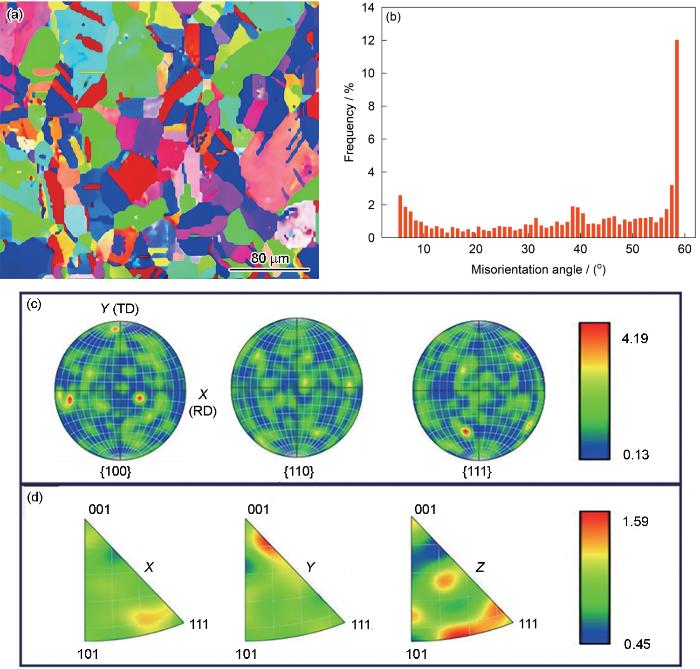
... NSSP-304样品三个面中,两个面的显微硬度基本相同,轧制面(RD-TD面)略高于其他两个面;而CPSS-304样品三个面的显微硬度基本相同.这与NSSP-304和CPSS-304样品的织构不同有关[24].图11和12分别给出了NSSP-304和CPSS-304样品晶粒取向、取向角分布及{100}、{110}和{111}极图和反极图.极图和反极图的不同颜色表示织构变化.由图11和12可知,NSSP-304和CPSS-304样品的最大极密度分别为7.54和4.19,织构指数(TI)分别为3.8和1.2.TI越大,织构强度越高,TI = 1说明晶粒随机取向,无织构[25,26].图11和12表明,(1) NSSP-304样品小角度晶界(LAGBs,5°~15°)的晶粒含量高(48.3%),大角度晶界(HAGBs,> 15°)的晶粒含量低(51.7%);(2) CPSS-304样品LAGBs晶粒含量低(10.3%),HAGBs晶粒含量高(89.7%);(3) CPSS-304样品的晶粒取向(TI ≈ 1)基本随机,这是热轧工艺造成的;(4) NSSP-304样品存在织构({110}<211>).因此,NSSP-304样品RD-TD面平均显微硬度较大与NSSP-304织构有关.图11和12中NSSP-304和CPSS-304样品的EBSD结果与图2、3和6中的显微硬度一致.研究[27~31]表明,NSSP-304样品晶粒细化和形变孪晶,以及较高的位错密度(位错墙)和LAGBs晶粒含量提高了材料的显微硬度.NSSP-304样品在TD-ND面和RD-ND面出现细长晶粒导致织构的形成,这是TD-ND面与RD-ND面的显微硬度基本相同,而RD-TD面的显微硬度高于其他两个面40 HV的原因. ...
Fine-grained microstructure without texture obtained by electron beam powder bed fusion for AISI 304 L-based stainless steel
1
2023
... NSSP-304样品三个面中,两个面的显微硬度基本相同,轧制面(RD-TD面)略高于其他两个面;而CPSS-304样品三个面的显微硬度基本相同.这与NSSP-304和CPSS-304样品的织构不同有关[24].图11和12分别给出了NSSP-304和CPSS-304样品晶粒取向、取向角分布及{100}、{110}和{111}极图和反极图.极图和反极图的不同颜色表示织构变化.由图11和12可知,NSSP-304和CPSS-304样品的最大极密度分别为7.54和4.19,织构指数(TI)分别为3.8和1.2.TI越大,织构强度越高,TI = 1说明晶粒随机取向,无织构[25,26].图11和12表明,(1) NSSP-304样品小角度晶界(LAGBs,5°~15°)的晶粒含量高(48.3%),大角度晶界(HAGBs,> 15°)的晶粒含量低(51.7%);(2) CPSS-304样品LAGBs晶粒含量低(10.3%),HAGBs晶粒含量高(89.7%);(3) CPSS-304样品的晶粒取向(TI ≈ 1)基本随机,这是热轧工艺造成的;(4) NSSP-304样品存在织构({110}<211>).因此,NSSP-304样品RD-TD面平均显微硬度较大与NSSP-304织构有关.图11和12中NSSP-304和CPSS-304样品的EBSD结果与图2、3和6中的显微硬度一致.研究[27~31]表明,NSSP-304样品晶粒细化和形变孪晶,以及较高的位错密度(位错墙)和LAGBs晶粒含量提高了材料的显微硬度.NSSP-304样品在TD-ND面和RD-ND面出现细长晶粒导致织构的形成,这是TD-ND面与RD-ND面的显微硬度基本相同,而RD-TD面的显微硬度高于其他两个面40 HV的原因. ...
Flow characteristics and microstructural evolution in pulsed current assisted micro-scaled compression of stainless steel sheet
1
2021
... NSSP-304样品三个面中,两个面的显微硬度基本相同,轧制面(RD-TD面)略高于其他两个面;而CPSS-304样品三个面的显微硬度基本相同.这与NSSP-304和CPSS-304样品的织构不同有关[24].图11和12分别给出了NSSP-304和CPSS-304样品晶粒取向、取向角分布及{100}、{110}和{111}极图和反极图.极图和反极图的不同颜色表示织构变化.由图11和12可知,NSSP-304和CPSS-304样品的最大极密度分别为7.54和4.19,织构指数(TI)分别为3.8和1.2.TI越大,织构强度越高,TI = 1说明晶粒随机取向,无织构[25,26].图11和12表明,(1) NSSP-304样品小角度晶界(LAGBs,5°~15°)的晶粒含量高(48.3%),大角度晶界(HAGBs,> 15°)的晶粒含量低(51.7%);(2) CPSS-304样品LAGBs晶粒含量低(10.3%),HAGBs晶粒含量高(89.7%);(3) CPSS-304样品的晶粒取向(TI ≈ 1)基本随机,这是热轧工艺造成的;(4) NSSP-304样品存在织构({110}<211>).因此,NSSP-304样品RD-TD面平均显微硬度较大与NSSP-304织构有关.图11和12中NSSP-304和CPSS-304样品的EBSD结果与图2、3和6中的显微硬度一致.研究[27~31]表明,NSSP-304样品晶粒细化和形变孪晶,以及较高的位错密度(位错墙)和LAGBs晶粒含量提高了材料的显微硬度.NSSP-304样品在TD-ND面和RD-ND面出现细长晶粒导致织构的形成,这是TD-ND面与RD-ND面的显微硬度基本相同,而RD-TD面的显微硬度高于其他两个面40 HV的原因. ...
Microstructure, dislocation density and microhardness of 1%C-doped CoCrFeNi complex concentrated alloys during isochronal annealing
1
2023
... NSSP-304样品三个面中,两个面的显微硬度基本相同,轧制面(RD-TD面)略高于其他两个面;而CPSS-304样品三个面的显微硬度基本相同.这与NSSP-304和CPSS-304样品的织构不同有关[24].图11和12分别给出了NSSP-304和CPSS-304样品晶粒取向、取向角分布及{100}、{110}和{111}极图和反极图.极图和反极图的不同颜色表示织构变化.由图11和12可知,NSSP-304和CPSS-304样品的最大极密度分别为7.54和4.19,织构指数(TI)分别为3.8和1.2.TI越大,织构强度越高,TI = 1说明晶粒随机取向,无织构[25,26].图11和12表明,(1) NSSP-304样品小角度晶界(LAGBs,5°~15°)的晶粒含量高(48.3%),大角度晶界(HAGBs,> 15°)的晶粒含量低(51.7%);(2) CPSS-304样品LAGBs晶粒含量低(10.3%),HAGBs晶粒含量高(89.7%);(3) CPSS-304样品的晶粒取向(TI ≈ 1)基本随机,这是热轧工艺造成的;(4) NSSP-304样品存在织构({110}<211>).因此,NSSP-304样品RD-TD面平均显微硬度较大与NSSP-304织构有关.图11和12中NSSP-304和CPSS-304样品的EBSD结果与图2、3和6中的显微硬度一致.研究[27~31]表明,NSSP-304样品晶粒细化和形变孪晶,以及较高的位错密度(位错墙)和LAGBs晶粒含量提高了材料的显微硬度.NSSP-304样品在TD-ND面和RD-ND面出现细长晶粒导致织构的形成,这是TD-ND面与RD-ND面的显微硬度基本相同,而RD-TD面的显微硬度高于其他两个面40 HV的原因. ...
Microstructure, microhardness and residual stress of laser additive manufactured CoCrFeMnNi high-entropy alloy subjected to laser shock peening
0
2020
Effect of laser peening without coating on mechanical and microstructural behaviour of SS 304 stainless steel
0
2022
On multiaxial creep-fatigue considering the non-proportional loading effect: Constitutive modeling, deformation mechanism, and life prediction
0
2022
Deformation-induced phase transition and nanotwins in SS 304 steel during cryogenic laser shock peening without coating
1
2022
... NSSP-304样品三个面中,两个面的显微硬度基本相同,轧制面(RD-TD面)略高于其他两个面;而CPSS-304样品三个面的显微硬度基本相同.这与NSSP-304和CPSS-304样品的织构不同有关[24].图11和12分别给出了NSSP-304和CPSS-304样品晶粒取向、取向角分布及{100}、{110}和{111}极图和反极图.极图和反极图的不同颜色表示织构变化.由图11和12可知,NSSP-304和CPSS-304样品的最大极密度分别为7.54和4.19,织构指数(TI)分别为3.8和1.2.TI越大,织构强度越高,TI = 1说明晶粒随机取向,无织构[25,26].图11和12表明,(1) NSSP-304样品小角度晶界(LAGBs,5°~15°)的晶粒含量高(48.3%),大角度晶界(HAGBs,> 15°)的晶粒含量低(51.7%);(2) CPSS-304样品LAGBs晶粒含量低(10.3%),HAGBs晶粒含量高(89.7%);(3) CPSS-304样品的晶粒取向(TI ≈ 1)基本随机,这是热轧工艺造成的;(4) NSSP-304样品存在织构({110}<211>).因此,NSSP-304样品RD-TD面平均显微硬度较大与NSSP-304织构有关.图11和12中NSSP-304和CPSS-304样品的EBSD结果与图2、3和6中的显微硬度一致.研究[27~31]表明,NSSP-304样品晶粒细化和形变孪晶,以及较高的位错密度(位错墙)和LAGBs晶粒含量提高了材料的显微硬度.NSSP-304样品在TD-ND面和RD-ND面出现细长晶粒导致织构的形成,这是TD-ND面与RD-ND面的显微硬度基本相同,而RD-TD面的显微硬度高于其他两个面40 HV的原因. ...
Hardness, microstructure and texture of friction surfaced 17-4PH precipitation hardening stainless steel coatings with and without subsequent aging
1
2020
... 大量研究表明,晶粒细化、高位错密度和形变孪晶不利于[32~34]或者有利于[35~37]材料显微硬度、力学性能和耐腐蚀性能的提高.因此,通过传统的微观结构参量(如晶粒尺寸、位错和孪晶等)理解力学(显微硬度)和耐腐蚀性能遇到困难,对于不同材料和实验条件会得出相互矛盾的结论.因此,304不锈钢传统的微观结构参量与硬度和耐腐蚀性能之间存在关联(能够影响显微硬度和耐腐蚀性能),但不是一一对应的本征关系.为了解决这个问题,需要采用新的材料微观结构参量代替传统的微观结构参量来理解和表征材料这两种性能[38].从材料原子尺度的角度,显微硬度与材料中原子之间的相互作用有关,这种相互作用本质上是金属材料中原子价电子之间的相互作用.材料的腐蚀过程涉及材料中原子的价电子与腐蚀介质中腐蚀性离子或者原子的价电子交换过程(通过电化学反应,材料中的原子变为离子,腐蚀介质中离子或者原子变成新的原子或者离子)[16,38].NSSP-304和CPSS-304紫外光电子能谱的结果[16]表明,与CPSS-304钢相比,NSSP-304功函数变大,金属原子(304不锈钢为Fe、Cr和Ni)的价电子结合能变大,高能级价电子的含量提高,低能级价电子的含量降低.因此,NSSP-304钢价电子结构意味着其原子间的相互作用更强,这表明NSSP-304钢具有更大的变形抗力和更高的显微硬度[39].同样,NSSP-304钢的价电子结构表明其价电子与腐蚀介质中离子或者原子的价电子交换阻力提高,即更大的金属原子转变为金属离子的阻力(耐腐蚀性能提高[16,38,40,41]).此外,如图4和5所示,NSSP-304样品在两种溶液中耐点腐蚀性能的提高也与Cl-在其腐蚀表面的吸附能力变弱、化学活性较低有关[16,38].材料在点腐蚀过程中,除了涉及氧化膜形成与破裂过程外,还涉及氧化膜破裂后的金属基体与腐蚀介质发生的电化学反应过程.因此,NSSP-304钢显微硬度和耐腐蚀性能的提高可以通过其价电子结构得到合理解释.从NSSP-304和CPSS-304钢微观组织以及两种材料的价电子结构[16]的角度,NSSP-304钢不同的微观组织(晶粒细化、形变孪晶、高密度位错和高LAGBs晶粒含量)导致其价电子结构不同于CPSS-304钢.本文作者前期研究了耐腐蚀性能(高温氧化、热腐蚀和电化学腐蚀)与材料(工业纯Fe、304不锈钢和纯Al)价电子结构之间的关系;并研究了304不锈钢价电子结构与其力学性能(拉伸和疲劳)之间的关系[16,44,40~43].结合这些前期工作及本工作结果,金属材料的价电子结构(功函数、价电子的结合能和不同能级价电子的含量等)有可能作为材料力学和耐腐蚀性能的本征参量,材料力学性能和耐腐蚀性能与其价电子结构可能存在相应的一一对应关系,避免通过传统的微观结构参量理解力学性能和耐腐蚀性能得出相互矛盾的结论[44].本文作者提出的材料价电子结构表征方法和相关观点已被用来理解其他金属材料的耐腐蚀性能(电化学腐蚀和高温氧化)及其机理[44~46]. ...
High-speed perforation of high-entropy alloy CrMnFeCoNi plates: Experiments and modeling
0
2024
General corrosion behavior and mechanism of low-temperature plasma nitrided 17-4PH stainless steel in high temperature water
1
2024
... 大量研究表明,晶粒细化、高位错密度和形变孪晶不利于[32~34]或者有利于[35~37]材料显微硬度、力学性能和耐腐蚀性能的提高.因此,通过传统的微观结构参量(如晶粒尺寸、位错和孪晶等)理解力学(显微硬度)和耐腐蚀性能遇到困难,对于不同材料和实验条件会得出相互矛盾的结论.因此,304不锈钢传统的微观结构参量与硬度和耐腐蚀性能之间存在关联(能够影响显微硬度和耐腐蚀性能),但不是一一对应的本征关系.为了解决这个问题,需要采用新的材料微观结构参量代替传统的微观结构参量来理解和表征材料这两种性能[38].从材料原子尺度的角度,显微硬度与材料中原子之间的相互作用有关,这种相互作用本质上是金属材料中原子价电子之间的相互作用.材料的腐蚀过程涉及材料中原子的价电子与腐蚀介质中腐蚀性离子或者原子的价电子交换过程(通过电化学反应,材料中的原子变为离子,腐蚀介质中离子或者原子变成新的原子或者离子)[16,38].NSSP-304和CPSS-304紫外光电子能谱的结果[16]表明,与CPSS-304钢相比,NSSP-304功函数变大,金属原子(304不锈钢为Fe、Cr和Ni)的价电子结合能变大,高能级价电子的含量提高,低能级价电子的含量降低.因此,NSSP-304钢价电子结构意味着其原子间的相互作用更强,这表明NSSP-304钢具有更大的变形抗力和更高的显微硬度[39].同样,NSSP-304钢的价电子结构表明其价电子与腐蚀介质中离子或者原子的价电子交换阻力提高,即更大的金属原子转变为金属离子的阻力(耐腐蚀性能提高[16,38,40,41]).此外,如图4和5所示,NSSP-304样品在两种溶液中耐点腐蚀性能的提高也与Cl-在其腐蚀表面的吸附能力变弱、化学活性较低有关[16,38].材料在点腐蚀过程中,除了涉及氧化膜形成与破裂过程外,还涉及氧化膜破裂后的金属基体与腐蚀介质发生的电化学反应过程.因此,NSSP-304钢显微硬度和耐腐蚀性能的提高可以通过其价电子结构得到合理解释.从NSSP-304和CPSS-304钢微观组织以及两种材料的价电子结构[16]的角度,NSSP-304钢不同的微观组织(晶粒细化、形变孪晶、高密度位错和高LAGBs晶粒含量)导致其价电子结构不同于CPSS-304钢.本文作者前期研究了耐腐蚀性能(高温氧化、热腐蚀和电化学腐蚀)与材料(工业纯Fe、304不锈钢和纯Al)价电子结构之间的关系;并研究了304不锈钢价电子结构与其力学性能(拉伸和疲劳)之间的关系[16,44,40~43].结合这些前期工作及本工作结果,金属材料的价电子结构(功函数、价电子的结合能和不同能级价电子的含量等)有可能作为材料力学和耐腐蚀性能的本征参量,材料力学性能和耐腐蚀性能与其价电子结构可能存在相应的一一对应关系,避免通过传统的微观结构参量理解力学性能和耐腐蚀性能得出相互矛盾的结论[44].本文作者提出的材料价电子结构表征方法和相关观点已被用来理解其他金属材料的耐腐蚀性能(电化学腐蚀和高温氧化)及其机理[44~46]. ...
Enhance corrosion resistance of 304 stainless steel using nanosecond pulsed laser surface processing
1
2023
... 大量研究表明,晶粒细化、高位错密度和形变孪晶不利于[32~34]或者有利于[35~37]材料显微硬度、力学性能和耐腐蚀性能的提高.因此,通过传统的微观结构参量(如晶粒尺寸、位错和孪晶等)理解力学(显微硬度)和耐腐蚀性能遇到困难,对于不同材料和实验条件会得出相互矛盾的结论.因此,304不锈钢传统的微观结构参量与硬度和耐腐蚀性能之间存在关联(能够影响显微硬度和耐腐蚀性能),但不是一一对应的本征关系.为了解决这个问题,需要采用新的材料微观结构参量代替传统的微观结构参量来理解和表征材料这两种性能[38].从材料原子尺度的角度,显微硬度与材料中原子之间的相互作用有关,这种相互作用本质上是金属材料中原子价电子之间的相互作用.材料的腐蚀过程涉及材料中原子的价电子与腐蚀介质中腐蚀性离子或者原子的价电子交换过程(通过电化学反应,材料中的原子变为离子,腐蚀介质中离子或者原子变成新的原子或者离子)[16,38].NSSP-304和CPSS-304紫外光电子能谱的结果[16]表明,与CPSS-304钢相比,NSSP-304功函数变大,金属原子(304不锈钢为Fe、Cr和Ni)的价电子结合能变大,高能级价电子的含量提高,低能级价电子的含量降低.因此,NSSP-304钢价电子结构意味着其原子间的相互作用更强,这表明NSSP-304钢具有更大的变形抗力和更高的显微硬度[39].同样,NSSP-304钢的价电子结构表明其价电子与腐蚀介质中离子或者原子的价电子交换阻力提高,即更大的金属原子转变为金属离子的阻力(耐腐蚀性能提高[16,38,40,41]).此外,如图4和5所示,NSSP-304样品在两种溶液中耐点腐蚀性能的提高也与Cl-在其腐蚀表面的吸附能力变弱、化学活性较低有关[16,38].材料在点腐蚀过程中,除了涉及氧化膜形成与破裂过程外,还涉及氧化膜破裂后的金属基体与腐蚀介质发生的电化学反应过程.因此,NSSP-304钢显微硬度和耐腐蚀性能的提高可以通过其价电子结构得到合理解释.从NSSP-304和CPSS-304钢微观组织以及两种材料的价电子结构[16]的角度,NSSP-304钢不同的微观组织(晶粒细化、形变孪晶、高密度位错和高LAGBs晶粒含量)导致其价电子结构不同于CPSS-304钢.本文作者前期研究了耐腐蚀性能(高温氧化、热腐蚀和电化学腐蚀)与材料(工业纯Fe、304不锈钢和纯Al)价电子结构之间的关系;并研究了304不锈钢价电子结构与其力学性能(拉伸和疲劳)之间的关系[16,44,40~43].结合这些前期工作及本工作结果,金属材料的价电子结构(功函数、价电子的结合能和不同能级价电子的含量等)有可能作为材料力学和耐腐蚀性能的本征参量,材料力学性能和耐腐蚀性能与其价电子结构可能存在相应的一一对应关系,避免通过传统的微观结构参量理解力学性能和耐腐蚀性能得出相互矛盾的结论[44].本文作者提出的材料价电子结构表征方法和相关观点已被用来理解其他金属材料的耐腐蚀性能(电化学腐蚀和高温氧化)及其机理[44~46]. ...
The response of 316L steel manufactured by selective laser melting route to high-temperature oxidation behaviour: The role of microstructure modification
0
2024
Corrosion damage repair of 7075-T6 aluminum alloy by ultrasonic nanocrystal surface modification
1
2023
... 大量研究表明,晶粒细化、高位错密度和形变孪晶不利于[32~34]或者有利于[35~37]材料显微硬度、力学性能和耐腐蚀性能的提高.因此,通过传统的微观结构参量(如晶粒尺寸、位错和孪晶等)理解力学(显微硬度)和耐腐蚀性能遇到困难,对于不同材料和实验条件会得出相互矛盾的结论.因此,304不锈钢传统的微观结构参量与硬度和耐腐蚀性能之间存在关联(能够影响显微硬度和耐腐蚀性能),但不是一一对应的本征关系.为了解决这个问题,需要采用新的材料微观结构参量代替传统的微观结构参量来理解和表征材料这两种性能[38].从材料原子尺度的角度,显微硬度与材料中原子之间的相互作用有关,这种相互作用本质上是金属材料中原子价电子之间的相互作用.材料的腐蚀过程涉及材料中原子的价电子与腐蚀介质中腐蚀性离子或者原子的价电子交换过程(通过电化学反应,材料中的原子变为离子,腐蚀介质中离子或者原子变成新的原子或者离子)[16,38].NSSP-304和CPSS-304紫外光电子能谱的结果[16]表明,与CPSS-304钢相比,NSSP-304功函数变大,金属原子(304不锈钢为Fe、Cr和Ni)的价电子结合能变大,高能级价电子的含量提高,低能级价电子的含量降低.因此,NSSP-304钢价电子结构意味着其原子间的相互作用更强,这表明NSSP-304钢具有更大的变形抗力和更高的显微硬度[39].同样,NSSP-304钢的价电子结构表明其价电子与腐蚀介质中离子或者原子的价电子交换阻力提高,即更大的金属原子转变为金属离子的阻力(耐腐蚀性能提高[16,38,40,41]).此外,如图4和5所示,NSSP-304样品在两种溶液中耐点腐蚀性能的提高也与Cl-在其腐蚀表面的吸附能力变弱、化学活性较低有关[16,38].材料在点腐蚀过程中,除了涉及氧化膜形成与破裂过程外,还涉及氧化膜破裂后的金属基体与腐蚀介质发生的电化学反应过程.因此,NSSP-304钢显微硬度和耐腐蚀性能的提高可以通过其价电子结构得到合理解释.从NSSP-304和CPSS-304钢微观组织以及两种材料的价电子结构[16]的角度,NSSP-304钢不同的微观组织(晶粒细化、形变孪晶、高密度位错和高LAGBs晶粒含量)导致其价电子结构不同于CPSS-304钢.本文作者前期研究了耐腐蚀性能(高温氧化、热腐蚀和电化学腐蚀)与材料(工业纯Fe、304不锈钢和纯Al)价电子结构之间的关系;并研究了304不锈钢价电子结构与其力学性能(拉伸和疲劳)之间的关系[16,44,40~43].结合这些前期工作及本工作结果,金属材料的价电子结构(功函数、价电子的结合能和不同能级价电子的含量等)有可能作为材料力学和耐腐蚀性能的本征参量,材料力学性能和耐腐蚀性能与其价电子结构可能存在相应的一一对应关系,避免通过传统的微观结构参量理解力学性能和耐腐蚀性能得出相互矛盾的结论[44].本文作者提出的材料价电子结构表征方法和相关观点已被用来理解其他金属材料的耐腐蚀性能(电化学腐蚀和高温氧化)及其机理[44~46]. ...
Synchronous optimization of strengths, ductility and corrosion resistances of bulk nanocrystalline 304 stainless steel
4
2020
... 大量研究表明,晶粒细化、高位错密度和形变孪晶不利于[32~34]或者有利于[35~37]材料显微硬度、力学性能和耐腐蚀性能的提高.因此,通过传统的微观结构参量(如晶粒尺寸、位错和孪晶等)理解力学(显微硬度)和耐腐蚀性能遇到困难,对于不同材料和实验条件会得出相互矛盾的结论.因此,304不锈钢传统的微观结构参量与硬度和耐腐蚀性能之间存在关联(能够影响显微硬度和耐腐蚀性能),但不是一一对应的本征关系.为了解决这个问题,需要采用新的材料微观结构参量代替传统的微观结构参量来理解和表征材料这两种性能[38].从材料原子尺度的角度,显微硬度与材料中原子之间的相互作用有关,这种相互作用本质上是金属材料中原子价电子之间的相互作用.材料的腐蚀过程涉及材料中原子的价电子与腐蚀介质中腐蚀性离子或者原子的价电子交换过程(通过电化学反应,材料中的原子变为离子,腐蚀介质中离子或者原子变成新的原子或者离子)[16,38].NSSP-304和CPSS-304紫外光电子能谱的结果[16]表明,与CPSS-304钢相比,NSSP-304功函数变大,金属原子(304不锈钢为Fe、Cr和Ni)的价电子结合能变大,高能级价电子的含量提高,低能级价电子的含量降低.因此,NSSP-304钢价电子结构意味着其原子间的相互作用更强,这表明NSSP-304钢具有更大的变形抗力和更高的显微硬度[39].同样,NSSP-304钢的价电子结构表明其价电子与腐蚀介质中离子或者原子的价电子交换阻力提高,即更大的金属原子转变为金属离子的阻力(耐腐蚀性能提高[16,38,40,41]).此外,如图4和5所示,NSSP-304样品在两种溶液中耐点腐蚀性能的提高也与Cl-在其腐蚀表面的吸附能力变弱、化学活性较低有关[16,38].材料在点腐蚀过程中,除了涉及氧化膜形成与破裂过程外,还涉及氧化膜破裂后的金属基体与腐蚀介质发生的电化学反应过程.因此,NSSP-304钢显微硬度和耐腐蚀性能的提高可以通过其价电子结构得到合理解释.从NSSP-304和CPSS-304钢微观组织以及两种材料的价电子结构[16]的角度,NSSP-304钢不同的微观组织(晶粒细化、形变孪晶、高密度位错和高LAGBs晶粒含量)导致其价电子结构不同于CPSS-304钢.本文作者前期研究了耐腐蚀性能(高温氧化、热腐蚀和电化学腐蚀)与材料(工业纯Fe、304不锈钢和纯Al)价电子结构之间的关系;并研究了304不锈钢价电子结构与其力学性能(拉伸和疲劳)之间的关系[16,44,40~43].结合这些前期工作及本工作结果,金属材料的价电子结构(功函数、价电子的结合能和不同能级价电子的含量等)有可能作为材料力学和耐腐蚀性能的本征参量,材料力学性能和耐腐蚀性能与其价电子结构可能存在相应的一一对应关系,避免通过传统的微观结构参量理解力学性能和耐腐蚀性能得出相互矛盾的结论[44].本文作者提出的材料价电子结构表征方法和相关观点已被用来理解其他金属材料的耐腐蚀性能(电化学腐蚀和高温氧化)及其机理[44~46]. ...
... ,38].NSSP-304和CPSS-304紫外光电子能谱的结果[16]表明,与CPSS-304钢相比,NSSP-304功函数变大,金属原子(304不锈钢为Fe、Cr和Ni)的价电子结合能变大,高能级价电子的含量提高,低能级价电子的含量降低.因此,NSSP-304钢价电子结构意味着其原子间的相互作用更强,这表明NSSP-304钢具有更大的变形抗力和更高的显微硬度[39].同样,NSSP-304钢的价电子结构表明其价电子与腐蚀介质中离子或者原子的价电子交换阻力提高,即更大的金属原子转变为金属离子的阻力(耐腐蚀性能提高[16,38,40,41]).此外,如图4和5所示,NSSP-304样品在两种溶液中耐点腐蚀性能的提高也与Cl-在其腐蚀表面的吸附能力变弱、化学活性较低有关[16,38].材料在点腐蚀过程中,除了涉及氧化膜形成与破裂过程外,还涉及氧化膜破裂后的金属基体与腐蚀介质发生的电化学反应过程.因此,NSSP-304钢显微硬度和耐腐蚀性能的提高可以通过其价电子结构得到合理解释.从NSSP-304和CPSS-304钢微观组织以及两种材料的价电子结构[16]的角度,NSSP-304钢不同的微观组织(晶粒细化、形变孪晶、高密度位错和高LAGBs晶粒含量)导致其价电子结构不同于CPSS-304钢.本文作者前期研究了耐腐蚀性能(高温氧化、热腐蚀和电化学腐蚀)与材料(工业纯Fe、304不锈钢和纯Al)价电子结构之间的关系;并研究了304不锈钢价电子结构与其力学性能(拉伸和疲劳)之间的关系[16,44,40~43].结合这些前期工作及本工作结果,金属材料的价电子结构(功函数、价电子的结合能和不同能级价电子的含量等)有可能作为材料力学和耐腐蚀性能的本征参量,材料力学性能和耐腐蚀性能与其价电子结构可能存在相应的一一对应关系,避免通过传统的微观结构参量理解力学性能和耐腐蚀性能得出相互矛盾的结论[44].本文作者提出的材料价电子结构表征方法和相关观点已被用来理解其他金属材料的耐腐蚀性能(电化学腐蚀和高温氧化)及其机理[44~46]. ...
... ,38,40,41]).此外,如图4和5所示,NSSP-304样品在两种溶液中耐点腐蚀性能的提高也与Cl-在其腐蚀表面的吸附能力变弱、化学活性较低有关[16,38].材料在点腐蚀过程中,除了涉及氧化膜形成与破裂过程外,还涉及氧化膜破裂后的金属基体与腐蚀介质发生的电化学反应过程.因此,NSSP-304钢显微硬度和耐腐蚀性能的提高可以通过其价电子结构得到合理解释.从NSSP-304和CPSS-304钢微观组织以及两种材料的价电子结构[16]的角度,NSSP-304钢不同的微观组织(晶粒细化、形变孪晶、高密度位错和高LAGBs晶粒含量)导致其价电子结构不同于CPSS-304钢.本文作者前期研究了耐腐蚀性能(高温氧化、热腐蚀和电化学腐蚀)与材料(工业纯Fe、304不锈钢和纯Al)价电子结构之间的关系;并研究了304不锈钢价电子结构与其力学性能(拉伸和疲劳)之间的关系[16,44,40~43].结合这些前期工作及本工作结果,金属材料的价电子结构(功函数、价电子的结合能和不同能级价电子的含量等)有可能作为材料力学和耐腐蚀性能的本征参量,材料力学性能和耐腐蚀性能与其价电子结构可能存在相应的一一对应关系,避免通过传统的微观结构参量理解力学性能和耐腐蚀性能得出相互矛盾的结论[44].本文作者提出的材料价电子结构表征方法和相关观点已被用来理解其他金属材料的耐腐蚀性能(电化学腐蚀和高温氧化)及其机理[44~46]. ...
... ,38].材料在点腐蚀过程中,除了涉及氧化膜形成与破裂过程外,还涉及氧化膜破裂后的金属基体与腐蚀介质发生的电化学反应过程.因此,NSSP-304钢显微硬度和耐腐蚀性能的提高可以通过其价电子结构得到合理解释.从NSSP-304和CPSS-304钢微观组织以及两种材料的价电子结构[16]的角度,NSSP-304钢不同的微观组织(晶粒细化、形变孪晶、高密度位错和高LAGBs晶粒含量)导致其价电子结构不同于CPSS-304钢.本文作者前期研究了耐腐蚀性能(高温氧化、热腐蚀和电化学腐蚀)与材料(工业纯Fe、304不锈钢和纯Al)价电子结构之间的关系;并研究了304不锈钢价电子结构与其力学性能(拉伸和疲劳)之间的关系[16,44,40~43].结合这些前期工作及本工作结果,金属材料的价电子结构(功函数、价电子的结合能和不同能级价电子的含量等)有可能作为材料力学和耐腐蚀性能的本征参量,材料力学性能和耐腐蚀性能与其价电子结构可能存在相应的一一对应关系,避免通过传统的微观结构参量理解力学性能和耐腐蚀性能得出相互矛盾的结论[44].本文作者提出的材料价电子结构表征方法和相关观点已被用来理解其他金属材料的耐腐蚀性能(电化学腐蚀和高温氧化)及其机理[44~46]. ...
Development of strength-hardness relationships in additively manufactured titanium alloys
1
2017
... 大量研究表明,晶粒细化、高位错密度和形变孪晶不利于[32~34]或者有利于[35~37]材料显微硬度、力学性能和耐腐蚀性能的提高.因此,通过传统的微观结构参量(如晶粒尺寸、位错和孪晶等)理解力学(显微硬度)和耐腐蚀性能遇到困难,对于不同材料和实验条件会得出相互矛盾的结论.因此,304不锈钢传统的微观结构参量与硬度和耐腐蚀性能之间存在关联(能够影响显微硬度和耐腐蚀性能),但不是一一对应的本征关系.为了解决这个问题,需要采用新的材料微观结构参量代替传统的微观结构参量来理解和表征材料这两种性能[38].从材料原子尺度的角度,显微硬度与材料中原子之间的相互作用有关,这种相互作用本质上是金属材料中原子价电子之间的相互作用.材料的腐蚀过程涉及材料中原子的价电子与腐蚀介质中腐蚀性离子或者原子的价电子交换过程(通过电化学反应,材料中的原子变为离子,腐蚀介质中离子或者原子变成新的原子或者离子)[16,38].NSSP-304和CPSS-304紫外光电子能谱的结果[16]表明,与CPSS-304钢相比,NSSP-304功函数变大,金属原子(304不锈钢为Fe、Cr和Ni)的价电子结合能变大,高能级价电子的含量提高,低能级价电子的含量降低.因此,NSSP-304钢价电子结构意味着其原子间的相互作用更强,这表明NSSP-304钢具有更大的变形抗力和更高的显微硬度[39].同样,NSSP-304钢的价电子结构表明其价电子与腐蚀介质中离子或者原子的价电子交换阻力提高,即更大的金属原子转变为金属离子的阻力(耐腐蚀性能提高[16,38,40,41]).此外,如图4和5所示,NSSP-304样品在两种溶液中耐点腐蚀性能的提高也与Cl-在其腐蚀表面的吸附能力变弱、化学活性较低有关[16,38].材料在点腐蚀过程中,除了涉及氧化膜形成与破裂过程外,还涉及氧化膜破裂后的金属基体与腐蚀介质发生的电化学反应过程.因此,NSSP-304钢显微硬度和耐腐蚀性能的提高可以通过其价电子结构得到合理解释.从NSSP-304和CPSS-304钢微观组织以及两种材料的价电子结构[16]的角度,NSSP-304钢不同的微观组织(晶粒细化、形变孪晶、高密度位错和高LAGBs晶粒含量)导致其价电子结构不同于CPSS-304钢.本文作者前期研究了耐腐蚀性能(高温氧化、热腐蚀和电化学腐蚀)与材料(工业纯Fe、304不锈钢和纯Al)价电子结构之间的关系;并研究了304不锈钢价电子结构与其力学性能(拉伸和疲劳)之间的关系[16,44,40~43].结合这些前期工作及本工作结果,金属材料的价电子结构(功函数、价电子的结合能和不同能级价电子的含量等)有可能作为材料力学和耐腐蚀性能的本征参量,材料力学性能和耐腐蚀性能与其价电子结构可能存在相应的一一对应关系,避免通过传统的微观结构参量理解力学性能和耐腐蚀性能得出相互矛盾的结论[44].本文作者提出的材料价电子结构表征方法和相关观点已被用来理解其他金属材料的耐腐蚀性能(电化学腐蚀和高温氧化)及其机理[44~46]. ...
The electrochemical corrosion of bulk nanocrystalline ingot iron in HCl solutions with different concentrations
2
2011
... 大量研究表明,晶粒细化、高位错密度和形变孪晶不利于[32~34]或者有利于[35~37]材料显微硬度、力学性能和耐腐蚀性能的提高.因此,通过传统的微观结构参量(如晶粒尺寸、位错和孪晶等)理解力学(显微硬度)和耐腐蚀性能遇到困难,对于不同材料和实验条件会得出相互矛盾的结论.因此,304不锈钢传统的微观结构参量与硬度和耐腐蚀性能之间存在关联(能够影响显微硬度和耐腐蚀性能),但不是一一对应的本征关系.为了解决这个问题,需要采用新的材料微观结构参量代替传统的微观结构参量来理解和表征材料这两种性能[38].从材料原子尺度的角度,显微硬度与材料中原子之间的相互作用有关,这种相互作用本质上是金属材料中原子价电子之间的相互作用.材料的腐蚀过程涉及材料中原子的价电子与腐蚀介质中腐蚀性离子或者原子的价电子交换过程(通过电化学反应,材料中的原子变为离子,腐蚀介质中离子或者原子变成新的原子或者离子)[16,38].NSSP-304和CPSS-304紫外光电子能谱的结果[16]表明,与CPSS-304钢相比,NSSP-304功函数变大,金属原子(304不锈钢为Fe、Cr和Ni)的价电子结合能变大,高能级价电子的含量提高,低能级价电子的含量降低.因此,NSSP-304钢价电子结构意味着其原子间的相互作用更强,这表明NSSP-304钢具有更大的变形抗力和更高的显微硬度[39].同样,NSSP-304钢的价电子结构表明其价电子与腐蚀介质中离子或者原子的价电子交换阻力提高,即更大的金属原子转变为金属离子的阻力(耐腐蚀性能提高[16,38,40,41]).此外,如图4和5所示,NSSP-304样品在两种溶液中耐点腐蚀性能的提高也与Cl-在其腐蚀表面的吸附能力变弱、化学活性较低有关[16,38].材料在点腐蚀过程中,除了涉及氧化膜形成与破裂过程外,还涉及氧化膜破裂后的金属基体与腐蚀介质发生的电化学反应过程.因此,NSSP-304钢显微硬度和耐腐蚀性能的提高可以通过其价电子结构得到合理解释.从NSSP-304和CPSS-304钢微观组织以及两种材料的价电子结构[16]的角度,NSSP-304钢不同的微观组织(晶粒细化、形变孪晶、高密度位错和高LAGBs晶粒含量)导致其价电子结构不同于CPSS-304钢.本文作者前期研究了耐腐蚀性能(高温氧化、热腐蚀和电化学腐蚀)与材料(工业纯Fe、304不锈钢和纯Al)价电子结构之间的关系;并研究了304不锈钢价电子结构与其力学性能(拉伸和疲劳)之间的关系[16,44,40~43].结合这些前期工作及本工作结果,金属材料的价电子结构(功函数、价电子的结合能和不同能级价电子的含量等)有可能作为材料力学和耐腐蚀性能的本征参量,材料力学性能和耐腐蚀性能与其价电子结构可能存在相应的一一对应关系,避免通过传统的微观结构参量理解力学性能和耐腐蚀性能得出相互矛盾的结论[44].本文作者提出的材料价电子结构表征方法和相关观点已被用来理解其他金属材料的耐腐蚀性能(电化学腐蚀和高温氧化)及其机理[44~46]. ...
... ,40~43].结合这些前期工作及本工作结果,金属材料的价电子结构(功函数、价电子的结合能和不同能级价电子的含量等)有可能作为材料力学和耐腐蚀性能的本征参量,材料力学性能和耐腐蚀性能与其价电子结构可能存在相应的一一对应关系,避免通过传统的微观结构参量理解力学性能和耐腐蚀性能得出相互矛盾的结论[44].本文作者提出的材料价电子结构表征方法和相关观点已被用来理解其他金属材料的耐腐蚀性能(电化学腐蚀和高温氧化)及其机理[44~46]. ...
The high-temperature oxidation of bulk nanocrystalline 304 stainless steel in air
1
2013
... 大量研究表明,晶粒细化、高位错密度和形变孪晶不利于[32~34]或者有利于[35~37]材料显微硬度、力学性能和耐腐蚀性能的提高.因此,通过传统的微观结构参量(如晶粒尺寸、位错和孪晶等)理解力学(显微硬度)和耐腐蚀性能遇到困难,对于不同材料和实验条件会得出相互矛盾的结论.因此,304不锈钢传统的微观结构参量与硬度和耐腐蚀性能之间存在关联(能够影响显微硬度和耐腐蚀性能),但不是一一对应的本征关系.为了解决这个问题,需要采用新的材料微观结构参量代替传统的微观结构参量来理解和表征材料这两种性能[38].从材料原子尺度的角度,显微硬度与材料中原子之间的相互作用有关,这种相互作用本质上是金属材料中原子价电子之间的相互作用.材料的腐蚀过程涉及材料中原子的价电子与腐蚀介质中腐蚀性离子或者原子的价电子交换过程(通过电化学反应,材料中的原子变为离子,腐蚀介质中离子或者原子变成新的原子或者离子)[16,38].NSSP-304和CPSS-304紫外光电子能谱的结果[16]表明,与CPSS-304钢相比,NSSP-304功函数变大,金属原子(304不锈钢为Fe、Cr和Ni)的价电子结合能变大,高能级价电子的含量提高,低能级价电子的含量降低.因此,NSSP-304钢价电子结构意味着其原子间的相互作用更强,这表明NSSP-304钢具有更大的变形抗力和更高的显微硬度[39].同样,NSSP-304钢的价电子结构表明其价电子与腐蚀介质中离子或者原子的价电子交换阻力提高,即更大的金属原子转变为金属离子的阻力(耐腐蚀性能提高[16,38,40,41]).此外,如图4和5所示,NSSP-304样品在两种溶液中耐点腐蚀性能的提高也与Cl-在其腐蚀表面的吸附能力变弱、化学活性较低有关[16,38].材料在点腐蚀过程中,除了涉及氧化膜形成与破裂过程外,还涉及氧化膜破裂后的金属基体与腐蚀介质发生的电化学反应过程.因此,NSSP-304钢显微硬度和耐腐蚀性能的提高可以通过其价电子结构得到合理解释.从NSSP-304和CPSS-304钢微观组织以及两种材料的价电子结构[16]的角度,NSSP-304钢不同的微观组织(晶粒细化、形变孪晶、高密度位错和高LAGBs晶粒含量)导致其价电子结构不同于CPSS-304钢.本文作者前期研究了耐腐蚀性能(高温氧化、热腐蚀和电化学腐蚀)与材料(工业纯Fe、304不锈钢和纯Al)价电子结构之间的关系;并研究了304不锈钢价电子结构与其力学性能(拉伸和疲劳)之间的关系[16,44,40~43].结合这些前期工作及本工作结果,金属材料的价电子结构(功函数、价电子的结合能和不同能级价电子的含量等)有可能作为材料力学和耐腐蚀性能的本征参量,材料力学性能和耐腐蚀性能与其价电子结构可能存在相应的一一对应关系,避免通过传统的微观结构参量理解力学性能和耐腐蚀性能得出相互矛盾的结论[44].本文作者提出的材料价电子结构表征方法和相关观点已被用来理解其他金属材料的耐腐蚀性能(电化学腐蚀和高温氧化)及其机理[44~46]. ...
The electrochemical corrosion characterization of bulk nanocrystalline aluminium by X-ray photoelectron spectroscopy and ultra-violet photoelectron spectroscopy
0
2014
The electrochemical corrosion of bulk nanocrystalline aluminum in acidic sodium sulfate solutions at room temperature
1
2015
... 大量研究表明,晶粒细化、高位错密度和形变孪晶不利于[32~34]或者有利于[35~37]材料显微硬度、力学性能和耐腐蚀性能的提高.因此,通过传统的微观结构参量(如晶粒尺寸、位错和孪晶等)理解力学(显微硬度)和耐腐蚀性能遇到困难,对于不同材料和实验条件会得出相互矛盾的结论.因此,304不锈钢传统的微观结构参量与硬度和耐腐蚀性能之间存在关联(能够影响显微硬度和耐腐蚀性能),但不是一一对应的本征关系.为了解决这个问题,需要采用新的材料微观结构参量代替传统的微观结构参量来理解和表征材料这两种性能[38].从材料原子尺度的角度,显微硬度与材料中原子之间的相互作用有关,这种相互作用本质上是金属材料中原子价电子之间的相互作用.材料的腐蚀过程涉及材料中原子的价电子与腐蚀介质中腐蚀性离子或者原子的价电子交换过程(通过电化学反应,材料中的原子变为离子,腐蚀介质中离子或者原子变成新的原子或者离子)[16,38].NSSP-304和CPSS-304紫外光电子能谱的结果[16]表明,与CPSS-304钢相比,NSSP-304功函数变大,金属原子(304不锈钢为Fe、Cr和Ni)的价电子结合能变大,高能级价电子的含量提高,低能级价电子的含量降低.因此,NSSP-304钢价电子结构意味着其原子间的相互作用更强,这表明NSSP-304钢具有更大的变形抗力和更高的显微硬度[39].同样,NSSP-304钢的价电子结构表明其价电子与腐蚀介质中离子或者原子的价电子交换阻力提高,即更大的金属原子转变为金属离子的阻力(耐腐蚀性能提高[16,38,40,41]).此外,如图4和5所示,NSSP-304样品在两种溶液中耐点腐蚀性能的提高也与Cl-在其腐蚀表面的吸附能力变弱、化学活性较低有关[16,38].材料在点腐蚀过程中,除了涉及氧化膜形成与破裂过程外,还涉及氧化膜破裂后的金属基体与腐蚀介质发生的电化学反应过程.因此,NSSP-304钢显微硬度和耐腐蚀性能的提高可以通过其价电子结构得到合理解释.从NSSP-304和CPSS-304钢微观组织以及两种材料的价电子结构[16]的角度,NSSP-304钢不同的微观组织(晶粒细化、形变孪晶、高密度位错和高LAGBs晶粒含量)导致其价电子结构不同于CPSS-304钢.本文作者前期研究了耐腐蚀性能(高温氧化、热腐蚀和电化学腐蚀)与材料(工业纯Fe、304不锈钢和纯Al)价电子结构之间的关系;并研究了304不锈钢价电子结构与其力学性能(拉伸和疲劳)之间的关系[16,44,40~43].结合这些前期工作及本工作结果,金属材料的价电子结构(功函数、价电子的结合能和不同能级价电子的含量等)有可能作为材料力学和耐腐蚀性能的本征参量,材料力学性能和耐腐蚀性能与其价电子结构可能存在相应的一一对应关系,避免通过传统的微观结构参量理解力学性能和耐腐蚀性能得出相互矛盾的结论[44].本文作者提出的材料价电子结构表征方法和相关观点已被用来理解其他金属材料的耐腐蚀性能(电化学腐蚀和高温氧化)及其机理[44~46]. ...
Oxidation behavior of the directed energy deposited 316L stainless steel in supercritical carbon dioxide environment: Effect of post-manufacturing heat treatment
3
2024
... 大量研究表明,晶粒细化、高位错密度和形变孪晶不利于[32~34]或者有利于[35~37]材料显微硬度、力学性能和耐腐蚀性能的提高.因此,通过传统的微观结构参量(如晶粒尺寸、位错和孪晶等)理解力学(显微硬度)和耐腐蚀性能遇到困难,对于不同材料和实验条件会得出相互矛盾的结论.因此,304不锈钢传统的微观结构参量与硬度和耐腐蚀性能之间存在关联(能够影响显微硬度和耐腐蚀性能),但不是一一对应的本征关系.为了解决这个问题,需要采用新的材料微观结构参量代替传统的微观结构参量来理解和表征材料这两种性能[38].从材料原子尺度的角度,显微硬度与材料中原子之间的相互作用有关,这种相互作用本质上是金属材料中原子价电子之间的相互作用.材料的腐蚀过程涉及材料中原子的价电子与腐蚀介质中腐蚀性离子或者原子的价电子交换过程(通过电化学反应,材料中的原子变为离子,腐蚀介质中离子或者原子变成新的原子或者离子)[16,38].NSSP-304和CPSS-304紫外光电子能谱的结果[16]表明,与CPSS-304钢相比,NSSP-304功函数变大,金属原子(304不锈钢为Fe、Cr和Ni)的价电子结合能变大,高能级价电子的含量提高,低能级价电子的含量降低.因此,NSSP-304钢价电子结构意味着其原子间的相互作用更强,这表明NSSP-304钢具有更大的变形抗力和更高的显微硬度[39].同样,NSSP-304钢的价电子结构表明其价电子与腐蚀介质中离子或者原子的价电子交换阻力提高,即更大的金属原子转变为金属离子的阻力(耐腐蚀性能提高[16,38,40,41]).此外,如图4和5所示,NSSP-304样品在两种溶液中耐点腐蚀性能的提高也与Cl-在其腐蚀表面的吸附能力变弱、化学活性较低有关[16,38].材料在点腐蚀过程中,除了涉及氧化膜形成与破裂过程外,还涉及氧化膜破裂后的金属基体与腐蚀介质发生的电化学反应过程.因此,NSSP-304钢显微硬度和耐腐蚀性能的提高可以通过其价电子结构得到合理解释.从NSSP-304和CPSS-304钢微观组织以及两种材料的价电子结构[16]的角度,NSSP-304钢不同的微观组织(晶粒细化、形变孪晶、高密度位错和高LAGBs晶粒含量)导致其价电子结构不同于CPSS-304钢.本文作者前期研究了耐腐蚀性能(高温氧化、热腐蚀和电化学腐蚀)与材料(工业纯Fe、304不锈钢和纯Al)价电子结构之间的关系;并研究了304不锈钢价电子结构与其力学性能(拉伸和疲劳)之间的关系[16,44,40~43].结合这些前期工作及本工作结果,金属材料的价电子结构(功函数、价电子的结合能和不同能级价电子的含量等)有可能作为材料力学和耐腐蚀性能的本征参量,材料力学性能和耐腐蚀性能与其价电子结构可能存在相应的一一对应关系,避免通过传统的微观结构参量理解力学性能和耐腐蚀性能得出相互矛盾的结论[44].本文作者提出的材料价电子结构表征方法和相关观点已被用来理解其他金属材料的耐腐蚀性能(电化学腐蚀和高温氧化)及其机理[44~46]. ...
... [44].本文作者提出的材料价电子结构表征方法和相关观点已被用来理解其他金属材料的耐腐蚀性能(电化学腐蚀和高温氧化)及其机理[44~46]. ...
... [44~46]. ...
Adsorption and diffusion behavior of Cl- on sputtering Fe-20Cr nanocrystalline thin film in acid solution (pH = 2)
0
2015
Enhancement of DC flashover voltage of epoxy insulators and gap breakdown voltage in SF6 gas by direct fluorination of metal electrodes
1
2024
... 大量研究表明,晶粒细化、高位错密度和形变孪晶不利于[32~34]或者有利于[35~37]材料显微硬度、力学性能和耐腐蚀性能的提高.因此,通过传统的微观结构参量(如晶粒尺寸、位错和孪晶等)理解力学(显微硬度)和耐腐蚀性能遇到困难,对于不同材料和实验条件会得出相互矛盾的结论.因此,304不锈钢传统的微观结构参量与硬度和耐腐蚀性能之间存在关联(能够影响显微硬度和耐腐蚀性能),但不是一一对应的本征关系.为了解决这个问题,需要采用新的材料微观结构参量代替传统的微观结构参量来理解和表征材料这两种性能[38].从材料原子尺度的角度,显微硬度与材料中原子之间的相互作用有关,这种相互作用本质上是金属材料中原子价电子之间的相互作用.材料的腐蚀过程涉及材料中原子的价电子与腐蚀介质中腐蚀性离子或者原子的价电子交换过程(通过电化学反应,材料中的原子变为离子,腐蚀介质中离子或者原子变成新的原子或者离子)[16,38].NSSP-304和CPSS-304紫外光电子能谱的结果[16]表明,与CPSS-304钢相比,NSSP-304功函数变大,金属原子(304不锈钢为Fe、Cr和Ni)的价电子结合能变大,高能级价电子的含量提高,低能级价电子的含量降低.因此,NSSP-304钢价电子结构意味着其原子间的相互作用更强,这表明NSSP-304钢具有更大的变形抗力和更高的显微硬度[39].同样,NSSP-304钢的价电子结构表明其价电子与腐蚀介质中离子或者原子的价电子交换阻力提高,即更大的金属原子转变为金属离子的阻力(耐腐蚀性能提高[16,38,40,41]).此外,如图4和5所示,NSSP-304样品在两种溶液中耐点腐蚀性能的提高也与Cl-在其腐蚀表面的吸附能力变弱、化学活性较低有关[16,38].材料在点腐蚀过程中,除了涉及氧化膜形成与破裂过程外,还涉及氧化膜破裂后的金属基体与腐蚀介质发生的电化学反应过程.因此,NSSP-304钢显微硬度和耐腐蚀性能的提高可以通过其价电子结构得到合理解释.从NSSP-304和CPSS-304钢微观组织以及两种材料的价电子结构[16]的角度,NSSP-304钢不同的微观组织(晶粒细化、形变孪晶、高密度位错和高LAGBs晶粒含量)导致其价电子结构不同于CPSS-304钢.本文作者前期研究了耐腐蚀性能(高温氧化、热腐蚀和电化学腐蚀)与材料(工业纯Fe、304不锈钢和纯Al)价电子结构之间的关系;并研究了304不锈钢价电子结构与其力学性能(拉伸和疲劳)之间的关系[16,44,40~43].结合这些前期工作及本工作结果,金属材料的价电子结构(功函数、价电子的结合能和不同能级价电子的含量等)有可能作为材料力学和耐腐蚀性能的本征参量,材料力学性能和耐腐蚀性能与其价电子结构可能存在相应的一一对应关系,避免通过传统的微观结构参量理解力学性能和耐腐蚀性能得出相互矛盾的结论[44].本文作者提出的材料价电子结构表征方法和相关观点已被用来理解其他金属材料的耐腐蚀性能(电化学腐蚀和高温氧化)及其机理[44~46]. ...