|
|
|
| Micromechanics Modeling of the Hetero-Deformation Induced Strengthening and Strain Hardening Effect in Bimodal Structure Copper |
LI Shaojie1, JIN Jianfeng1,2( ), TIAN Yanzhong1, PAN Hucheng1, WANG Mingtao1, QIN Gaowu1,2,3() |
1 School of Materials Science and Engineering, Northeastern University, Shenyang 110819, China
2 Institute of Materials Intelligent Technology, Liaoning Academy of Materials, Shenyang 110167, China
3 Institute for Strategic Materials and Components, Shenyang University of Chemical Technology, Shenyang 110142, China |
|
Cite this article:
LI Shaojie, JIN Jianfeng, TIAN Yanzhong, PAN Hucheng, WANG Mingtao, QIN Gaowu. Micromechanics Modeling of the Hetero-Deformation Induced Strengthening and Strain Hardening Effect in Bimodal Structure Copper. Acta Metall Sin, 2026, 62(10): 1687-1701.
|
|
|
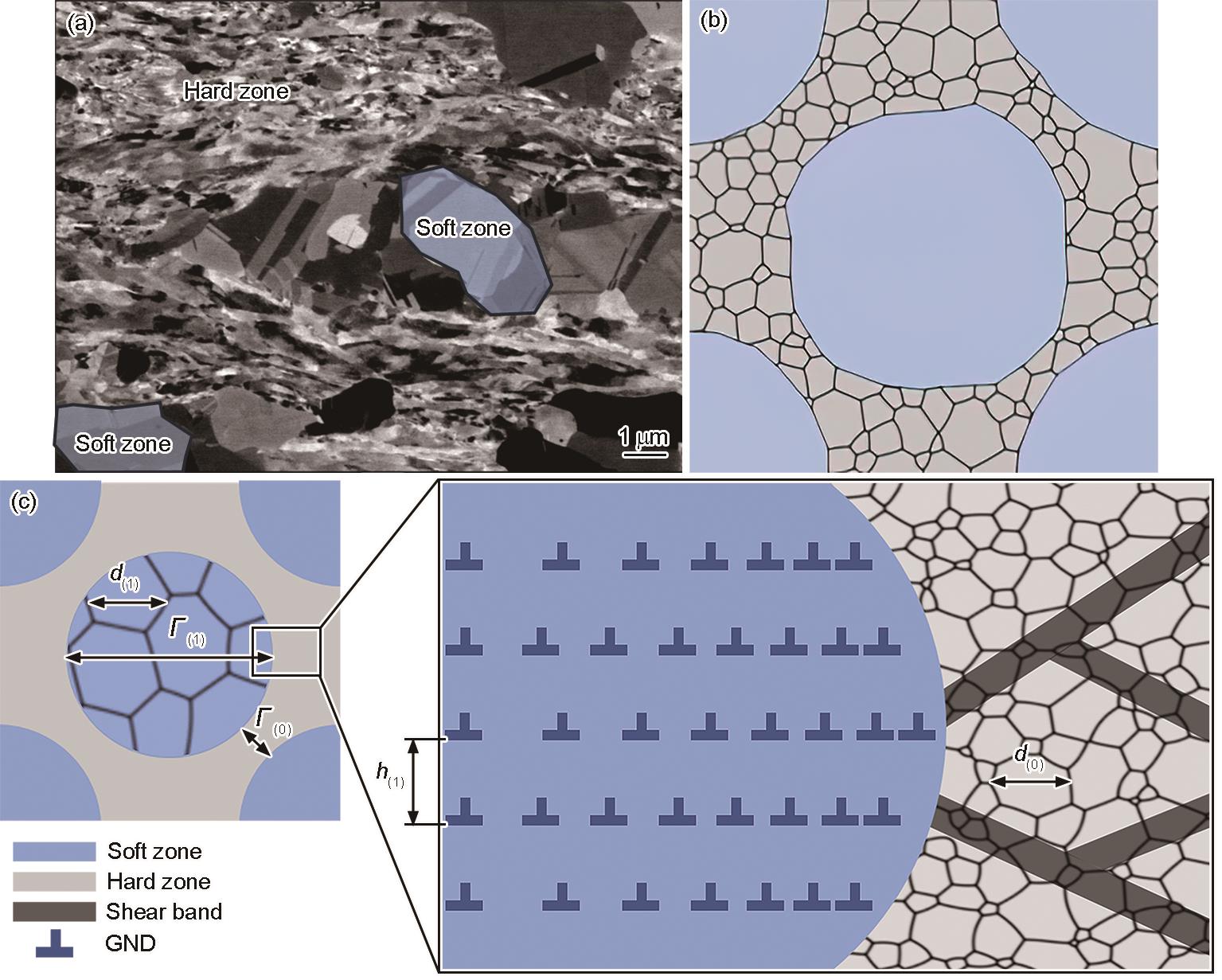
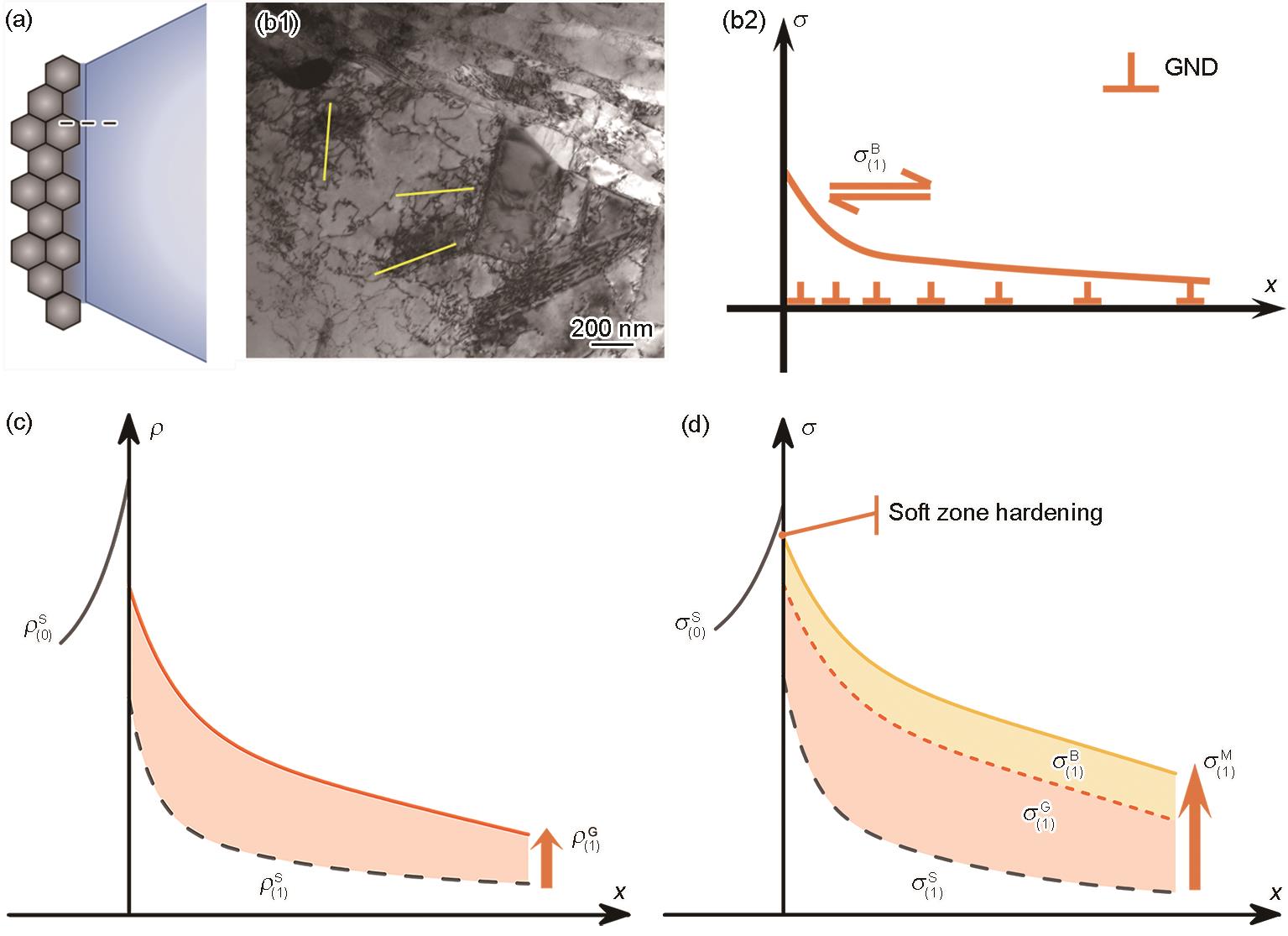
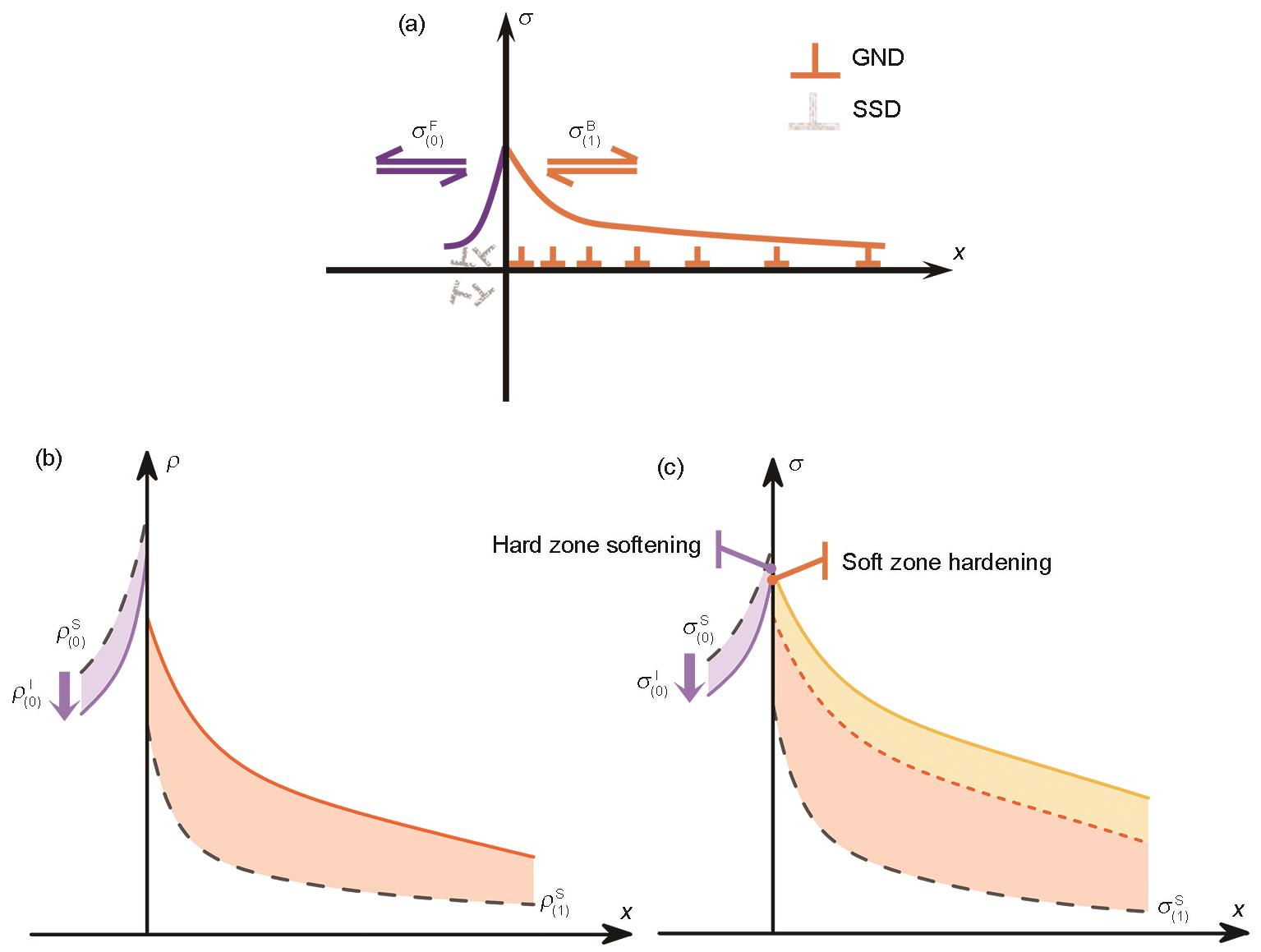
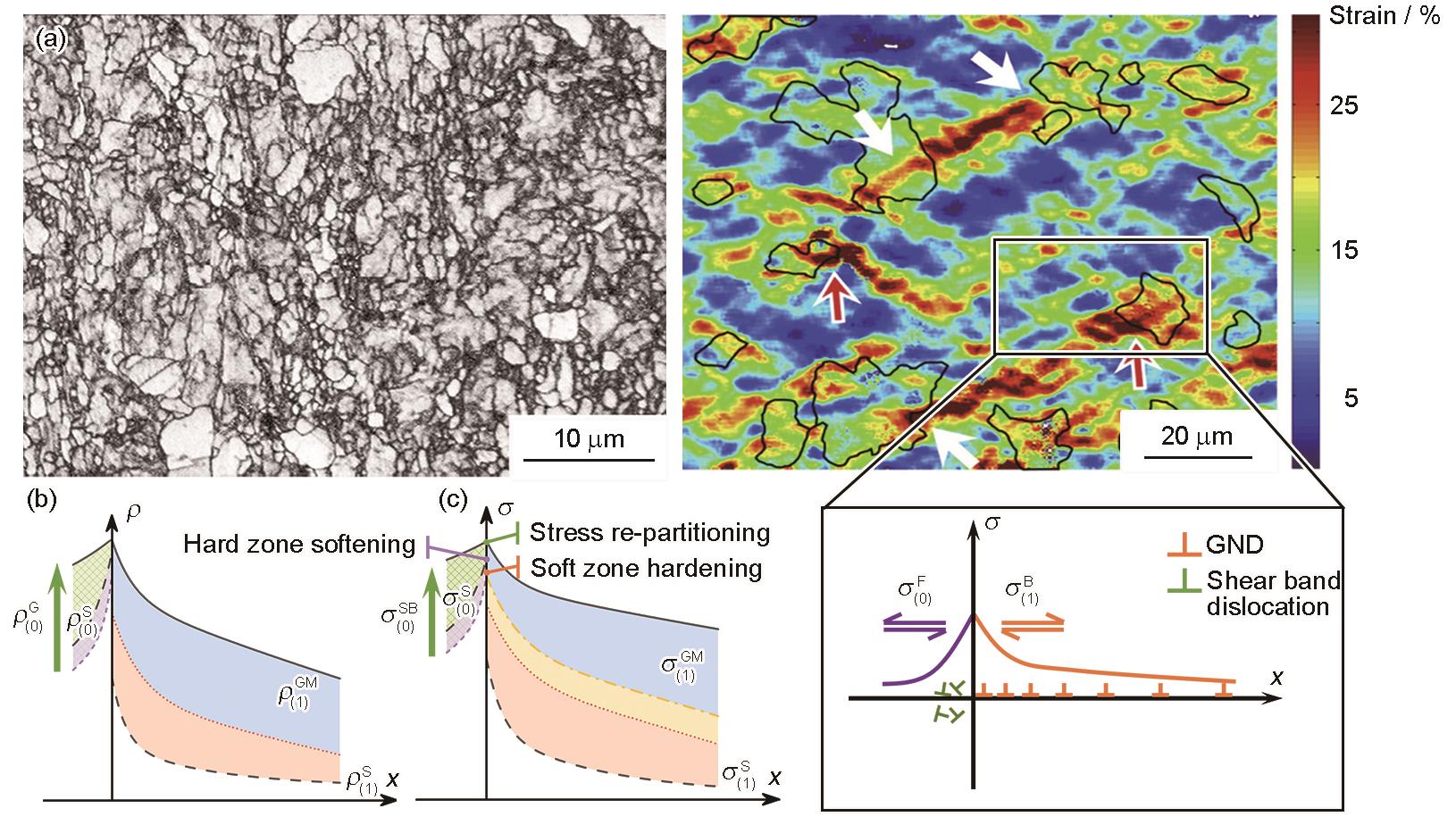
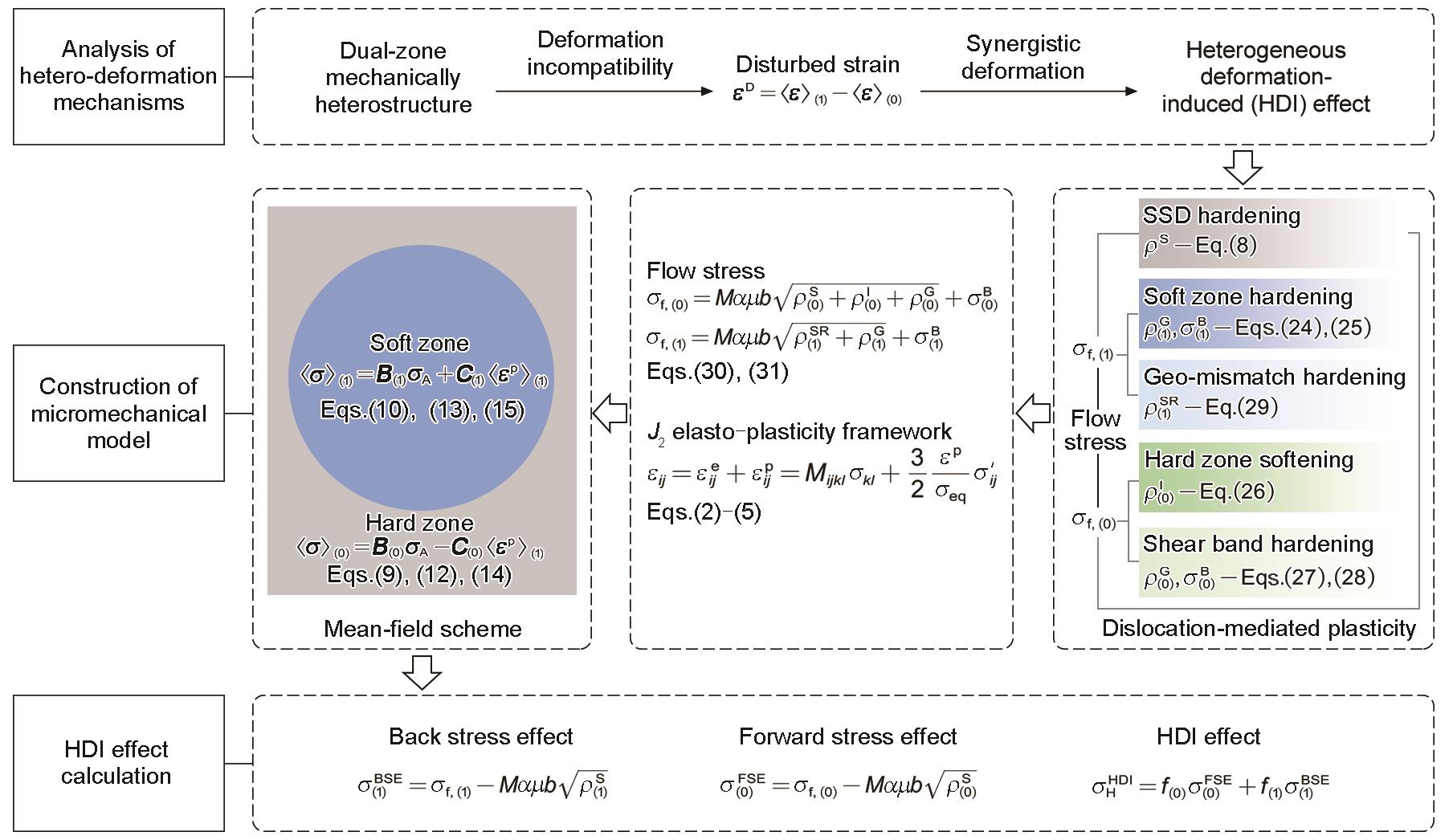
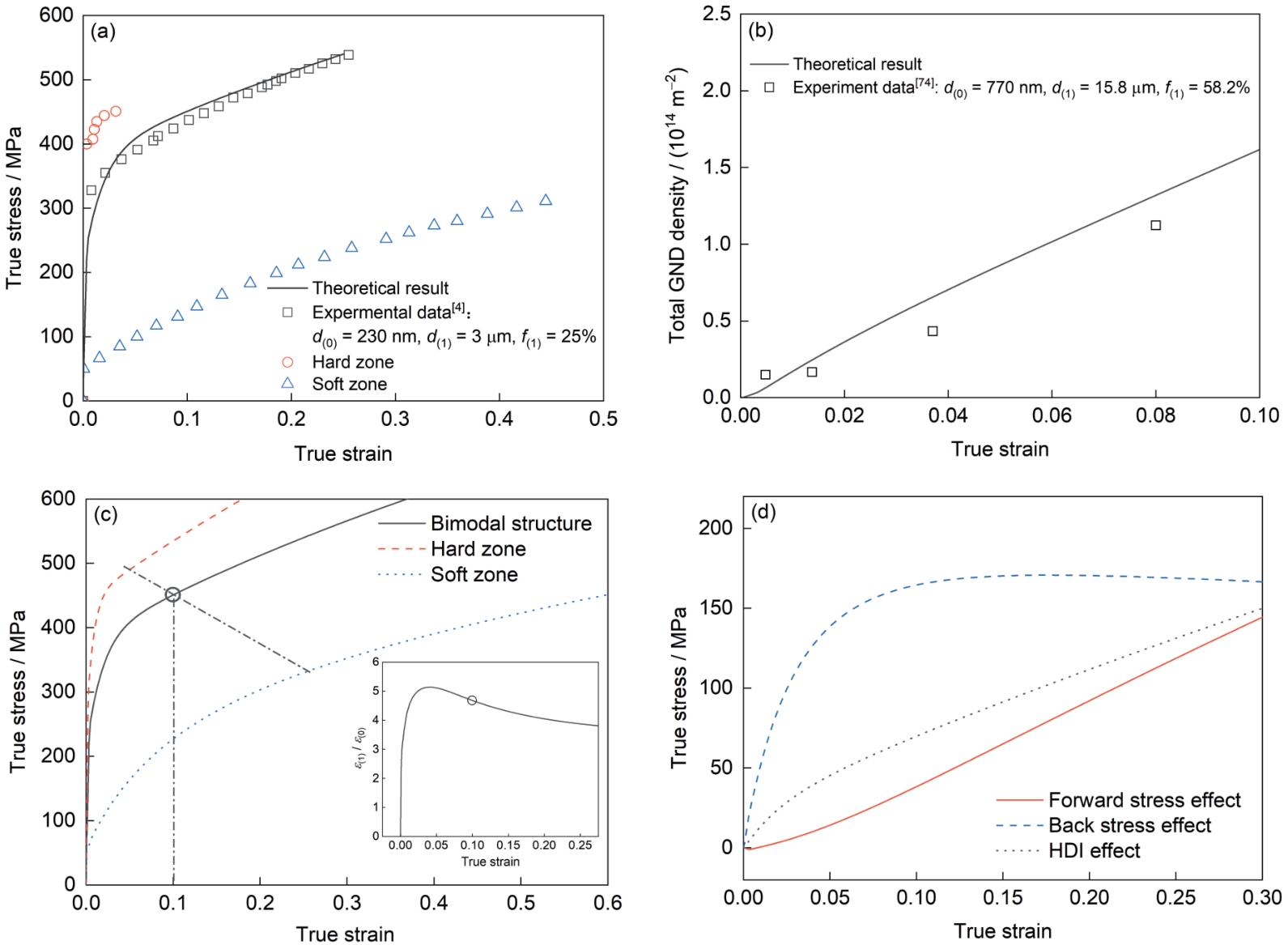
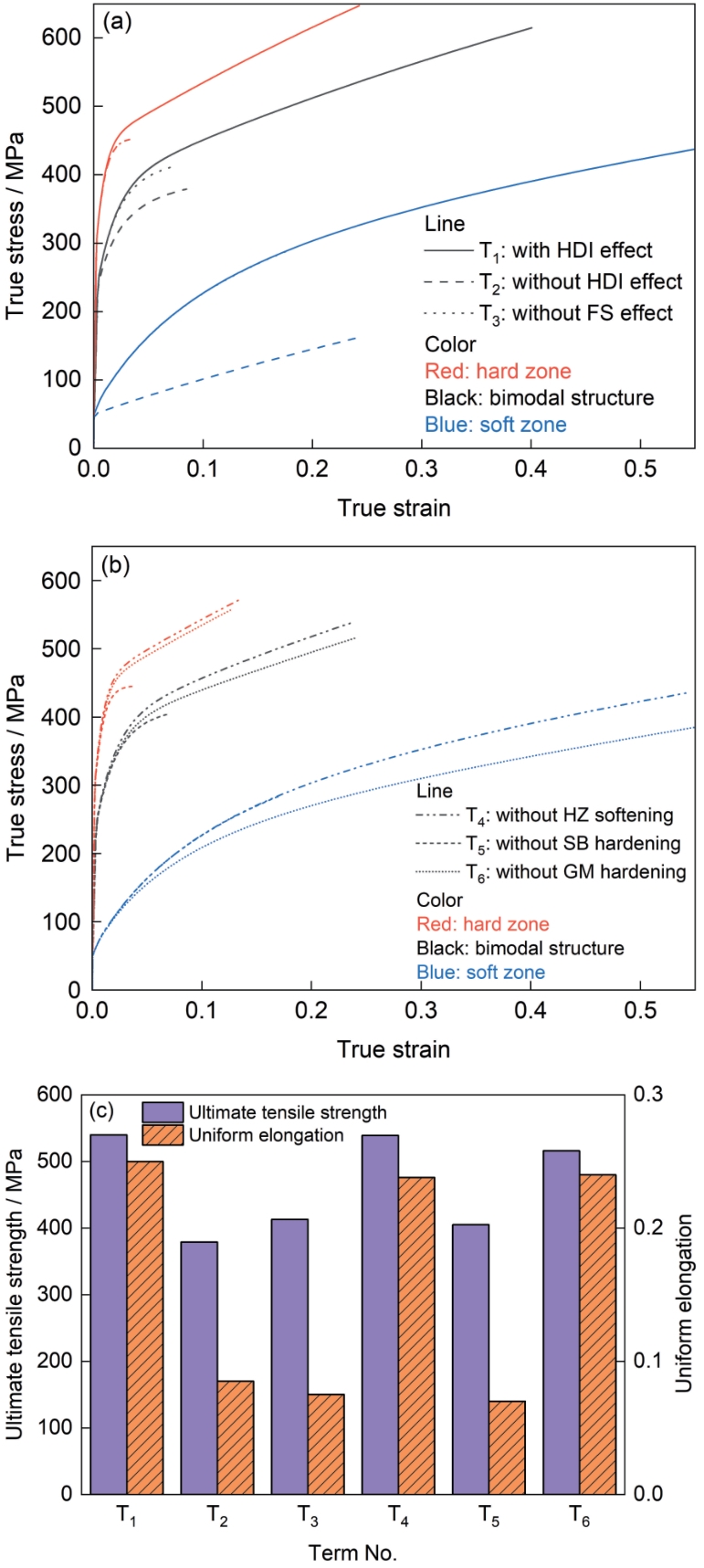
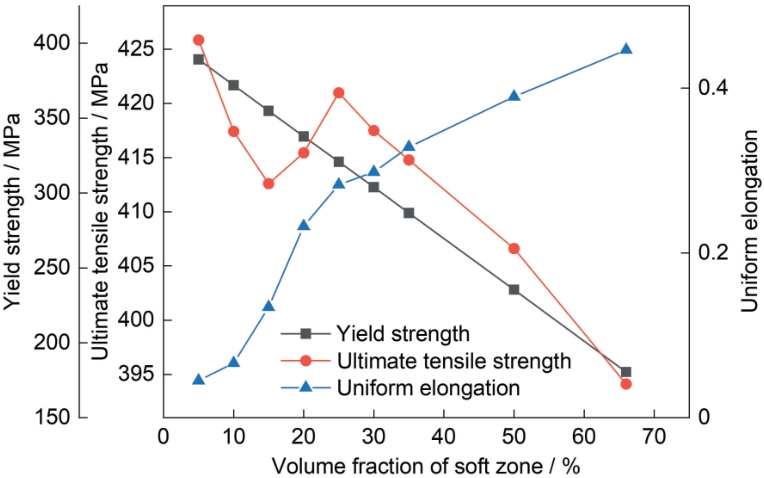
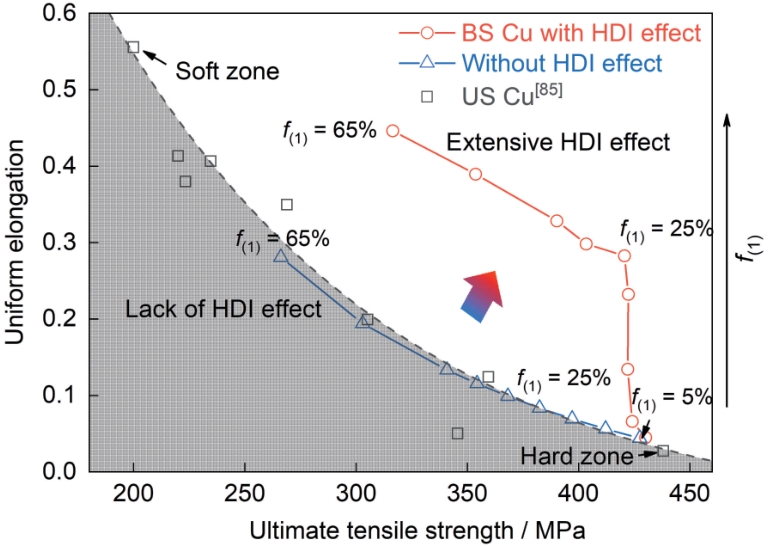
Abstract Owing to their unique hetero-deformation induced (HDI) strengthening and strain hardening effect, bimodal structure alloys can exhibit excellent strength-ductility synergy. However, the roles of the HDI mechanism remain incompletely understood. This study establishes a micromechanical model of the bimodal structure of pure Cu with 230 nm fine grains and 3 μm coarse grains as an example and estimates the HDI effects on the mechanical properties of Cu. This model is based on the Mori-Tanaka mean field method. The bimodal structure comprises a particulate inclusion phase of coarse grains (soft zone) and a hard matrix phase of fine grains (hard zone). Combining plastic strain gradient and dislocation theories, the HDI effect is proposed as a three-stage process of soft zone hardening, hard zone softening, and stress repartitioning, thereby providing quantitative assessments of the HDI effects on the overall mechanical behaviors of bimodal copper. Based on the experimental observations, the forward stress effect is considered to result from softening via the disentanglement and annihilation of entangled dislocations and from hardening caused by shear band formations. The model predictions favorably agree with the existing experimental data. The role of the forward stress effect in the mechanical response is apparently enhanced when the hard zone (230 nm grains) completely encloses the soft zone (3 μm grains). Moreover, increasing the volume fraction of the soft zone decreases the overall strength and reduces the ductility of Cu. At soft zone fractions of 25%-30%, the strength and ductility were optimally balanced with a tensile strength of 417-420 MPa and an elongation of 28.2%-29.8%. The ultimate tensile strength and elongation were 7% lower and 10-fold higher, respectively, than those of unimodal 230-nm-grained Cu and almost doubled and halved, respectively, from those of unimodal 3-μm-grained Cu.
|
|
Received: 03 September 2024
|
|
|
| Fund: National Key Research and Development Program of China(2023YFB3710900) |
Corresponding Authors:
JIN Jianfeng, associate professor, Tel: 13194248493, E-mail: jinjf@atm.neu.edu.cn;
QIN Gaowu, professor, Tel: (024)83691565, E-mail: qingw@smm.neu.edu.cn
|
| [1] |
Zhu Y T, Wu X L. Heterostructured materials[J]. Prog. Mater. Sci., 2023, 131: 101019
doi: 10.1016/j.pmatsci.2022.101019
|
| [2] |
Wu X L, Zhu Y T. Heterostructured metallic materials: Plastic deformation and strain hardening[J]. Acta Metall. Sin., 2022, 58: 1349
doi: 10.11900/0412.1961.2022.00327
|
|
武晓雷, 朱运田. 异构金属材料及其塑性变形与应变硬化[J]. 金属学报, 2022, 58: 1349
doi: 10.11900/0412.1961.2022.00327
|
| [3] |
Tellkamp V L, Lavernia E J, Melmed A. Mechanical behavior and microstructure of a thermally stable bulk nanostructured Al alloy[J]. Metall. Mater. Trans., 2001, 32A: 2335
|
| [4] |
Wang Y M, Chen M W, Zhou F H, et al. High tensile ductility in a nanostructured metal[J]. Nature, 2002, 419: 912
doi: 10.1038/nature01133
|
| [5] |
Li Y S, Zhang Y, Tao N R, et al. Effect of thermal annealing on mechanical properties of a nanostructured copper prepared by means of dynamic plastic deformation[J]. Scr. Mater., 2008, 59: 475
doi: 10.1016/j.scriptamat.2008.04.043
|
| [6] |
Bach J, Stoiber M, Schindler L, et al. Deformation mechanisms and strain rate sensitivity of bimodal and ultrafine-grained copper[J]. Acta Mater., 2020, 186: 363
doi: 10.1016/j.actamat.2019.12.044
|
| [7] |
Qian T, Karaman I, Marx M. Mechanical properties of nanocrystalline and ultrafine-grained nickel with bimodal microstructure[J]. Adv. Eng. Mater., 2014, 16: 1323
doi: 10.1002/adem.v16.11
|
| [8] |
Prasad M J N V, Suwas S, Chokshi A H. Microstructural evolution and mechanical characteristics in nanocrystalline nickel with a bimodal grain-size distribution[J]. Mater. Sci. Eng., 2009, A503: 86
|
| [9] |
Tejedor R, Rodríguez-Baracaldo R, Benito J A, et al. Plastic deformation of a nanostructured and ultra-fine grained Fe-1%Cr with a bimodal grain size distribution[J]. Int. J. Mater. Form., 2008, 1: 487
doi: 10.1007/s12289-008-0109-x
|
| [10] |
Fan G J, Choo H, Liaw P K, et al. Plastic deformation and fracture of ultrafine-grained Al-Mg alloys with a bimodal grain size distribution[J]. Acta Mater., 2006, 54: 1759
doi: 10.1016/j.actamat.2005.11.044
|
| [11] |
Lee Z, Radmilovic V, Ahn B, et al. Tensile deformation and fracture mechanism of bulk bimodal ultrafine-grained Al-Mg alloy[J]. Metall. Mater. Trans., 2010, 41A: 795
|
| [12] |
Shakoori Oskooie M, Asgharzadeh H, Kim H S. Microstructure, plastic deformation and strengthening mechanisms of an Al-Mg-Si alloy with a bimodal grain structure[J]. J. Alloys Compd., 2015, 632: 540
doi: 10.1016/j.jallcom.2015.01.229
|
| [13] |
He J H, Jin L, Wang F H, et al. Mechanical properties of Mg-8Gd-3Y-0.5Zr alloy with bimodal grain size distributions[J]. J. Magnes. Alloy., 2017, 5: 423
doi: 10.1016/j.jma.2017.09.004
|
| [14] |
Xu C, Fan G H, Nakata T, et al. Deformation behavior of ultra-strong and ductile Mg-Gd-Y-Zn-Zr alloy with bimodal microstructure[J]. Metall. Mater. Trans., 2018, 49A: 1931
|
| [15] |
Zhang H, Wang H Y, Wang J G, et al. The synergy effect of fine and coarse grains on enhanced ductility of bimodal-structured Mg alloys[J]. J. Alloys Compd., 2019, 780: 312
doi: 10.1016/j.jallcom.2018.11.229
|
| [16] |
Jin Z Z, Zha M, Yu Z Y, et al. Exploring the Hall-Petch relation and strengthening mechanism of bimodal-grained Mg-Al-Zn alloys[J]. J. Alloys Compd., 2020, 833: 155004
doi: 10.1016/j.jallcom.2020.155004
|
| [17] |
Wei X X, Jin L, Wang F H, et al. High strength and ductility Mg-8Gd-3Y-0.5Zr alloy with bimodal structure and nano-precipitates[J]. J. Mater. Sci. Technol., 2020, 44: 19
doi: 10.1016/j.jmst.2019.10.024
|
| [18] |
Liu S S, Zhang J L, Chen X, et al. Improving mechanical properties of heterogeneous Mg-Gd alloy laminate via accumulated extrusion bonding[J]. Mater. Sci. Eng., 2020, A785: 139324
|
| [19] |
Wang Y F, Huang C X, He Q, et al. Heterostructure induced dispersive shear bands in heterostructured Cu[J]. Scr. Mater., 2019, 170: 76
doi: 10.1016/j.scriptamat.2019.05.036
|
| [20] |
Li G D, Morinaka S, Kawabata M, et al. Improvement of strength with maintaining ductility of harmonic structure pure copper by cold rolling and annealing process[J]. Procedia Manuf., 2018, 15: 1641
|
| [21] |
Park H K, Ameyama K, Yoo J, et al. Additional hardening in harmonic structured materials by strain partitioning and back stress[J]. Mater. Res. Lett., 2018, 6: 261
doi: 10.1080/21663831.2018.1439115
|
| [22] |
Wu X L, Yang M X, Yuan F P, et al. Heterogeneous lamella structure unites ultrafine-grain strength with coarse-grain ductility[J]. Proc. Natl. Acad. Sci. USA, 2015, 112: 14501
doi: 10.1073/pnas.1517193112
pmid: 26554017
|
| [23] |
Zhou X, Li X Y, Lu K. Stabilizing nanograins in metals with grain boundary relaxation[J]. Scr. Mater., 2020, 187: 345
doi: 10.1016/j.scriptamat.2020.06.047
|
| [24] |
Yasnikov I S, Kaneko Y, Uchida M, et al. The grain size effect on strain hardening and necking instability revisited from the dislocation density evolution approach[J]. Mater. Sci. Eng., 2022, A831: 142330
|
| [25] |
Bouaziz O, Estrin Y, Bréchet Y, et al. Critical grain size for dislocation storage and consequences for strain hardening of nanocrystalline materials[J]. Scr. Mater., 2010, 63: 477
doi: 10.1016/j.scriptamat.2010.05.006
|
| [26] |
Wu X L, Zhu Y T. Heterogeneous materials: A new class of materials with unprecedented mechanical properties[J]. Mater. Res. Lett., 2017, 5: 527
doi: 10.1080/21663831.2017.1343208
|
| [27] |
Zhu L L, Lu J. Modelling the plastic deformation of nanostructured metals with bimodal grain size distribution[J]. Int. J. Plast., 2012, 30-31: 166
doi: 10.1016/j.ijplas.2011.10.003
|
| [28] |
Li J J, Lu W J, Chen S H, et al. Revealing extra strengthening and strain hardening in heterogeneous two-phase nanostructures[J]. Int. J. Plast., 2020, 126: 102626
doi: 10.1016/j.ijplas.2019.11.005
|
| [29] |
Cheng Z, Bu L F, Zhang Y, et al. Unraveling the origin of extra strengthening in gradient nanotwinned metals[J]. Proc. Natl. Acad. Sci. USA, 2022, 119: e2116808119
doi: 10.1073/pnas.2116808119
|
| [30] |
Wang Y F, Zhu Y T, Yu Z J, et al. Hetero-zone boundary affected region: A primary microstructural factor controlling extra work hardening in heterostructure[J]. Acta Mater., 2022, 241: 118395
doi: 10.1016/j.actamat.2022.118395
|
| [31] |
Wu H, Fan G H. An overview of tailoring strain delocalization for strength-ductility synergy[J]. Prog. Mater. Sci., 2020, 113: 100675
doi: 10.1016/j.pmatsci.2020.100675
|
| [32] |
Li J J, Qin F, Yan D S, et al. Shear instability in heterogeneous nanolayered Cu/Zr composites[J]. J. Mater. Sci. Technol., 2022, 105: 81
doi: 10.1016/j.jmst.2021.06.070
|
| [33] |
Wu X L, Yang M X, Li R G, et al. Plastic accommodation during tensile deformation of gradient structure[J]. Sci. China Mater., 2021, 64: 1534
doi: 10.1007/s40843-020-1545-2
|
| [34] |
Fan G H, Miao K S, Li D Y, et al. Unraveling the strength-ductility synergy of heterostructured metallic materials from the perspective of local stress/strain[J]. Acta Metall. Sin., 2022, 58: 1427
doi: 10.11900/0412.1961.2022.00317
|
|
范国华, 缪克松, 李丹阳 等. 从局域应力/应变视角理解异构金属材料的强韧化行为[J]. 金属学报, 2022, 58: 1427
doi: 10.11900/0412.1961.2022.00317
|
| [35] |
Yuan R, Beyerlein I J, Zhou C Z. Homogenization of plastic deformation in heterogeneous lamella structures[J]. Mater. Res. Lett., 2017, 5: 251
doi: 10.1080/21663831.2016.1255264
|
| [36] |
Ma H W, Zhao Y C, Lyu Z, et al. What are the “dispersive shear bands” on the surfaces of layered heterostructured materials?[J]. J. Mech. Phys. Solids, 2023, 181: 105467
doi: 10.1016/j.jmps.2023.105467
|
| [37] |
Wang Y F, Huang C X, Li Y S, et al. Dense dispersed shear bands in gradient-structured Ni[J]. Int. J. Plast., 2020, 124: 186
doi: 10.1016/j.ijplas.2019.08.012
|
| [38] |
Estrin Y, Vinogradov A. Extreme grain refinement by severe plastic deformation: A wealth of challenging science[J]. Acta Mater., 2013, 61: 782
doi: 10.1016/j.actamat.2012.10.038
|
| [39] |
Peng P, Tang A T, She J, et al. Significant improvement in yield stress of Mg-Gd-Mn alloy by forming bimodal grain structure[J]. Mater. Sci. Eng., 2021, A803: 140569
|
| [40] |
Renk O, Hohenwarter A, Pippan R. Cyclic deformation behavior of a 316L austenitic stainless steel processed by high pressure torsion[J]. Adv. Eng. Mater., 2012, 14: 948
doi: 10.1002/adem.v14.11
|
| [41] |
Huang C X, Wang Y F, Ma X L, et al. Interface affected zone for optimal strength and ductility in heterogeneous laminate[J]. Mater. Today, 2018, 21: 713
doi: 10.1016/j.mattod.2018.03.006
|
| [42] |
Zhu L L, Shi S Q, Lu K, et al. A statistical model for predicting the mechanical properties of nanostructured metals with bimodal grain size distribution[J]. Acta Mater., 2012, 60: 5762
doi: 10.1016/j.actamat.2012.06.059
|
| [43] |
Weng G J. The overall elastoplastic stress-strain relations of dual-phase metals[J]. J. Mech. Phys. Solids, 1990, 38: 419
doi: 10.1016/0022-5096(90)90007-Q
|
| [44] |
Delincé M, Bréchet Y, Embury J D, et al. Structure-property optimization of ultrafine-grained dual-phase steels using a microstructure-based strain hardening model[J]. Acta Mater., 2007, 55: 2337
doi: 10.1016/j.actamat.2006.11.029
|
| [45] |
Gao H J, Huang Y G. Taylor-based nonlocal theory of plasticity[J]. Int. J. Solids Struct., 2001, 38: 2615
doi: 10.1016/S0020-7683(00)00173-6
|
| [46] |
Orowan E. Zur kristallplastizität. III: Über den mechanismus des gleitvorganges[J]. Z. Phys., 1934, 89: 634
doi: 10.1007/BF01341480
|
| [47] |
Taylor G I. The mechanism of plastic deformation of crystals. Part I.—Theoretical[J]. Proc. Roy. Soc., 1934, 145A: 362
|
| [48] |
Zerilli F J, Armstrong R W. Dislocation-mechanics-based constitutive relations for material dynamics calculations[J]. J. Appl. Phys., 1987, 61: 1816
doi: 10.1063/1.338024
|
| [49] |
Elmasry A, Azoti W, El-Safty S A, et al. A comparative review of multiscale models for effective properties of nano- and micro-composites[J]. Prog. Mater. Sci., 2023, 132: 101022
doi: 10.1016/j.pmatsci.2022.101022
|
| [50] |
Mori T, Tanaka K. Average stress in matrix and average elastic energy of materials with misfitting inclusions[J]. Acta Metall., 1973, 21: 571
doi: 10.1016/0001-6160(73)90064-3
|
| [51] |
Benveniste Y. A new approach to the application of Mori-Tanaka's theory in composite materials[J]. Mech. Mater., 1987, 6: 147
doi: 10.1016/0167-6636(87)90005-6
|
| [52] |
Li J J, Chen S H, Weng G J, et al. A micromechanical model for heterogeneous nanograined metals with shape effect of inclusions and geometrically necessary dislocation pileups at the domain boundary[J]. Int. J. Plast., 2021, 144: 103024
doi: 10.1016/j.ijplas.2021.103024
|
| [53] |
Mura T. Micromechanics of Defects in Solids[M]. 2nd Ed., Dordrecht: Springer, 1987: 188
|
| [54] |
Bishop J F W, XLVI Hill R.. A theory of the plastic distortion of a polycrystalline aggregate under combined stresses[J]. London Edinburgh Dublin Philos. Mag. J. Sci., 1951, 42: 414
|
| [55] |
Li J J, Lu W J, Gibson J, et al. Eliminating deformation incompatibility in composites by gradient nanolayer architectures[J]. Sci. Rep., 2018, 8: 16216
doi: 10.1038/s41598-018-34369-9
pmid: 30385852
|
| [56] |
Крутков Ю А. Тензор Функций Напряжений И Общие Решения В Статике Теории Упругости[M]. Москва: Изд-во АН СССР, 1949: 1
|
| [57] |
Qu J M, Cherkaoui M. Fundamentals of Micromechanics of Solids[M]. Hoboken: Wiley, 2006: 73
|
| [58] |
Kachanov M, Sevostianov I. Micromechanics of Materials, with Applications[M]. Cham: Springer, 2018: 391
|
| [59] |
Shen G L, Hu G K. Mechanics of Composite Materials[M]. Beijing: Tsinghua University Press, 2006: 246
|
|
沈观林, 胡更开. 复合材料力学[M]. 北京: 清华大学出版社, 2006: 246
|
| [60] |
Jiang S, Lin Peng R, Zhao X, et al. Deformation incompatibility enables hetero-deformation induced strengthening in Ti/Nb laminates[J]. Mater. Res. Lett., 2023, 11: 126
doi: 10.1080/21663831.2022.2128916
|
| [61] |
Nix W D, Gao H J. Indentation size effects in crystalline materials: A law for strain gradient plasticity[J]. J. Mech. Phys. Solids, 1998, 46: 411
doi: 10.1016/S0022-5096(97)00086-0
|
| [62] |
Feaugas X. On the origin of the tensile flow stress in the stainless steel AISI 316L at 300 K: Back stress and effective stress[J]. Acta Mater., 1999, 47: 3617
doi: 10.1016/S1359-6454(99)00222-0
|
| [63] |
Yang M X, Pan Y, Yuan F P, et al. Back stress strengthening and strain hardening in gradient structure[J]. Mater. Res. Lett., 2016, 4: 145
doi: 10.1080/21663831.2016.1153004
|
| [64] |
Zhou H, Huang C X, Sha X C, et al. In-situ observation of dislocation dynamics near heterostructured interfaces[J]. Mater. Res. Lett., 2019, 7: 376
doi: 10.1080/21663831.2019.1616330
|
| [65] |
Hasegawa T, Yakou T, Kocks U F. Forward and reverse rearrangements of dislocations in tangled walls[J]. Mater. Sci. Eng., 1986, 81: 189
doi: 10.1016/0025-5416(86)90262-4
|
| [66] |
Zirkle T, Zhu T, McDowell D L. Micromechanical crystal plasticity back stress evolution within FCC dislocation substructure[J]. Int. J. Plast., 2021, 146: 103082
doi: 10.1016/j.ijplas.2021.103082
|
| [67] |
Marukawa K, Sanpei T. Stability of the work hardened state against stress reversal in copper single crystals[J]. Acta Metall., 1971, 19: 1169
doi: 10.1016/0001-6160(71)90049-6
|
| [68] |
Rassweiler G M, Grube W L. Internal Stresses and Fatigue in Metals[M]. Amsterdam: Elsevier, 1959: 1
|
| [69] |
Wu X L, Jiang P, Chen L, et al. Extraordinary strain hardening by gradient structure[J]. Proc. Natl. Acad. Sci. USA, 2014, 111: 7197
doi: 10.1073/pnas.1324069111
pmid: 24799688
|
| [70] |
Hirsch J, Lücke K, Hatherly M. Overview No.76: Mechanism of deformation and development of rolling textures in polycrystalline f.c.c. Metals—III. The influence of slip inhomogeneities and twinning[J]. Acta Metall., 1988, 36: 2905
doi: 10.1016/0001-6160(88)90174-5
|
| [71] |
Wang Y F, Huang C X, Li Z K, et al. Shear band stability and uniform elongation of gradient structured material: Role of lateral constraint[J]. Extreme Mech. Lett., 2020, 37: 100686
doi: 10.1016/j.eml.2020.100686
|
| [72] |
Wang Y F, Wei Y G, Zhao Z F, et al. Mechanical response of the constrained nanostructured layer in heterogeneous laminate[J]. Scr. Mater., 2022, 207: 114310
doi: 10.1016/j.scriptamat.2021.114310
|
| [73] |
Wang Y F, Wei Y G, Zhao Z F, et al. Activating dispersed strain bands in tensioned nanostructure layer for high ductility: The effects of microstructure inhomogeneity[J]. Int. J. Plast., 2022, 149: 103159
doi: 10.1016/j.ijplas.2021.103159
|
| [74] |
Li G D, Jiang J X, Ma H C, et al. Superior strength-ductility synergy in three-dimensional heterogeneous-nanostructured metals[J]. Acta Mater., 2023, 256: 119143
doi: 10.1016/j.actamat.2023.119143
|
| [75] |
Gao H J, Huang Y G. Geometrically necessary dislocation and size-dependent plasticity[J]. Scr. Mater., 2003, 48: 113
doi: 10.1016/S1359-6462(02)00329-9
|
| [76] |
von Considére M. Memoire sur L'emploi du fer et de L'acier Dans les Constructions[M]. Paris: Ch. Dunod, 1885: 1
|
| [77] |
Recht R F. Catastrophic thermoplastic shear[J]. J. Appl. Mech., 1964, 31: 189
doi: 10.1115/1.3629585
|
| [78] |
Meyers M A, Subhash G, Kad B K, et al. Evolution of microstructure and shear-band formation in α-hcp titanium[J]. Mech. Mater., 1994, 17: 175
doi: 10.1016/0167-6636(94)90058-2
|
| [79] |
Armstrong R W, Zerilli F J. Dislocation mechanics aspects of plastic instability and shear banding[J]. Mech. Mater., 1994, 17: 319
doi: 10.1016/0167-6636(94)90069-8
|
| [80] |
Xu Y B, Zhang J H, Bai Y L, et al. Shear localization in dynamic deformation: Microstructural evolution[J]. Metall. Mater. Trans., 2008, 39A: 811
|
| [81] |
Liu X L, Yuan F P, Zhu Y T, et al. Extraordinary Bauschinger effect in gradient structured copper[J]. Scr. Mater., 2018, 150: 57
doi: 10.1016/j.scriptamat.2018.03.007
|
| [82] |
Yang Y, Gong Y L, Li X F, et al. Effect of bimodal grain size and gradient structure on heterogeneous deformation induced (HDI) stress and mechanical properties of Cu[J]. Mater. Res. Express, 2022, 9: 035004
|
| [83] |
Shimokawa T, Hasegawa T, Kiyota K, et al. Heterogeneous evolution of lattice defects leading to high strength and high ductility in harmonic structure materials through atomic and dislocation simulations[J]. Acta Mater., 2022, 226: 117679
doi: 10.1016/j.actamat.2022.117679
|
| [84] |
Wu H, Huang M, Li X W, et al. Temperature-dependent reversed fracture behavior of multilayered TiBw/Ti-Ti(Al) composites[J]. Int. J. Plast., 2021, 141: 102998
doi: 10.1016/j.ijplas.2021.102998
|
| [85] |
Tian Y Z, Ren Y P, Gao S, et al. Two-stage Hall-Petch relationship in Cu with recrystallized structure[J]. J. Mater. Sci. Technol., 2020, 48: 31
doi: 10.1016/j.jmst.2019.12.023
|
| No Suggested Reading articles found! |
|
|
Viewed |
|
|
|
Full text
|
|
|
|
|
Abstract
|
|
|
|
|
Cited |
|
|
|
|
| |
Shared |
|
|
|
|
| |
Discussed |
|
|
|
|