Research progress of key materials in proton exchange membrane fuel cell
1
2022
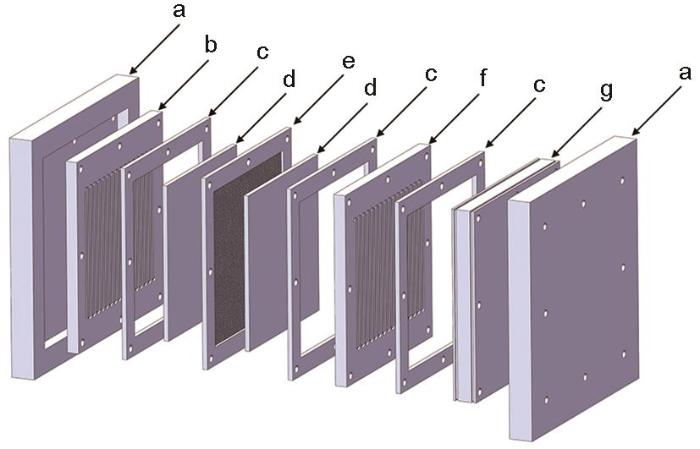
... 随着全球碳中和战略的推进,质子交换膜燃料电池(PEMFC)作为低温燃料电池的典型代表(结构示意图见图1 ),凭借其显著的技术优势——高能量转换效率(> 60%)、低温运行特性(60~80 ℃)以及近零排放的环保特征,在交通动力系统(如燃料电池汽车)、便携式电源设备及分布式能源系统等领域实现规模化应用[1 ,2 ] .双极板作为燃料电池系统的关键组件,承担着多重核心作用:气体分配、电子传导以及反应物流场管理.双极板的耐腐蚀和导电特性直接决定了燃料电池的整体性能指标,包括能量转换效率、耐久寿命及制造成本等,因而双极板材料成为当前研究的重点方向,PEMFC双极板材料的优化研究具有重要的工程价值和商业意义. ...
质子交换膜燃料电池关键材料的研究进展
1
2022
... 随着全球碳中和战略的推进,质子交换膜燃料电池(PEMFC)作为低温燃料电池的典型代表(结构示意图见图1 ),凭借其显著的技术优势——高能量转换效率(> 60%)、低温运行特性(60~80 ℃)以及近零排放的环保特征,在交通动力系统(如燃料电池汽车)、便携式电源设备及分布式能源系统等领域实现规模化应用[1 ,2 ] .双极板作为燃料电池系统的关键组件,承担着多重核心作用:气体分配、电子传导以及反应物流场管理.双极板的耐腐蚀和导电特性直接决定了燃料电池的整体性能指标,包括能量转换效率、耐久寿命及制造成本等,因而双极板材料成为当前研究的重点方向,PEMFC双极板材料的优化研究具有重要的工程价值和商业意义. ...
Bipolar plates for PEM fuel cells: A review
2
2005
... 随着全球碳中和战略的推进,质子交换膜燃料电池(PEMFC)作为低温燃料电池的典型代表(结构示意图见图1 ),凭借其显著的技术优势——高能量转换效率(> 60%)、低温运行特性(60~80 ℃)以及近零排放的环保特征,在交通动力系统(如燃料电池汽车)、便携式电源设备及分布式能源系统等领域实现规模化应用[1 ,2 ] .双极板作为燃料电池系统的关键组件,承担着多重核心作用:气体分配、电子传导以及反应物流场管理.双极板的耐腐蚀和导电特性直接决定了燃料电池的整体性能指标,包括能量转换效率、耐久寿命及制造成本等,因而双极板材料成为当前研究的重点方向,PEMFC双极板材料的优化研究具有重要的工程价值和商业意义. ...
... 早期燃料电池堆采用石墨作为双极板材料.尽管石墨在燃料电池环境中具有优异的化学稳定性,但其流场需通过机械加工成型,且材料脆性大、成本高,难以满足大规模生产需求,为此,学界开展了大量研究以开发可替代石墨的双极板材料,这类材料需兼具PEMFC适用性及汽车应用适配性[2 ] .近年来,金属双极板由于其理想的特性(如高导电性、可成形性和可制造性、气密性和优越的力学性能),引起广泛关注[4 ,5 ] .并且,金属板比石墨板具有更高的强度、韧性和抗冲击性,其独特的力学性能允许制造更薄的板. ...
Targets for bipolar plates
2
2020
... 鉴于双极板需同时满足多种相互制约的物理化学性能要求,研究人员多年来已探索了大量候选材料体系.为系统指导材料开发,美国能源部(DOE)于2020年制定了双极板材料的性能指标体系[3 ] (详见表1 ),该标准从腐蚀电流密度(i corr ) < 1 μA/cm²、界面接触电阻(ICR) < 10 mΩ·cm2 和抗弯强度> 25 MPa等多个维度明确了材料服役性能的量化要求.这一指标体系的建立,为双极板材料的研发提供了明确的性能目标和评价基准. ...
... 无涂层传统不锈钢与本文作者团队开发的含Ru铁素体不锈钢的拉伸性能及不锈钢作为双极板材料在模拟PEMFC环境中的i corr (耐腐蚀性能)和ICR (导电性能)的对比[3 ,36 ,41 ,44 ,45 ,48 ,55 ,56 ] 见图4 .可见,传统不锈钢双极板难以协同优化腐蚀电流密度与界面接触电阻这一相互制约的性能指标,需借助复杂的涂层工艺方才能使两者性能同时达到DOE标准,本团队开发的含Ru铁素体不锈钢在未涂覆状态下其i corr 和ICR均已满足DOE要求,体现出显著的材料性能优势和应用潜力. ...
Durability and characterization studies of polymer electrolyte membrane fuel cell’s coated aluminum bipolar plates and membrane electrode assembly
2
2009
... 早期燃料电池堆采用石墨作为双极板材料.尽管石墨在燃料电池环境中具有优异的化学稳定性,但其流场需通过机械加工成型,且材料脆性大、成本高,难以满足大规模生产需求,为此,学界开展了大量研究以开发可替代石墨的双极板材料,这类材料需兼具PEMFC适用性及汽车应用适配性[2 ] .近年来,金属双极板由于其理想的特性(如高导电性、可成形性和可制造性、气密性和优越的力学性能),引起广泛关注[4 ,5 ] .并且,金属板比石墨板具有更高的强度、韧性和抗冲击性,其独特的力学性能允许制造更薄的板. ...
... 尽管金属具有许多优点,但它们更容易受到腐蚀,这可能会对其性能和耐久性产生不利影响[4 ,6 ] .并且,腐蚀同时发生在运行中的PEMFC的阳极和阴极.在阳极,由于还原环境的存在,保护性金属氧化物层可能会被还原,从而导致不必要的氢化物形成和金属在水中的溶解,这可能会潜在地增加聚合物电解质膜污染的风险,并可能对催化剂层的活性产生不利影响.在阴极,其氧化环境会大大增加金属双极板的腐蚀速率,导致性能恶化,甚至导致整个燃料电池过早失效.为改善金属双极板的耐腐蚀性能,研究者们提出了表面改性技术,并开发了耐腐蚀涂层来最大限度地减少这些影响[7 ,8 ] .但是耐腐蚀涂层的开发使得金属双极板的制造工艺更加复杂且成本变高. ...
Corrosion resistance of stainless steel bipolar plates in a PEFC environment: A comprehensive study
1
2010
... 早期燃料电池堆采用石墨作为双极板材料.尽管石墨在燃料电池环境中具有优异的化学稳定性,但其流场需通过机械加工成型,且材料脆性大、成本高,难以满足大规模生产需求,为此,学界开展了大量研究以开发可替代石墨的双极板材料,这类材料需兼具PEMFC适用性及汽车应用适配性[2 ] .近年来,金属双极板由于其理想的特性(如高导电性、可成形性和可制造性、气密性和优越的力学性能),引起广泛关注[4 ,5 ] .并且,金属板比石墨板具有更高的强度、韧性和抗冲击性,其独特的力学性能允许制造更薄的板. ...
1
2009
... 尽管金属具有许多优点,但它们更容易受到腐蚀,这可能会对其性能和耐久性产生不利影响[4 ,6 ] .并且,腐蚀同时发生在运行中的PEMFC的阳极和阴极.在阳极,由于还原环境的存在,保护性金属氧化物层可能会被还原,从而导致不必要的氢化物形成和金属在水中的溶解,这可能会潜在地增加聚合物电解质膜污染的风险,并可能对催化剂层的活性产生不利影响.在阴极,其氧化环境会大大增加金属双极板的腐蚀速率,导致性能恶化,甚至导致整个燃料电池过早失效.为改善金属双极板的耐腐蚀性能,研究者们提出了表面改性技术,并开发了耐腐蚀涂层来最大限度地减少这些影响[7 ,8 ] .但是耐腐蚀涂层的开发使得金属双极板的制造工艺更加复杂且成本变高. ...
Reviewing metallic PEMFC bipolar plates
1
2010
... 尽管金属具有许多优点,但它们更容易受到腐蚀,这可能会对其性能和耐久性产生不利影响[4 ,6 ] .并且,腐蚀同时发生在运行中的PEMFC的阳极和阴极.在阳极,由于还原环境的存在,保护性金属氧化物层可能会被还原,从而导致不必要的氢化物形成和金属在水中的溶解,这可能会潜在地增加聚合物电解质膜污染的风险,并可能对催化剂层的活性产生不利影响.在阴极,其氧化环境会大大增加金属双极板的腐蚀速率,导致性能恶化,甚至导致整个燃料电池过早失效.为改善金属双极板的耐腐蚀性能,研究者们提出了表面改性技术,并开发了耐腐蚀涂层来最大限度地减少这些影响[7 ,8 ] .但是耐腐蚀涂层的开发使得金属双极板的制造工艺更加复杂且成本变高. ...
Polymer electrolyte membrane fuel cell (PEMFC) flow field plate: Design, materials and characterisation
1
2010
... 尽管金属具有许多优点,但它们更容易受到腐蚀,这可能会对其性能和耐久性产生不利影响[4 ,6 ] .并且,腐蚀同时发生在运行中的PEMFC的阳极和阴极.在阳极,由于还原环境的存在,保护性金属氧化物层可能会被还原,从而导致不必要的氢化物形成和金属在水中的溶解,这可能会潜在地增加聚合物电解质膜污染的风险,并可能对催化剂层的活性产生不利影响.在阴极,其氧化环境会大大增加金属双极板的腐蚀速率,导致性能恶化,甚至导致整个燃料电池过早失效.为改善金属双极板的耐腐蚀性能,研究者们提出了表面改性技术,并开发了耐腐蚀涂层来最大限度地减少这些影响[7 ,8 ] .但是耐腐蚀涂层的开发使得金属双极板的制造工艺更加复杂且成本变高. ...
Cathode/anode integrated composite bipolar plate for high-temperature PEMFC
1
2017
... 铝合金具有优异的导电性和导热性,且成本低、重量较轻,是制备金属双极板的理想材料.但是,由于Al的化学性质非常活泼,表面易生成较厚的Al2 O3 膜,从而导致表面钝化膜电阻过大[9 ] .因此,铝合金在PEMFC强腐蚀环境中的稳定性不足,必须通过表面改性处理才能满足双极板应用要求.表2 [10 ~17 ] 系统地总结了近几年铝合金双极板的基体和涂层材料,并给出了铝合金在镀涂层前后的腐蚀电流密度和界面接触电阻.如AA5083合金,涂层前基材的i corr 高达390 μA/cm2 ,ICR为34 mΩ·cm2 ;经CrN涂层改性后,i corr 降至57.42~79.12 μA/cm2 ,ICR降至6.0 mΩ·cm2 [10 ] .类似地,AA5052合金在沉积碳基复合涂层后性能显著提升,如C-TiN涂层使其i corr 降至0.4 μA/cm2 ,ICR为4.08~6.39 mΩ·cm2 ;C-CrN涂层则实现0.5 μA/cm2 的i corr 和4.08 mΩ·cm2 的ICR[11 ] .可见,铝合金表面镀涂层在很大程度上改善了其耐腐蚀和导电性能. ...
Influence of CrN-coating thickness on the corrosion resistance behaviour of aluminium-based bipolar plates
5
2011
... 铝合金具有优异的导电性和导热性,且成本低、重量较轻,是制备金属双极板的理想材料.但是,由于Al的化学性质非常活泼,表面易生成较厚的Al2 O3 膜,从而导致表面钝化膜电阻过大[9 ] .因此,铝合金在PEMFC强腐蚀环境中的稳定性不足,必须通过表面改性处理才能满足双极板应用要求.表2 [10 ~17 ] 系统地总结了近几年铝合金双极板的基体和涂层材料,并给出了铝合金在镀涂层前后的腐蚀电流密度和界面接触电阻.如AA5083合金,涂层前基材的i corr 高达390 μA/cm2 ,ICR为34 mΩ·cm2 ;经CrN涂层改性后,i corr 降至57.42~79.12 μA/cm2 ,ICR降至6.0 mΩ·cm2 [10 ] .类似地,AA5052合金在沉积碳基复合涂层后性能显著提升,如C-TiN涂层使其i corr 降至0.4 μA/cm2 ,ICR为4.08~6.39 mΩ·cm2 ;C-CrN涂层则实现0.5 μA/cm2 的i corr 和4.08 mΩ·cm2 的ICR[11 ] .可见,铝合金表面镀涂层在很大程度上改善了其耐腐蚀和导电性能. ...
... 2 [10 ].类似地,AA5052合金在沉积碳基复合涂层后性能显著提升,如C-TiN涂层使其i corr 降至0.4 μA/cm2 ,ICR为4.08~6.39 mΩ·cm2 ;C-CrN涂层则实现0.5 μA/cm2 的i corr 和4.08 mΩ·cm2 的ICR[11 ] .可见,铝合金表面镀涂层在很大程度上改善了其耐腐蚀和导电性能. ...
... 铝合金基体和涂层的电化学特征[10 ~17 ] ...
... Electrochemical characteristics of Al alloy substrates and coatings[10 -17 ] ...
... mΩ·cm
2 AA5083[10 ] - 70 0.5 mol·L-1 H2 SO4 + 2 × 10⁻⁶ HF 390 34 (135 N·cm-2 ) CrN 70 57.42-79.12 6.0 (135 N·cm-2 ) AA5052[11 -15 ] ...
Study of different aluminum alloy substrates coated with Ni-Co-P as metallic bipolar plates for PEM fuel cell applications
2
2012
... 铝合金具有优异的导电性和导热性,且成本低、重量较轻,是制备金属双极板的理想材料.但是,由于Al的化学性质非常活泼,表面易生成较厚的Al2 O3 膜,从而导致表面钝化膜电阻过大[9 ] .因此,铝合金在PEMFC强腐蚀环境中的稳定性不足,必须通过表面改性处理才能满足双极板应用要求.表2 [10 ~17 ] 系统地总结了近几年铝合金双极板的基体和涂层材料,并给出了铝合金在镀涂层前后的腐蚀电流密度和界面接触电阻.如AA5083合金,涂层前基材的i corr 高达390 μA/cm2 ,ICR为34 mΩ·cm2 ;经CrN涂层改性后,i corr 降至57.42~79.12 μA/cm2 ,ICR降至6.0 mΩ·cm2 [10 ] .类似地,AA5052合金在沉积碳基复合涂层后性能显著提升,如C-TiN涂层使其i corr 降至0.4 μA/cm2 ,ICR为4.08~6.39 mΩ·cm2 ;C-CrN涂层则实现0.5 μA/cm2 的i corr 和4.08 mΩ·cm2 的ICR[11 ] .可见,铝合金表面镀涂层在很大程度上改善了其耐腐蚀和导电性能. ...
... AA5052[11 -15 ] ...
Composite-coated aluminum bipolar plates for PEM fuel cells
1
2013
... 目前性能优异的铝合金涂层体系主要包括:(1) 金属合金涂层:Ni-Mo-P涂层使AA5052合金的ICR低至0.023 mΩ·cm2 ,i corr 维持在0~4.78 μA/cm2 [12 ] ;(2) 贵金属涂层:Au/Ni-P涂层使AA5052合金的ICR低至4 mΩ·cm2 ,i corr 维持在0~3.46 μA/cm2 范围[13 ] .相比之下,TiN、CrN等传统涂层虽有一定改善效果,但改性后的性能(如TiN涂层的ICR为20.8 mΩ·cm2 )仍无法满足双极板严苛的服役要求.此外,碳基复合涂层、金属合金涂层和贵金属涂层虽然使得铝合金双极板接近甚至达到DOE技术指标,但也进一步增加了双极板的制造成本. ...
The fabrication and characteristics of electroless nickel and immersion Au-polytetrafluoroethylene composite coating on aluminum alloy 5052 as bipolar plate
1
2017
... 目前性能优异的铝合金涂层体系主要包括:(1) 金属合金涂层:Ni-Mo-P涂层使AA5052合金的ICR低至0.023 mΩ·cm2 ,i corr 维持在0~4.78 μA/cm2 [12 ] ;(2) 贵金属涂层:Au/Ni-P涂层使AA5052合金的ICR低至4 mΩ·cm2 ,i corr 维持在0~3.46 μA/cm2 范围[13 ] .相比之下,TiN、CrN等传统涂层虽有一定改善效果,但改性后的性能(如TiN涂层的ICR为20.8 mΩ·cm2 )仍无法满足双极板严苛的服役要求.此外,碳基复合涂层、金属合金涂层和贵金属涂层虽然使得铝合金双极板接近甚至达到DOE技术指标,但也进一步增加了双极板的制造成本. ...
Analysis of the corrosion behavior of Al alloy bipolar plate for proton exchange membrane fuel cell (PEMFC) under operating thermal conditions
0
2012
The characteristics and performance of electroless nickel and immersion Au plated aluminum alloy bipolar plates in polymer electrolyte membrane fuel cells
1
2012
Alloys that form conductive and passivating oxides for proton exchange membrane fuel cell bipolar plates
1
2004
- 70 0.001 mol·L-1 H2 SO4 + 2 × 10⁻⁶ HF 268.8 61.58 (140 N·cm-2 ) TiN 70 0.001 mol·L-1 H2 SO4 + 0.1 × 10⁻⁶ HF 34.4 20.08 CrN 36.8 7.76 C-TiN 0.4 4.08-6.39 C-CrN 0.5 4.08 (150 N·cm-2 ) Ni-Mo-P 25 0.5 mol·L-1 H2 SO4 + 5 × 10⁻⁶ HF 0-4.78 0.023 Au/Ni-P 25 0.5 mol·L-1 H2 SO4 + 2 × 10⁻⁶ HF 0-3.46 4.0 (140 N·cm-2 ) AA1060[16 ] Graphene oxide 70 0.5 mol·L-1 H2 SO4 + 2 × 10⁻⁶ HF < 1 < 5 AA6016[17 ] Polypropylene 70 1 mol·L-1 H2 SO4 + 2 × 10⁻⁶ HF 0.33-0.36 21 (200 N·cm-2 ) Note: The data in parentheses represents the corresponding compaction force, the same in Tables 3 and 6 ...
Technical, environmental and exergetic aspects of hydrogen energy systems
4
2002
... 铝合金具有优异的导电性和导热性,且成本低、重量较轻,是制备金属双极板的理想材料.但是,由于Al的化学性质非常活泼,表面易生成较厚的Al2 O3 膜,从而导致表面钝化膜电阻过大[9 ] .因此,铝合金在PEMFC强腐蚀环境中的稳定性不足,必须通过表面改性处理才能满足双极板应用要求.表2 [10 ~17 ] 系统地总结了近几年铝合金双极板的基体和涂层材料,并给出了铝合金在镀涂层前后的腐蚀电流密度和界面接触电阻.如AA5083合金,涂层前基材的i corr 高达390 μA/cm2 ,ICR为34 mΩ·cm2 ;经CrN涂层改性后,i corr 降至57.42~79.12 μA/cm2 ,ICR降至6.0 mΩ·cm2 [10 ] .类似地,AA5052合金在沉积碳基复合涂层后性能显著提升,如C-TiN涂层使其i corr 降至0.4 μA/cm2 ,ICR为4.08~6.39 mΩ·cm2 ;C-CrN涂层则实现0.5 μA/cm2 的i corr 和4.08 mΩ·cm2 的ICR[11 ] .可见,铝合金表面镀涂层在很大程度上改善了其耐腐蚀和导电性能. ...
... 铝合金基体和涂层的电化学特征[10 ~17 ] ...
... Electrochemical characteristics of Al alloy substrates and coatings[10 -17 ] ...
...
- 70 0.001 mol·L-1 H2 SO4 + 2 × 10⁻⁶ HF 268.8 61.58 (140 N·cm-2 ) TiN 70 0.001 mol·L-1 H2 SO4 + 0.1 × 10⁻⁶ HF 34.4 20.08 CrN 36.8 7.76 C-TiN 0.4 4.08-6.39 C-CrN 0.5 4.08 (150 N·cm-2 ) Ni-Mo-P 25 0.5 mol·L-1 H2 SO4 + 5 × 10⁻⁶ HF 0-4.78 0.023 Au/Ni-P 25 0.5 mol·L-1 H2 SO4 + 2 × 10⁻⁶ HF 0-3.46 4.0 (140 N·cm-2 ) AA1060[16 ] Graphene oxide 70 0.5 mol·L-1 H2 SO4 + 2 × 10⁻⁶ HF < 1 < 5 AA6016[17 ] Polypropylene 70 1 mol·L-1 H2 SO4 + 2 × 10⁻⁶ HF 0.33-0.36 21 (200 N·cm-2 ) Note: The data in parentheses represents the corresponding compaction force, the same in Tables 3 and 6 ...
TiN-coated titanium as the bipolar plate for PEMFC by multi-arc ion plating
7
2011
... Ti具有密度低、强度高、耐腐蚀性能及导电性优异等特点.但钛合金在高温或酸性条件下表面也会形成较厚的钝化膜,导致膜电极扩散层与双极板间的接触电阻增大,降低燃料电池的输出功率[18 ] .由于钛合金表面容易形成电导率低的钝化膜,钛合金不能直接作为双极板投入使用.与铝合金类似,钛合金可以通过在表面镀涂层的方法提高其耐腐蚀性能和电导率,以满足双极板的性能要求.如表3 [18 ~21 ] 所示,无涂层的Ti-6Al-4V合金在模拟电池环境下的i corr 为5.48~7.46 μA/cm2 ,ICR为87 mΩ·cm2 [19 ] ;通过在其表面镀覆一层Zr或ZrCN,其i corr 分别为0.97和0.336~15.7 μA/cm2 ,ICR分别降至40 mΩ·cm2 [20 ] 和11.2~11.71 mΩ·cm2 [21 ] .纯Ti在模拟电池环境下的i corr 和ICR分别为0.042 μA/cm2 和37 mΩ·cm2 [18 ] ;在其表面镀TiN后,i corr 和ICR分别为0.0086 μA/cm2 和2.4 mΩ·cm2 [18 ] .由此可见,钛合金即使在镀层后仍然不能满足双极板的性能要求;纯Ti在镀涂层后可满足性能要求,但纯Ti的高成本限制了钛基双极板的商业化发展. ...
... [18 ~21 ]所示,无涂层的Ti-6Al-4V合金在模拟电池环境下的i corr 为5.48~7.46 μA/cm2 ,ICR为87 mΩ·cm2 [19 ] ;通过在其表面镀覆一层Zr或ZrCN,其i corr 分别为0.97和0.336~15.7 μA/cm2 ,ICR分别降至40 mΩ·cm2 [20 ] 和11.2~11.71 mΩ·cm2 [21 ] .纯Ti在模拟电池环境下的i corr 和ICR分别为0.042 μA/cm2 和37 mΩ·cm2 [18 ] ;在其表面镀TiN后,i corr 和ICR分别为0.0086 μA/cm2 和2.4 mΩ·cm2 [18 ] .由此可见,钛合金即使在镀层后仍然不能满足双极板的性能要求;纯Ti在镀涂层后可满足性能要求,但纯Ti的高成本限制了钛基双极板的商业化发展. ...
... 2 [18 ];在其表面镀TiN后,i corr 和ICR分别为0.0086 μA/cm2 和2.4 mΩ·cm2 [18 ] .由此可见,钛合金即使在镀层后仍然不能满足双极板的性能要求;纯Ti在镀涂层后可满足性能要求,但纯Ti的高成本限制了钛基双极板的商业化发展. ...
... 2 [18 ].由此可见,钛合金即使在镀层后仍然不能满足双极板的性能要求;纯Ti在镀涂层后可满足性能要求,但纯Ti的高成本限制了钛基双极板的商业化发展. ...
... 钛合金基体和涂层的电化学特征[18 ~21 ] ...
... Electrochemical characteristics of Ti alloy substrates and coatings [18 -21 ] ...
... mΩ·cm
2 Ti-6Al-4V[19 ~21 ] - 5.48-7.46 87 (140 N·cm-2 ) Zr 0.97 40 (140 N·cm-2 ) ZrCN 0.336-15.7 11.2-11.71 (140 N·cm-2 ) Pure Ti[18 ] - 0.042 37 (200 N·cm-2 ) TiN 0.0086 2.4 (200 N·cm-2 ) Note: Testing conditions: 0.5 mol/L H2 SO4 + 2 × 10⁻⁶ HF, 70 o C (simulated PEMFC cathode environment) ...
Properties of ZrC nanocrystalline coating on Ti alloy bipolar plates in simulated PEMFC environments
2
2017
... Ti具有密度低、强度高、耐腐蚀性能及导电性优异等特点.但钛合金在高温或酸性条件下表面也会形成较厚的钝化膜,导致膜电极扩散层与双极板间的接触电阻增大,降低燃料电池的输出功率[18 ] .由于钛合金表面容易形成电导率低的钝化膜,钛合金不能直接作为双极板投入使用.与铝合金类似,钛合金可以通过在表面镀涂层的方法提高其耐腐蚀性能和电导率,以满足双极板的性能要求.如表3 [18 ~21 ] 所示,无涂层的Ti-6Al-4V合金在模拟电池环境下的i corr 为5.48~7.46 μA/cm2 ,ICR为87 mΩ·cm2 [19 ] ;通过在其表面镀覆一层Zr或ZrCN,其i corr 分别为0.97和0.336~15.7 μA/cm2 ,ICR分别降至40 mΩ·cm2 [20 ] 和11.2~11.71 mΩ·cm2 [21 ] .纯Ti在模拟电池环境下的i corr 和ICR分别为0.042 μA/cm2 和37 mΩ·cm2 [18 ] ;在其表面镀TiN后,i corr 和ICR分别为0.0086 μA/cm2 和2.4 mΩ·cm2 [18 ] .由此可见,钛合金即使在镀层后仍然不能满足双极板的性能要求;纯Ti在镀涂层后可满足性能要求,但纯Ti的高成本限制了钛基双极板的商业化发展. ...
... mΩ·cm
2 Ti-6Al-4V[19 ~21 ] - 5.48-7.46 87 (140 N·cm-2 ) Zr 0.97 40 (140 N·cm-2 ) ZrCN 0.336-15.7 11.2-11.71 (140 N·cm-2 ) Pure Ti[18 ] - 0.042 37 (200 N·cm-2 ) TiN 0.0086 2.4 (200 N·cm-2 ) Note: Testing conditions: 0.5 mol/L H2 SO4 + 2 × 10⁻⁶ HF, 70 o C (simulated PEMFC cathode environment) ...
模拟PEMFC环境下纳米晶ZrC涂层钛合金双及板的性能研究
2
2017
... Ti具有密度低、强度高、耐腐蚀性能及导电性优异等特点.但钛合金在高温或酸性条件下表面也会形成较厚的钝化膜,导致膜电极扩散层与双极板间的接触电阻增大,降低燃料电池的输出功率[18 ] .由于钛合金表面容易形成电导率低的钝化膜,钛合金不能直接作为双极板投入使用.与铝合金类似,钛合金可以通过在表面镀涂层的方法提高其耐腐蚀性能和电导率,以满足双极板的性能要求.如表3 [18 ~21 ] 所示,无涂层的Ti-6Al-4V合金在模拟电池环境下的i corr 为5.48~7.46 μA/cm2 ,ICR为87 mΩ·cm2 [19 ] ;通过在其表面镀覆一层Zr或ZrCN,其i corr 分别为0.97和0.336~15.7 μA/cm2 ,ICR分别降至40 mΩ·cm2 [20 ] 和11.2~11.71 mΩ·cm2 [21 ] .纯Ti在模拟电池环境下的i corr 和ICR分别为0.042 μA/cm2 和37 mΩ·cm2 [18 ] ;在其表面镀TiN后,i corr 和ICR分别为0.0086 μA/cm2 和2.4 mΩ·cm2 [18 ] .由此可见,钛合金即使在镀层后仍然不能满足双极板的性能要求;纯Ti在镀涂层后可满足性能要求,但纯Ti的高成本限制了钛基双极板的商业化发展. ...
... mΩ·cm
2 Ti-6Al-4V[19 ~21 ] - 5.48-7.46 87 (140 N·cm-2 ) Zr 0.97 40 (140 N·cm-2 ) ZrCN 0.336-15.7 11.2-11.71 (140 N·cm-2 ) Pure Ti[18 ] - 0.042 37 (200 N·cm-2 ) TiN 0.0086 2.4 (200 N·cm-2 ) Note: Testing conditions: 0.5 mol/L H2 SO4 + 2 × 10⁻⁶ HF, 70 o C (simulated PEMFC cathode environment) ...
Properties of Zr nanocrystalline coating on Ti alloy bipolar plates in simulated PEMFC environments
1
2015
... Ti具有密度低、强度高、耐腐蚀性能及导电性优异等特点.但钛合金在高温或酸性条件下表面也会形成较厚的钝化膜,导致膜电极扩散层与双极板间的接触电阻增大,降低燃料电池的输出功率[18 ] .由于钛合金表面容易形成电导率低的钝化膜,钛合金不能直接作为双极板投入使用.与铝合金类似,钛合金可以通过在表面镀涂层的方法提高其耐腐蚀性能和电导率,以满足双极板的性能要求.如表3 [18 ~21 ] 所示,无涂层的Ti-6Al-4V合金在模拟电池环境下的i corr 为5.48~7.46 μA/cm2 ,ICR为87 mΩ·cm2 [19 ] ;通过在其表面镀覆一层Zr或ZrCN,其i corr 分别为0.97和0.336~15.7 μA/cm2 ,ICR分别降至40 mΩ·cm2 [20 ] 和11.2~11.71 mΩ·cm2 [21 ] .纯Ti在模拟电池环境下的i corr 和ICR分别为0.042 μA/cm2 和37 mΩ·cm2 [18 ] ;在其表面镀TiN后,i corr 和ICR分别为0.0086 μA/cm2 和2.4 mΩ·cm2 [18 ] .由此可见,钛合金即使在镀层后仍然不能满足双极板的性能要求;纯Ti在镀涂层后可满足性能要求,但纯Ti的高成本限制了钛基双极板的商业化发展. ...
Corrosion behavior of a ZrCN coated Ti alloy with potential application as a bipolar plate for proton exchange membrane fuel cell
5
2016
... Ti具有密度低、强度高、耐腐蚀性能及导电性优异等特点.但钛合金在高温或酸性条件下表面也会形成较厚的钝化膜,导致膜电极扩散层与双极板间的接触电阻增大,降低燃料电池的输出功率[18 ] .由于钛合金表面容易形成电导率低的钝化膜,钛合金不能直接作为双极板投入使用.与铝合金类似,钛合金可以通过在表面镀涂层的方法提高其耐腐蚀性能和电导率,以满足双极板的性能要求.如表3 [18 ~21 ] 所示,无涂层的Ti-6Al-4V合金在模拟电池环境下的i corr 为5.48~7.46 μA/cm2 ,ICR为87 mΩ·cm2 [19 ] ;通过在其表面镀覆一层Zr或ZrCN,其i corr 分别为0.97和0.336~15.7 μA/cm2 ,ICR分别降至40 mΩ·cm2 [20 ] 和11.2~11.71 mΩ·cm2 [21 ] .纯Ti在模拟电池环境下的i corr 和ICR分别为0.042 μA/cm2 和37 mΩ·cm2 [18 ] ;在其表面镀TiN后,i corr 和ICR分别为0.0086 μA/cm2 和2.4 mΩ·cm2 [18 ] .由此可见,钛合金即使在镀层后仍然不能满足双极板的性能要求;纯Ti在镀涂层后可满足性能要求,但纯Ti的高成本限制了钛基双极板的商业化发展. ...
... 2 [21 ].纯Ti在模拟电池环境下的i corr 和ICR分别为0.042 μA/cm2 和37 mΩ·cm2 [18 ] ;在其表面镀TiN后,i corr 和ICR分别为0.0086 μA/cm2 和2.4 mΩ·cm2 [18 ] .由此可见,钛合金即使在镀层后仍然不能满足双极板的性能要求;纯Ti在镀涂层后可满足性能要求,但纯Ti的高成本限制了钛基双极板的商业化发展. ...
... 钛合金基体和涂层的电化学特征[18 ~21 ] ...
... Electrochemical characteristics of Ti alloy substrates and coatings [18 -21 ] ...
... mΩ·cm
2 Ti-6Al-4V[19 ~21 ] - 5.48-7.46 87 (140 N·cm-2 ) Zr 0.97 40 (140 N·cm-2 ) ZrCN 0.336-15.7 11.2-11.71 (140 N·cm-2 ) Pure Ti[18 ] - 0.042 37 (200 N·cm-2 ) TiN 0.0086 2.4 (200 N·cm-2 ) Note: Testing conditions: 0.5 mol/L H2 SO4 + 2 × 10⁻⁶ HF, 70 o C (simulated PEMFC cathode environment) ...
A novel design and micro-fabrication for copper (Cu) electroforming bipolar plates
1
2008
... Cu及其合金具备优异的导电性、导热性且成本较低,被认为是具有潜力的双极板材料之一[22 ~25 ] .然而,Cu在酸性环境中耐腐蚀性能差且导电性下降[23 ] .因此,亟需为铜基双极板开发涂层材料. ...
High-performance carbon fiber/gold/copper composite wires for lightweight electrical cables
1
2020
... Cu及其合金具备优异的导电性、导热性且成本较低,被认为是具有潜力的双极板材料之一[22 ~25 ] .然而,Cu在酸性环境中耐腐蚀性能差且导电性下降[23 ] .因此,亟需为铜基双极板开发涂层材料. ...
Thermally nitrided Cu-5.3Cr alloy for application as metallic separators in PEMFCs
1
2008
... Lee等[24 ] 对Cu-5.3Cr基双极板进行了热氮化处理,以促进Cr元素最终转变为Cr2 N.结果表明,随着温度升高,Cr元素向表面偏聚并形成致密的Cr2 N相.经过该工艺处理的样品表现出优良的导电性能,并在阳极环境中具备良好的耐腐蚀性能;然而,在阴极条件下,涂层的保护效果不足,导致Cu基体发生Cu的氧化及O的还原,其i corr 为1480 μA/cm2 ,耐腐蚀性能未能达到DOE标准,限制了其实际应用. ...
Electrodeposited conductive polypyrrole/polyaniline composite film for the corrosion protection of copper bipolar plates in proton exchange membrane fuel cells
2
2016
... Cu及其合金具备优异的导电性、导热性且成本较低,被认为是具有潜力的双极板材料之一[22 ~25 ] .然而,Cu在酸性环境中耐腐蚀性能差且导电性下降[23 ] .因此,亟需为铜基双极板开发涂层材料. ...
... Pan等[25 ] 采用电化学方法在Cu基板上成功构建了聚吡咯/聚苯胺复合涂层.该双层聚合物膜因具备特殊的离子选择性渗透结构,在酸性环境中同时展现出优异的导电性与腐蚀防护能力,其i corr 为1.62 μA/cm2 ,140 N/cm2 条件下ICR约为3 mΩ·cm2 ,显示出良好的应用前景. ...
Investigation of stainless steel 316 coated with nickel
1
2022
... Ni是一种具有磁性、高硬度、良好延展性和耐腐蚀性能的金属,常用于不锈钢及其他耐腐蚀合金的制备[26 ~28 ] .然而,由于Ni的成本显著高于Ti、Al等金属,其在双极板方面的研究相对有限. ...
Study on wear behavior of low nickel austenitic stainless steel by using ball on disc
0
2022
Outstanding oxygen evolution reaction performance of nickel iron selenide/stainless steel mat for water electrolysis
1
2020
... Ni是一种具有磁性、高硬度、良好延展性和耐腐蚀性能的金属,常用于不锈钢及其他耐腐蚀合金的制备[26 ~28 ] .然而,由于Ni的成本显著高于Ti、Al等金属,其在双极板方面的研究相对有限. ...
Investigation on physical and electrochemical properties of TiN-coated Monel alloy used for bipolar plates of proton exchange membrane fuel cell
1
2019
... Ghorbani等[29 ] 采用阴极弧蒸发(CAV)技术在镍基合金表面沉积TiN涂层.当表面粗糙度(R a )为230 nm、涂层厚度为1.5 μm时,i corr 和ICR分别达到0.17 μA/cm2 和8.47 mΩ·cm2 ,满足DOE技术指标. ...
Electropolymerization and corrosion resistance of polypyrrole on nickel bipolar plate for PEM fuel cell application
1
2020
... Ben Jadi等[30 ] 通过恒电流法在糖精钠电解液中于Ni基体表面沉积聚吡咯涂层.X射线光电子能谱(XPS)和扫描电子显微镜(SEM)分析结果表明,该涂层结构连续且致密,与基体结合良好,开路电位正向位移了约150 mV,显著提升了镍基双极板在腐蚀环境中的稳定性,其性能提升主要归因于涂层的高附着性和均匀性. ...
Revisiting the effect of molybdenum on pitting resistance of stainless steels
1
2021
... 近年来,通过成分优化(如高Cr/Mo合金化、超低碳化、稳定化元素添加)和表面改性(导电涂层、钝化处理),奥氏体不锈钢的耐腐蚀性能显著提升.例如,316L (Mo强化)和904L (高Ni/Cr/Mo)钢展现出优于304系列钢的抗局部腐蚀能力[31 ,32 ] ,而Ti/Nb稳定化型(如321、347钢)可抑制晶间腐蚀风险[33 ] .表4 [34 ~36 ] 列出了这些奥氏体不锈钢的化学成分要求. ...
The effect of dominant alloy additions on the corrosion behavior of some conventional and high alloy stainless steels in seawater
1
1995
... 近年来,通过成分优化(如高Cr/Mo合金化、超低碳化、稳定化元素添加)和表面改性(导电涂层、钝化处理),奥氏体不锈钢的耐腐蚀性能显著提升.例如,316L (Mo强化)和904L (高Ni/Cr/Mo)钢展现出优于304系列钢的抗局部腐蚀能力[31 ,32 ] ,而Ti/Nb稳定化型(如321、347钢)可抑制晶间腐蚀风险[33 ] .表4 [34 ~36 ] 列出了这些奥氏体不锈钢的化学成分要求. ...
New findings on intergranular corrosion mechanism of stabilized stainless steels
1
2011
... 近年来,通过成分优化(如高Cr/Mo合金化、超低碳化、稳定化元素添加)和表面改性(导电涂层、钝化处理),奥氏体不锈钢的耐腐蚀性能显著提升.例如,316L (Mo强化)和904L (高Ni/Cr/Mo)钢展现出优于304系列钢的抗局部腐蚀能力[31 ,32 ] ,而Ti/Nb稳定化型(如321、347钢)可抑制晶间腐蚀风险[33 ] .表4 [34 ~36 ] 列出了这些奥氏体不锈钢的化学成分要求. ...
Stainless steel as a bipolar plate material for solid polymer fuel cells
4
2000
... 近年来,通过成分优化(如高Cr/Mo合金化、超低碳化、稳定化元素添加)和表面改性(导电涂层、钝化处理),奥氏体不锈钢的耐腐蚀性能显著提升.例如,316L (Mo强化)和904L (高Ni/Cr/Mo)钢展现出优于304系列钢的抗局部腐蚀能力[31 ,32 ] ,而Ti/Nb稳定化型(如321、347钢)可抑制晶间腐蚀风险[33 ] .表4 [34 ~36 ] 列出了这些奥氏体不锈钢的化学成分要求. ...
... 奥氏体不锈钢的化学成分[34 ~36 ] (mass fraction / %) ...
... Chemical compositions of austenitic stainless steels[34 -36 ] ...
... Kumagai等[40 ] 对310S、304及316L不锈钢的耐腐蚀性能进行了对比研究.实验结果表明,在电流密度为0.5 A/cm2 的苛刻条件下,仅310S不锈钢未出现明显腐蚀现象.研究者将此归因于其过高的Cr含量(22%).随着研究的深入,更多学者发现不锈钢中其他合金元素同样会影响钝化膜的形成特性.Zhang等[38 ] 研究表明,Mo元素会显著改变不锈钢的耐蚀行为,其作用机制与Cr元素具有协同效应.Davies等[34 ] 通过系统实验证实,Ni元素的存在会调控不锈钢的腐蚀电化学特性,钝化膜外层区域存在的Ni元素会与O结合形成Ni的氧化物,该氧化物与Cr/Fe氧化物复合后可协同提升钝化膜的导电性能.同时指出材料表面电阻与钝化膜厚度呈显著正相关,这一发现为理解合金元素-钝化膜-导电性能的关系提供了重要依据. ...
Bipolar plate materials for solid polymer fuel cells
0
2000
Stainless steel as bipolar plate material for polymer electrolyte membrane fuel cells
13
2003
... 近年来,通过成分优化(如高Cr/Mo合金化、超低碳化、稳定化元素添加)和表面改性(导电涂层、钝化处理),奥氏体不锈钢的耐腐蚀性能显著提升.例如,316L (Mo强化)和904L (高Ni/Cr/Mo)钢展现出优于304系列钢的抗局部腐蚀能力[31 ,32 ] ,而Ti/Nb稳定化型(如321、347钢)可抑制晶间腐蚀风险[33 ] .表4 [34 ~36 ] 列出了这些奥氏体不锈钢的化学成分要求. ...
... 奥氏体不锈钢的化学成分[34 ~36 ] (mass fraction / %) ...
... Chemical compositions of austenitic stainless steels[34 -36 ] ...
... 研究[36 ~39 ] 表明,过渡金属元素(如Cr、Mo、Ni等)可有效提升奥氏体不锈钢的耐腐蚀性能.Wang等[36 ] 系统评估了349TM、904L、317L及316L不锈钢的耐腐蚀性能,证实高Cr含量(如349TM钢含20.2%Cr,质量分数,下同)可显著提升钝化膜稳定性和耐腐蚀性能,但表面形成的富Cr2 O3 钝化膜因厚度增加可导致界面接触电阻急剧升高.该研究揭示了Cr元素合金化的双重效应:一方面通过促进致密氧化层的形成抑制基体腐蚀,另一方面因钝化膜增厚引发导电性能劣化,凸显了双极板材料耐腐蚀性能与导电性能之间的固有矛盾. ...
... [36 ]系统评估了349TM、904L、317L及316L不锈钢的耐腐蚀性能,证实高Cr含量(如349TM钢含20.2%Cr,质量分数,下同)可显著提升钝化膜稳定性和耐腐蚀性能,但表面形成的富Cr2 O3 钝化膜因厚度增加可导致界面接触电阻急剧升高.该研究揭示了Cr元素合金化的双重效应:一方面通过促进致密氧化层的形成抑制基体腐蚀,另一方面因钝化膜增厚引发导电性能劣化,凸显了双极板材料耐腐蚀性能与导电性能之间的固有矛盾. ...
... 虽然在奥氏体不锈钢中通过加入合金元素可以提高钝化膜的导电性能,见表5 [36 ,41 ] 总结的不同奥氏体不锈钢在无涂层下的i corr 和ICR (其中,i corr 在0.5~20 μA/cm2 范围,ICR在70~180 mΩ·cm2 区间),但现有无涂层的奥氏体不锈钢材料均难以同时满足DOE对导电性能和耐腐蚀性能的双重指标要求. ...
... 不同奥氏体不锈钢无涂层时的腐蚀电流密度(i corr )和界面接触电阻(ICR)[36 ,41 ] ...
... i corr and ICR of uncoated austenitic stainless steels[36 ,41 ] ...
... μA·cm
-2 ICR mΩ·cm2 SS310[41 ] 0.8 (+0.6 V, air) 80 SS316[36 ] 15 (+0.6 V, Air), 50 (-0.1 V, H2 ) 150 SS317L[36 ] 17 (+0.6 V, Air), 21 ( -0.1 V, H2 ) 148 SS904L[36 ] 9.5 (+0.6 V, Air), 9.4 (-0.1 V, H2 ) 134 SS349[36 ] 10 (+0.6 V, Air), 15 (-0.1 V, H2 ) 100 <strong>4.2</strong> 不锈钢涂层 奥氏体和铁素体不锈钢通过合金化(如添加Cr、Mo等元素)可以改善钝化膜的导电性能,但其提升幅度难以满足DOE技术指标.因此,直接采用未经处理的传统不锈钢作为PEMFC双极板存在很大技术风险,使得研究者们将目光转移到了不锈钢表面涂层技术上. ...
... [
36 ]
17 (+0.6 V, Air), 21 ( -0.1 V, H2 ) 148 SS904L[36 ] 9.5 (+0.6 V, Air), 9.4 (-0.1 V, H2 ) 134 SS349[36 ] 10 (+0.6 V, Air), 15 (-0.1 V, H2 ) 100 <strong>4.2</strong> 不锈钢涂层 奥氏体和铁素体不锈钢通过合金化(如添加Cr、Mo等元素)可以改善钝化膜的导电性能,但其提升幅度难以满足DOE技术指标.因此,直接采用未经处理的传统不锈钢作为PEMFC双极板存在很大技术风险,使得研究者们将目光转移到了不锈钢表面涂层技术上. ...
... [
36 ]
9.5 (+0.6 V, Air), 9.4 (-0.1 V, H2 ) 134 SS349[36 ] 10 (+0.6 V, Air), 15 (-0.1 V, H2 ) 100 <strong>4.2</strong> 不锈钢涂层 奥氏体和铁素体不锈钢通过合金化(如添加Cr、Mo等元素)可以改善钝化膜的导电性能,但其提升幅度难以满足DOE技术指标.因此,直接采用未经处理的传统不锈钢作为PEMFC双极板存在很大技术风险,使得研究者们将目光转移到了不锈钢表面涂层技术上. ...
... [
36 ]
10 (+0.6 V, Air), 15 (-0.1 V, H2 ) 100 <strong>4.2</strong> 不锈钢涂层 奥氏体和铁素体不锈钢通过合金化(如添加Cr、Mo等元素)可以改善钝化膜的导电性能,但其提升幅度难以满足DOE技术指标.因此,直接采用未经处理的传统不锈钢作为PEMFC双极板存在很大技术风险,使得研究者们将目光转移到了不锈钢表面涂层技术上. ...
... 无涂层传统不锈钢与本文作者团队开发的含Ru铁素体不锈钢的拉伸性能及不锈钢作为双极板材料在模拟PEMFC环境中的i corr (耐腐蚀性能)和ICR (导电性能)的对比[3 ,36 ,41 ,44 ,45 ,48 ,55 ,56 ] 见图4 .可见,传统不锈钢双极板难以协同优化腐蚀电流密度与界面接触电阻这一相互制约的性能指标,需借助复杂的涂层工艺方才能使两者性能同时达到DOE标准,本团队开发的含Ru铁素体不锈钢在未涂覆状态下其i corr 和ICR均已满足DOE要求,体现出显著的材料性能优势和应用潜力. ...
Evaluation of Ni-Cr-P coatings electrodeposited on low carbon steel bipolar plates for polymer electrolyte membrane fuel cell
0
2018
Effects of Mo content on microstructure and corrosion resistance of arc ion plated Ti-Mo-N films on 316L stainless steel as bipolar plates for polymer exchange membrane fuel cells
1
2014
... Kumagai等[40 ] 对310S、304及316L不锈钢的耐腐蚀性能进行了对比研究.实验结果表明,在电流密度为0.5 A/cm2 的苛刻条件下,仅310S不锈钢未出现明显腐蚀现象.研究者将此归因于其过高的Cr含量(22%).随着研究的深入,更多学者发现不锈钢中其他合金元素同样会影响钝化膜的形成特性.Zhang等[38 ] 研究表明,Mo元素会显著改变不锈钢的耐蚀行为,其作用机制与Cr元素具有协同效应.Davies等[34 ] 通过系统实验证实,Ni元素的存在会调控不锈钢的腐蚀电化学特性,钝化膜外层区域存在的Ni元素会与O结合形成Ni的氧化物,该氧化物与Cr/Fe氧化物复合后可协同提升钝化膜的导电性能.同时指出材料表面电阻与钝化膜厚度呈显著正相关,这一发现为理解合金元素-钝化膜-导电性能的关系提供了重要依据. ...
Titanium bipolar plates augmented by nanocrystalline TiZrHfMoW coatings for application in proton exchange membrane fuel cells
1
2022
... 研究[36 ~39 ] 表明,过渡金属元素(如Cr、Mo、Ni等)可有效提升奥氏体不锈钢的耐腐蚀性能.Wang等[36 ] 系统评估了349TM、904L、317L及316L不锈钢的耐腐蚀性能,证实高Cr含量(如349TM钢含20.2%Cr,质量分数,下同)可显著提升钝化膜稳定性和耐腐蚀性能,但表面形成的富Cr2 O3 钝化膜因厚度增加可导致界面接触电阻急剧升高.该研究揭示了Cr元素合金化的双重效应:一方面通过促进致密氧化层的形成抑制基体腐蚀,另一方面因钝化膜增厚引发导电性能劣化,凸显了双极板材料耐腐蚀性能与导电性能之间的固有矛盾. ...
Stability of type 310S stainless steel bipolar plates tested at various current densities in proton exchange membrane fuel cells
1
2016
... Kumagai等[40 ] 对310S、304及316L不锈钢的耐腐蚀性能进行了对比研究.实验结果表明,在电流密度为0.5 A/cm2 的苛刻条件下,仅310S不锈钢未出现明显腐蚀现象.研究者将此归因于其过高的Cr含量(22%).随着研究的深入,更多学者发现不锈钢中其他合金元素同样会影响钝化膜的形成特性.Zhang等[38 ] 研究表明,Mo元素会显著改变不锈钢的耐蚀行为,其作用机制与Cr元素具有协同效应.Davies等[34 ] 通过系统实验证实,Ni元素的存在会调控不锈钢的腐蚀电化学特性,钝化膜外层区域存在的Ni元素会与O结合形成Ni的氧化物,该氧化物与Cr/Fe氧化物复合后可协同提升钝化膜的导电性能.同时指出材料表面电阻与钝化膜厚度呈显著正相关,这一发现为理解合金元素-钝化膜-导电性能的关系提供了重要依据. ...
Nanoparticle TiN-coated type 310S stainless steel as bipolar plates for polymer electrolyte membrane fuel cell
5
2008
... 虽然在奥氏体不锈钢中通过加入合金元素可以提高钝化膜的导电性能,见表5 [36 ,41 ] 总结的不同奥氏体不锈钢在无涂层下的i corr 和ICR (其中,i corr 在0.5~20 μA/cm2 范围,ICR在70~180 mΩ·cm2 区间),但现有无涂层的奥氏体不锈钢材料均难以同时满足DOE对导电性能和耐腐蚀性能的双重指标要求. ...
... 不同奥氏体不锈钢无涂层时的腐蚀电流密度(i corr )和界面接触电阻(ICR)[36 ,41 ] ...
... i corr and ICR of uncoated austenitic stainless steels[36 ,41 ] ...
... μA·cm
-2 ICR mΩ·cm2 SS310[41 ] 0.8 (+0.6 V, air) 80 SS316[36 ] 15 (+0.6 V, Air), 50 (-0.1 V, H2 ) 150 SS317L[36 ] 17 (+0.6 V, Air), 21 ( -0.1 V, H2 ) 148 SS904L[36 ] 9.5 (+0.6 V, Air), 9.4 (-0.1 V, H2 ) 134 SS349[36 ] 10 (+0.6 V, Air), 15 (-0.1 V, H2 ) 100 <strong>4.2</strong> 不锈钢涂层 奥氏体和铁素体不锈钢通过合金化(如添加Cr、Mo等元素)可以改善钝化膜的导电性能,但其提升幅度难以满足DOE技术指标.因此,直接采用未经处理的传统不锈钢作为PEMFC双极板存在很大技术风险,使得研究者们将目光转移到了不锈钢表面涂层技术上. ...
... 无涂层传统不锈钢与本文作者团队开发的含Ru铁素体不锈钢的拉伸性能及不锈钢作为双极板材料在模拟PEMFC环境中的i corr (耐腐蚀性能)和ICR (导电性能)的对比[3 ,36 ,41 ,44 ,45 ,48 ,55 ,56 ] 见图4 .可见,传统不锈钢双极板难以协同优化腐蚀电流密度与界面接触电阻这一相互制约的性能指标,需借助复杂的涂层工艺方才能使两者性能同时达到DOE标准,本团队开发的含Ru铁素体不锈钢在未涂覆状态下其i corr 和ICR均已满足DOE要求,体现出显著的材料性能优势和应用潜力. ...
Self-passivating carbon film as bipolar plate protective coating in polymer electrolyte membrane fuel cell
5
2016
... 目前,传统不锈钢双极板领域主要采用SS304、SS316和SS446三种不锈钢作为基体材料,表6 [42 ~55 ] 总结了这三种不锈钢双极板的基体和涂层材料,并给出了在镀涂层前后的i corr 和ICR.可以看出,无涂层传统不锈钢在模拟电池环境中的初始性能表现欠佳,其i corr 和ICR均未达到DOE技术指标.为改善这一状况,研究者开发了多种表面改性技术:当SS304不锈钢采用NbC涂层时,可使i corr 大幅降低至0.051~0.058 μA/cm2 ,ICR显著下降至8.47 mΩ·cm2 [42 ,43 ] ;选用聚吡咯、聚苯胺等导电高分子涂层时[43 ] ,性能可进一步提升至0.1~1.0 μA/cm2 和0.08~1.0 mΩ·cm2 ,展现出优异的综合性能.相较于SS304不锈钢,S316不锈钢的ICR略低(123 mΩ·cm2 ),但i corr 较高(5.7 μA/cm2 )[44 ] .通过CrN + Cr2 N复合涂层表面改性技术实现0.136~0.145 μA/cm2 的腐蚀电流密度和7.0 mΩ·cm2 的界面接触电阻[45 ] .通过在碳膜中掺杂Cr元素形成的涂层材料展现出卓越的综合性能,其i corr 范围(0.00316~0.316 μA/cm2 )和ICR (2.8 mΩ·cm2 )完全满足双极板的严苛要求[46 ] .此外,Ti-(Ti, Cr)N-CrN、Zr-C/a-C等涂层体系也表现出良好的应用潜力.而TaN x 2 等涂层材料由于与基体结合性欠佳,其性能参数(如TaN x 2 )未能达到使用标准[47 ] .对于SS446铁素体不锈钢,其较高的初始腐蚀电流密度(10~15 μA/cm2 )和ICR (190 mΩ·cm2 )限制了应用[48 ] .但通过表面渗氮处理可将i corr 和ICR分别提升至0.1~1.0 μA/cm2 和6.0 mΩ·cm2 . ...
... 2 [42 ,43 ];选用聚吡咯、聚苯胺等导电高分子涂层时[43 ] ,性能可进一步提升至0.1~1.0 μA/cm2 和0.08~1.0 mΩ·cm2 ,展现出优异的综合性能.相较于SS304不锈钢,S316不锈钢的ICR略低(123 mΩ·cm2 ),但i corr 较高(5.7 μA/cm2 )[44 ] .通过CrN + Cr2 N复合涂层表面改性技术实现0.136~0.145 μA/cm2 的腐蚀电流密度和7.0 mΩ·cm2 的界面接触电阻[45 ] .通过在碳膜中掺杂Cr元素形成的涂层材料展现出卓越的综合性能,其i corr 范围(0.00316~0.316 μA/cm2 )和ICR (2.8 mΩ·cm2 )完全满足双极板的严苛要求[46 ] .此外,Ti-(Ti, Cr)N-CrN、Zr-C/a-C等涂层体系也表现出良好的应用潜力.而TaN x 2 等涂层材料由于与基体结合性欠佳,其性能参数(如TaN x 2 )未能达到使用标准[47 ] .对于SS446铁素体不锈钢,其较高的初始腐蚀电流密度(10~15 μA/cm2 )和ICR (190 mΩ·cm2 )限制了应用[48 ] .但通过表面渗氮处理可将i corr 和ICR分别提升至0.1~1.0 μA/cm2 和6.0 mΩ·cm2 . ...
... 不锈钢基体和涂层的电化学特征[42 ~55 ] ...
... Electrochemical characteristics of stainless steel substrates and coatings[42 -55 ] ...
... [
42 ,
43 ,
49 ,
50 ]
- 2.6 140 (140 N·cm-2 ) Polypyrrole polyaniline 0.1-1.0 0.08-1.00 Nb-C 0.051-0.058 8.47 (140 N·cm-2 ) SS316[44 ,45 ,47 ,48 ,51 -54 ] - 5.7 123 (150 N·cm-2 ) Tr-(Ti, Cr)N-CrN 0.12 4.9 (150 N·cm-2 ) Zr-C/a-C (amorphous carbon) 0.49 3.63 (140 N·cm-2 ) CrN + Cr2 N 0.136-0.145 7.0 (150 N·cm-2 ) TaNₓ 1-10 42-82 PbO2 8.0 - Chromium-containing carbon 0.00316-0.316 2.8 (120 N·cm-2 ) SS446[46 ,55 ] - 10-15 190 (140 N·cm-2 ) N2 0.1-1.0 6.0 (140 N·cm-2 ) 总体而言,奥氏体和铁素体不锈钢材料在强酸性工作环境中面临腐蚀与导电的双重挑战,通过表面涂层改性技术可显著提升其综合性能,但其工艺复杂度与耐腐蚀性能-导电性能的权衡关系仍需进一步优化,以实现低成本、高性能双极板的规模化制备. ...
Conducting polymer-coated stainless steel bipolar plates for proton exchange membrane fuel cells (PEMFC)
3
2005
... 目前,传统不锈钢双极板领域主要采用SS304、SS316和SS446三种不锈钢作为基体材料,表6 [42 ~55 ] 总结了这三种不锈钢双极板的基体和涂层材料,并给出了在镀涂层前后的i corr 和ICR.可以看出,无涂层传统不锈钢在模拟电池环境中的初始性能表现欠佳,其i corr 和ICR均未达到DOE技术指标.为改善这一状况,研究者开发了多种表面改性技术:当SS304不锈钢采用NbC涂层时,可使i corr 大幅降低至0.051~0.058 μA/cm2 ,ICR显著下降至8.47 mΩ·cm2 [42 ,43 ] ;选用聚吡咯、聚苯胺等导电高分子涂层时[43 ] ,性能可进一步提升至0.1~1.0 μA/cm2 和0.08~1.0 mΩ·cm2 ,展现出优异的综合性能.相较于SS304不锈钢,S316不锈钢的ICR略低(123 mΩ·cm2 ),但i corr 较高(5.7 μA/cm2 )[44 ] .通过CrN + Cr2 N复合涂层表面改性技术实现0.136~0.145 μA/cm2 的腐蚀电流密度和7.0 mΩ·cm2 的界面接触电阻[45 ] .通过在碳膜中掺杂Cr元素形成的涂层材料展现出卓越的综合性能,其i corr 范围(0.00316~0.316 μA/cm2 )和ICR (2.8 mΩ·cm2 )完全满足双极板的严苛要求[46 ] .此外,Ti-(Ti, Cr)N-CrN、Zr-C/a-C等涂层体系也表现出良好的应用潜力.而TaN x 2 等涂层材料由于与基体结合性欠佳,其性能参数(如TaN x 2 )未能达到使用标准[47 ] .对于SS446铁素体不锈钢,其较高的初始腐蚀电流密度(10~15 μA/cm2 )和ICR (190 mΩ·cm2 )限制了应用[48 ] .但通过表面渗氮处理可将i corr 和ICR分别提升至0.1~1.0 μA/cm2 和6.0 mΩ·cm2 . ...
... [43 ],性能可进一步提升至0.1~1.0 μA/cm2 和0.08~1.0 mΩ·cm2 ,展现出优异的综合性能.相较于SS304不锈钢,S316不锈钢的ICR略低(123 mΩ·cm2 ),但i corr 较高(5.7 μA/cm2 )[44 ] .通过CrN + Cr2 N复合涂层表面改性技术实现0.136~0.145 μA/cm2 的腐蚀电流密度和7.0 mΩ·cm2 的界面接触电阻[45 ] .通过在碳膜中掺杂Cr元素形成的涂层材料展现出卓越的综合性能,其i corr 范围(0.00316~0.316 μA/cm2 )和ICR (2.8 mΩ·cm2 )完全满足双极板的严苛要求[46 ] .此外,Ti-(Ti, Cr)N-CrN、Zr-C/a-C等涂层体系也表现出良好的应用潜力.而TaN x 2 等涂层材料由于与基体结合性欠佳,其性能参数(如TaN x 2 )未能达到使用标准[47 ] .对于SS446铁素体不锈钢,其较高的初始腐蚀电流密度(10~15 μA/cm2 )和ICR (190 mΩ·cm2 )限制了应用[48 ] .但通过表面渗氮处理可将i corr 和ICR分别提升至0.1~1.0 μA/cm2 和6.0 mΩ·cm2 . ...
... Electrochemical characteristics of stainless steel substrates and coatings
[42 -55 ] Table 6 Substrate Coating i corr / (μA·cm-2 )ICR / (mΩ·cm2 ) SS304[42 ,43 ,49 ,50 ] - 2.6 140 (140 N·cm-2 ) Polypyrrole polyaniline 0.1-1.0 0.08-1.00 Nb-C 0.051-0.058 8.47 (140 N·cm-2 ) SS316[44 ,45 ,47 ,48 ,51 -54 ] - 5.7 123 (150 N·cm-2 ) Tr-(Ti, Cr)N-CrN 0.12 4.9 (150 N·cm-2 ) Zr-C/a-C (amorphous carbon) 0.49 3.63 (140 N·cm-2 ) CrN + Cr2 N 0.136-0.145 7.0 (150 N·cm-2 ) TaNₓ 1-10 42-82 PbO2 8.0 - Chromium-containing carbon 0.00316-0.316 2.8 (120 N·cm-2 ) SS446[46 ,55 ] - 10-15 190 (140 N·cm-2 ) N2 0.1-1.0 6.0 (140 N·cm-2 )
总体而言,奥氏体和铁素体不锈钢材料在强酸性工作环境中面临腐蚀与导电的双重挑战,通过表面涂层改性技术可显著提升其综合性能,但其工艺复杂度与耐腐蚀性能-导电性能的权衡关系仍需进一步优化,以实现低成本、高性能双极板的规模化制备. ...
Corrosion and electrical properties of CrN- and TiN-coated 316L stainless steel used as bipolar plates for polymer electrolyte membrane fuel cells
3
2013
... 目前,传统不锈钢双极板领域主要采用SS304、SS316和SS446三种不锈钢作为基体材料,表6 [42 ~55 ] 总结了这三种不锈钢双极板的基体和涂层材料,并给出了在镀涂层前后的i corr 和ICR.可以看出,无涂层传统不锈钢在模拟电池环境中的初始性能表现欠佳,其i corr 和ICR均未达到DOE技术指标.为改善这一状况,研究者开发了多种表面改性技术:当SS304不锈钢采用NbC涂层时,可使i corr 大幅降低至0.051~0.058 μA/cm2 ,ICR显著下降至8.47 mΩ·cm2 [42 ,43 ] ;选用聚吡咯、聚苯胺等导电高分子涂层时[43 ] ,性能可进一步提升至0.1~1.0 μA/cm2 和0.08~1.0 mΩ·cm2 ,展现出优异的综合性能.相较于SS304不锈钢,S316不锈钢的ICR略低(123 mΩ·cm2 ),但i corr 较高(5.7 μA/cm2 )[44 ] .通过CrN + Cr2 N复合涂层表面改性技术实现0.136~0.145 μA/cm2 的腐蚀电流密度和7.0 mΩ·cm2 的界面接触电阻[45 ] .通过在碳膜中掺杂Cr元素形成的涂层材料展现出卓越的综合性能,其i corr 范围(0.00316~0.316 μA/cm2 )和ICR (2.8 mΩ·cm2 )完全满足双极板的严苛要求[46 ] .此外,Ti-(Ti, Cr)N-CrN、Zr-C/a-C等涂层体系也表现出良好的应用潜力.而TaN x 2 等涂层材料由于与基体结合性欠佳,其性能参数(如TaN x 2 )未能达到使用标准[47 ] .对于SS446铁素体不锈钢,其较高的初始腐蚀电流密度(10~15 μA/cm2 )和ICR (190 mΩ·cm2 )限制了应用[48 ] .但通过表面渗氮处理可将i corr 和ICR分别提升至0.1~1.0 μA/cm2 和6.0 mΩ·cm2 . ...
... Electrochemical characteristics of stainless steel substrates and coatings
[42 -55 ] Table 6 Substrate Coating i corr / (μA·cm-2 )ICR / (mΩ·cm2 ) SS304[42 ,43 ,49 ,50 ] - 2.6 140 (140 N·cm-2 ) Polypyrrole polyaniline 0.1-1.0 0.08-1.00 Nb-C 0.051-0.058 8.47 (140 N·cm-2 ) SS316[44 ,45 ,47 ,48 ,51 -54 ] - 5.7 123 (150 N·cm-2 ) Tr-(Ti, Cr)N-CrN 0.12 4.9 (150 N·cm-2 ) Zr-C/a-C (amorphous carbon) 0.49 3.63 (140 N·cm-2 ) CrN + Cr2 N 0.136-0.145 7.0 (150 N·cm-2 ) TaNₓ 1-10 42-82 PbO2 8.0 - Chromium-containing carbon 0.00316-0.316 2.8 (120 N·cm-2 ) SS446[46 ,55 ] - 10-15 190 (140 N·cm-2 ) N2 0.1-1.0 6.0 (140 N·cm-2 )
总体而言,奥氏体和铁素体不锈钢材料在强酸性工作环境中面临腐蚀与导电的双重挑战,通过表面涂层改性技术可显著提升其综合性能,但其工艺复杂度与耐腐蚀性能-导电性能的权衡关系仍需进一步优化,以实现低成本、高性能双极板的规模化制备. ...
... 无涂层传统不锈钢与本文作者团队开发的含Ru铁素体不锈钢的拉伸性能及不锈钢作为双极板材料在模拟PEMFC环境中的i corr (耐腐蚀性能)和ICR (导电性能)的对比[3 ,36 ,41 ,44 ,45 ,48 ,55 ,56 ] 见图4 .可见,传统不锈钢双极板难以协同优化腐蚀电流密度与界面接触电阻这一相互制约的性能指标,需借助复杂的涂层工艺方才能使两者性能同时达到DOE标准,本团队开发的含Ru铁素体不锈钢在未涂覆状态下其i corr 和ICR均已满足DOE要求,体现出显著的材料性能优势和应用潜力. ...
Corrosion and interfacial contact resistance behavior of electrochemically nitrided 316L SS bipolar plates for proton exchange membrane fuel cells
3
2017
... 目前,传统不锈钢双极板领域主要采用SS304、SS316和SS446三种不锈钢作为基体材料,表6 [42 ~55 ] 总结了这三种不锈钢双极板的基体和涂层材料,并给出了在镀涂层前后的i corr 和ICR.可以看出,无涂层传统不锈钢在模拟电池环境中的初始性能表现欠佳,其i corr 和ICR均未达到DOE技术指标.为改善这一状况,研究者开发了多种表面改性技术:当SS304不锈钢采用NbC涂层时,可使i corr 大幅降低至0.051~0.058 μA/cm2 ,ICR显著下降至8.47 mΩ·cm2 [42 ,43 ] ;选用聚吡咯、聚苯胺等导电高分子涂层时[43 ] ,性能可进一步提升至0.1~1.0 μA/cm2 和0.08~1.0 mΩ·cm2 ,展现出优异的综合性能.相较于SS304不锈钢,S316不锈钢的ICR略低(123 mΩ·cm2 ),但i corr 较高(5.7 μA/cm2 )[44 ] .通过CrN + Cr2 N复合涂层表面改性技术实现0.136~0.145 μA/cm2 的腐蚀电流密度和7.0 mΩ·cm2 的界面接触电阻[45 ] .通过在碳膜中掺杂Cr元素形成的涂层材料展现出卓越的综合性能,其i corr 范围(0.00316~0.316 μA/cm2 )和ICR (2.8 mΩ·cm2 )完全满足双极板的严苛要求[46 ] .此外,Ti-(Ti, Cr)N-CrN、Zr-C/a-C等涂层体系也表现出良好的应用潜力.而TaN x 2 等涂层材料由于与基体结合性欠佳,其性能参数(如TaN x 2 )未能达到使用标准[47 ] .对于SS446铁素体不锈钢,其较高的初始腐蚀电流密度(10~15 μA/cm2 )和ICR (190 mΩ·cm2 )限制了应用[48 ] .但通过表面渗氮处理可将i corr 和ICR分别提升至0.1~1.0 μA/cm2 和6.0 mΩ·cm2 . ...
... Electrochemical characteristics of stainless steel substrates and coatings
[42 -55 ] Table 6 Substrate Coating i corr / (μA·cm-2 )ICR / (mΩ·cm2 ) SS304[42 ,43 ,49 ,50 ] - 2.6 140 (140 N·cm-2 ) Polypyrrole polyaniline 0.1-1.0 0.08-1.00 Nb-C 0.051-0.058 8.47 (140 N·cm-2 ) SS316[44 ,45 ,47 ,48 ,51 -54 ] - 5.7 123 (150 N·cm-2 ) Tr-(Ti, Cr)N-CrN 0.12 4.9 (150 N·cm-2 ) Zr-C/a-C (amorphous carbon) 0.49 3.63 (140 N·cm-2 ) CrN + Cr2 N 0.136-0.145 7.0 (150 N·cm-2 ) TaNₓ 1-10 42-82 PbO2 8.0 - Chromium-containing carbon 0.00316-0.316 2.8 (120 N·cm-2 ) SS446[46 ,55 ] - 10-15 190 (140 N·cm-2 ) N2 0.1-1.0 6.0 (140 N·cm-2 )
总体而言,奥氏体和铁素体不锈钢材料在强酸性工作环境中面临腐蚀与导电的双重挑战,通过表面涂层改性技术可显著提升其综合性能,但其工艺复杂度与耐腐蚀性能-导电性能的权衡关系仍需进一步优化,以实现低成本、高性能双极板的规模化制备. ...
... 无涂层传统不锈钢与本文作者团队开发的含Ru铁素体不锈钢的拉伸性能及不锈钢作为双极板材料在模拟PEMFC环境中的i corr (耐腐蚀性能)和ICR (导电性能)的对比[3 ,36 ,41 ,44 ,45 ,48 ,55 ,56 ] 见图4 .可见,传统不锈钢双极板难以协同优化腐蚀电流密度与界面接触电阻这一相互制约的性能指标,需借助复杂的涂层工艺方才能使两者性能同时达到DOE标准,本团队开发的含Ru铁素体不锈钢在未涂覆状态下其i corr 和ICR均已满足DOE要求,体现出显著的材料性能优势和应用潜力. ...
Optimized Cr-nitride film on 316L stainless steel as proton exchange membrane fuel cell bipolar plate
2
2009
... 目前,传统不锈钢双极板领域主要采用SS304、SS316和SS446三种不锈钢作为基体材料,表6 [42 ~55 ] 总结了这三种不锈钢双极板的基体和涂层材料,并给出了在镀涂层前后的i corr 和ICR.可以看出,无涂层传统不锈钢在模拟电池环境中的初始性能表现欠佳,其i corr 和ICR均未达到DOE技术指标.为改善这一状况,研究者开发了多种表面改性技术:当SS304不锈钢采用NbC涂层时,可使i corr 大幅降低至0.051~0.058 μA/cm2 ,ICR显著下降至8.47 mΩ·cm2 [42 ,43 ] ;选用聚吡咯、聚苯胺等导电高分子涂层时[43 ] ,性能可进一步提升至0.1~1.0 μA/cm2 和0.08~1.0 mΩ·cm2 ,展现出优异的综合性能.相较于SS304不锈钢,S316不锈钢的ICR略低(123 mΩ·cm2 ),但i corr 较高(5.7 μA/cm2 )[44 ] .通过CrN + Cr2 N复合涂层表面改性技术实现0.136~0.145 μA/cm2 的腐蚀电流密度和7.0 mΩ·cm2 的界面接触电阻[45 ] .通过在碳膜中掺杂Cr元素形成的涂层材料展现出卓越的综合性能,其i corr 范围(0.00316~0.316 μA/cm2 )和ICR (2.8 mΩ·cm2 )完全满足双极板的严苛要求[46 ] .此外,Ti-(Ti, Cr)N-CrN、Zr-C/a-C等涂层体系也表现出良好的应用潜力.而TaN x 2 等涂层材料由于与基体结合性欠佳,其性能参数(如TaN x 2 )未能达到使用标准[47 ] .对于SS446铁素体不锈钢,其较高的初始腐蚀电流密度(10~15 μA/cm2 )和ICR (190 mΩ·cm2 )限制了应用[48 ] .但通过表面渗氮处理可将i corr 和ICR分别提升至0.1~1.0 μA/cm2 和6.0 mΩ·cm2 . ...
... Electrochemical characteristics of stainless steel substrates and coatings
[42 -55 ] Table 6 Substrate Coating i corr / (μA·cm-2 )ICR / (mΩ·cm2 ) SS304[42 ,43 ,49 ,50 ] - 2.6 140 (140 N·cm-2 ) Polypyrrole polyaniline 0.1-1.0 0.08-1.00 Nb-C 0.051-0.058 8.47 (140 N·cm-2 ) SS316[44 ,45 ,47 ,48 ,51 -54 ] - 5.7 123 (150 N·cm-2 ) Tr-(Ti, Cr)N-CrN 0.12 4.9 (150 N·cm-2 ) Zr-C/a-C (amorphous carbon) 0.49 3.63 (140 N·cm-2 ) CrN + Cr2 N 0.136-0.145 7.0 (150 N·cm-2 ) TaNₓ 1-10 42-82 PbO2 8.0 - Chromium-containing carbon 0.00316-0.316 2.8 (120 N·cm-2 ) SS446[46 ,55 ] - 10-15 190 (140 N·cm-2 ) N2 0.1-1.0 6.0 (140 N·cm-2 )
总体而言,奥氏体和铁素体不锈钢材料在强酸性工作环境中面临腐蚀与导电的双重挑战,通过表面涂层改性技术可显著提升其综合性能,但其工艺复杂度与耐腐蚀性能-导电性能的权衡关系仍需进一步优化,以实现低成本、高性能双极板的规模化制备. ...
TaN x
2
2017
... 目前,传统不锈钢双极板领域主要采用SS304、SS316和SS446三种不锈钢作为基体材料,表6 [42 ~55 ] 总结了这三种不锈钢双极板的基体和涂层材料,并给出了在镀涂层前后的i corr 和ICR.可以看出,无涂层传统不锈钢在模拟电池环境中的初始性能表现欠佳,其i corr 和ICR均未达到DOE技术指标.为改善这一状况,研究者开发了多种表面改性技术:当SS304不锈钢采用NbC涂层时,可使i corr 大幅降低至0.051~0.058 μA/cm2 ,ICR显著下降至8.47 mΩ·cm2 [42 ,43 ] ;选用聚吡咯、聚苯胺等导电高分子涂层时[43 ] ,性能可进一步提升至0.1~1.0 μA/cm2 和0.08~1.0 mΩ·cm2 ,展现出优异的综合性能.相较于SS304不锈钢,S316不锈钢的ICR略低(123 mΩ·cm2 ),但i corr 较高(5.7 μA/cm2 )[44 ] .通过CrN + Cr2 N复合涂层表面改性技术实现0.136~0.145 μA/cm2 的腐蚀电流密度和7.0 mΩ·cm2 的界面接触电阻[45 ] .通过在碳膜中掺杂Cr元素形成的涂层材料展现出卓越的综合性能,其i corr 范围(0.00316~0.316 μA/cm2 )和ICR (2.8 mΩ·cm2 )完全满足双极板的严苛要求[46 ] .此外,Ti-(Ti, Cr)N-CrN、Zr-C/a-C等涂层体系也表现出良好的应用潜力.而TaN x 2 等涂层材料由于与基体结合性欠佳,其性能参数(如TaN x 2 )未能达到使用标准[47 ] .对于SS446铁素体不锈钢,其较高的初始腐蚀电流密度(10~15 μA/cm2 )和ICR (190 mΩ·cm2 )限制了应用[48 ] .但通过表面渗氮处理可将i corr 和ICR分别提升至0.1~1.0 μA/cm2 和6.0 mΩ·cm2 . ...
... Electrochemical characteristics of stainless steel substrates and coatings
[42 -55 ] Table 6 Substrate Coating i corr / (μA·cm-2 )ICR / (mΩ·cm2 ) SS304[42 ,43 ,49 ,50 ] - 2.6 140 (140 N·cm-2 ) Polypyrrole polyaniline 0.1-1.0 0.08-1.00 Nb-C 0.051-0.058 8.47 (140 N·cm-2 ) SS316[44 ,45 ,47 ,48 ,51 -54 ] - 5.7 123 (150 N·cm-2 ) Tr-(Ti, Cr)N-CrN 0.12 4.9 (150 N·cm-2 ) Zr-C/a-C (amorphous carbon) 0.49 3.63 (140 N·cm-2 ) CrN + Cr2 N 0.136-0.145 7.0 (150 N·cm-2 ) TaNₓ 1-10 42-82 PbO2 8.0 - Chromium-containing carbon 0.00316-0.316 2.8 (120 N·cm-2 ) SS446[46 ,55 ] - 10-15 190 (140 N·cm-2 ) N2 0.1-1.0 6.0 (140 N·cm-2 )
总体而言,奥氏体和铁素体不锈钢材料在强酸性工作环境中面临腐蚀与导电的双重挑战,通过表面涂层改性技术可显著提升其综合性能,但其工艺复杂度与耐腐蚀性能-导电性能的权衡关系仍需进一步优化,以实现低成本、高性能双极板的规模化制备. ...
Corrosion protection of metallic bipolar plates for fuel cells
3
2005
... 目前,传统不锈钢双极板领域主要采用SS304、SS316和SS446三种不锈钢作为基体材料,表6 [42 ~55 ] 总结了这三种不锈钢双极板的基体和涂层材料,并给出了在镀涂层前后的i corr 和ICR.可以看出,无涂层传统不锈钢在模拟电池环境中的初始性能表现欠佳,其i corr 和ICR均未达到DOE技术指标.为改善这一状况,研究者开发了多种表面改性技术:当SS304不锈钢采用NbC涂层时,可使i corr 大幅降低至0.051~0.058 μA/cm2 ,ICR显著下降至8.47 mΩ·cm2 [42 ,43 ] ;选用聚吡咯、聚苯胺等导电高分子涂层时[43 ] ,性能可进一步提升至0.1~1.0 μA/cm2 和0.08~1.0 mΩ·cm2 ,展现出优异的综合性能.相较于SS304不锈钢,S316不锈钢的ICR略低(123 mΩ·cm2 ),但i corr 较高(5.7 μA/cm2 )[44 ] .通过CrN + Cr2 N复合涂层表面改性技术实现0.136~0.145 μA/cm2 的腐蚀电流密度和7.0 mΩ·cm2 的界面接触电阻[45 ] .通过在碳膜中掺杂Cr元素形成的涂层材料展现出卓越的综合性能,其i corr 范围(0.00316~0.316 μA/cm2 )和ICR (2.8 mΩ·cm2 )完全满足双极板的严苛要求[46 ] .此外,Ti-(Ti, Cr)N-CrN、Zr-C/a-C等涂层体系也表现出良好的应用潜力.而TaN x 2 等涂层材料由于与基体结合性欠佳,其性能参数(如TaN x 2 )未能达到使用标准[47 ] .对于SS446铁素体不锈钢,其较高的初始腐蚀电流密度(10~15 μA/cm2 )和ICR (190 mΩ·cm2 )限制了应用[48 ] .但通过表面渗氮处理可将i corr 和ICR分别提升至0.1~1.0 μA/cm2 和6.0 mΩ·cm2 . ...
... Electrochemical characteristics of stainless steel substrates and coatings
[42 -55 ] Table 6 Substrate Coating i corr / (μA·cm-2 )ICR / (mΩ·cm2 ) SS304[42 ,43 ,49 ,50 ] - 2.6 140 (140 N·cm-2 ) Polypyrrole polyaniline 0.1-1.0 0.08-1.00 Nb-C 0.051-0.058 8.47 (140 N·cm-2 ) SS316[44 ,45 ,47 ,48 ,51 -54 ] - 5.7 123 (150 N·cm-2 ) Tr-(Ti, Cr)N-CrN 0.12 4.9 (150 N·cm-2 ) Zr-C/a-C (amorphous carbon) 0.49 3.63 (140 N·cm-2 ) CrN + Cr2 N 0.136-0.145 7.0 (150 N·cm-2 ) TaNₓ 1-10 42-82 PbO2 8.0 - Chromium-containing carbon 0.00316-0.316 2.8 (120 N·cm-2 ) SS446[46 ,55 ] - 10-15 190 (140 N·cm-2 ) N2 0.1-1.0 6.0 (140 N·cm-2 )
总体而言,奥氏体和铁素体不锈钢材料在强酸性工作环境中面临腐蚀与导电的双重挑战,通过表面涂层改性技术可显著提升其综合性能,但其工艺复杂度与耐腐蚀性能-导电性能的权衡关系仍需进一步优化,以实现低成本、高性能双极板的规模化制备. ...
... 无涂层传统不锈钢与本文作者团队开发的含Ru铁素体不锈钢的拉伸性能及不锈钢作为双极板材料在模拟PEMFC环境中的i corr (耐腐蚀性能)和ICR (导电性能)的对比[3 ,36 ,41 ,44 ,45 ,48 ,55 ,56 ] 见图4 .可见,传统不锈钢双极板难以协同优化腐蚀电流密度与界面接触电阻这一相互制约的性能指标,需借助复杂的涂层工艺方才能使两者性能同时达到DOE标准,本团队开发的含Ru铁素体不锈钢在未涂覆状态下其i corr 和ICR均已满足DOE要求,体现出显著的材料性能优势和应用潜力. ...
Corrosion behavior of TiN-coated stainless steel as bipolar plate for proton exchange membrane fuel cell
1
2010
... Electrochemical characteristics of stainless steel substrates and coatings
[42 -55 ] Table 6 Substrate Coating i corr / (μA·cm-2 )ICR / (mΩ·cm2 ) SS304[42 ,43 ,49 ,50 ] - 2.6 140 (140 N·cm-2 ) Polypyrrole polyaniline 0.1-1.0 0.08-1.00 Nb-C 0.051-0.058 8.47 (140 N·cm-2 ) SS316[44 ,45 ,47 ,48 ,51 -54 ] - 5.7 123 (150 N·cm-2 ) Tr-(Ti, Cr)N-CrN 0.12 4.9 (150 N·cm-2 ) Zr-C/a-C (amorphous carbon) 0.49 3.63 (140 N·cm-2 ) CrN + Cr2 N 0.136-0.145 7.0 (150 N·cm-2 ) TaNₓ 1-10 42-82 PbO2 8.0 - Chromium-containing carbon 0.00316-0.316 2.8 (120 N·cm-2 ) SS446[46 ,55 ] - 10-15 190 (140 N·cm-2 ) N2 0.1-1.0 6.0 (140 N·cm-2 )
总体而言,奥氏体和铁素体不锈钢材料在强酸性工作环境中面临腐蚀与导电的双重挑战,通过表面涂层改性技术可显著提升其综合性能,但其工艺复杂度与耐腐蚀性能-导电性能的权衡关系仍需进一步优化,以实现低成本、高性能双极板的规模化制备. ...
Electrochemical behaviour and surface conductivity of niobium carbide-modified austenitic stainless steel bipolar plate
1
2014
... Electrochemical characteristics of stainless steel substrates and coatings
[42 -55 ] Table 6 Substrate Coating i corr / (μA·cm-2 )ICR / (mΩ·cm2 ) SS304[42 ,43 ,49 ,50 ] - 2.6 140 (140 N·cm-2 ) Polypyrrole polyaniline 0.1-1.0 0.08-1.00 Nb-C 0.051-0.058 8.47 (140 N·cm-2 ) SS316[44 ,45 ,47 ,48 ,51 -54 ] - 5.7 123 (150 N·cm-2 ) Tr-(Ti, Cr)N-CrN 0.12 4.9 (150 N·cm-2 ) Zr-C/a-C (amorphous carbon) 0.49 3.63 (140 N·cm-2 ) CrN + Cr2 N 0.136-0.145 7.0 (150 N·cm-2 ) TaNₓ 1-10 42-82 PbO2 8.0 - Chromium-containing carbon 0.00316-0.316 2.8 (120 N·cm-2 ) SS446[46 ,55 ] - 10-15 190 (140 N·cm-2 ) N2 0.1-1.0 6.0 (140 N·cm-2 )
总体而言,奥氏体和铁素体不锈钢材料在强酸性工作环境中面临腐蚀与导电的双重挑战,通过表面涂层改性技术可显著提升其综合性能,但其工艺复杂度与耐腐蚀性能-导电性能的权衡关系仍需进一步优化,以实现低成本、高性能双极板的规模化制备. ...
Ti/(Ti, Cr)N/CrN multilayer coated 316L stainless steel by arc ion plating as bipolar plates for proton exchange membrane fuel cells
1
2017
... Electrochemical characteristics of stainless steel substrates and coatings
[42 -55 ] Table 6 Substrate Coating i corr / (μA·cm-2 )ICR / (mΩ·cm2 ) SS304[42 ,43 ,49 ,50 ] - 2.6 140 (140 N·cm-2 ) Polypyrrole polyaniline 0.1-1.0 0.08-1.00 Nb-C 0.051-0.058 8.47 (140 N·cm-2 ) SS316[44 ,45 ,47 ,48 ,51 -54 ] - 5.7 123 (150 N·cm-2 ) Tr-(Ti, Cr)N-CrN 0.12 4.9 (150 N·cm-2 ) Zr-C/a-C (amorphous carbon) 0.49 3.63 (140 N·cm-2 ) CrN + Cr2 N 0.136-0.145 7.0 (150 N·cm-2 ) TaNₓ 1-10 42-82 PbO2 8.0 - Chromium-containing carbon 0.00316-0.316 2.8 (120 N·cm-2 ) SS446[46 ,55 ] - 10-15 190 (140 N·cm-2 ) N2 0.1-1.0 6.0 (140 N·cm-2 )
总体而言,奥氏体和铁素体不锈钢材料在强酸性工作环境中面临腐蚀与导电的双重挑战,通过表面涂层改性技术可显著提升其综合性能,但其工艺复杂度与耐腐蚀性能-导电性能的权衡关系仍需进一步优化,以实现低成本、高性能双极板的规模化制备. ...
Multilayered Zr-C/a-C film on stainless steel 316L as bipolar plates for proton exchange membrane fuel cells
0
2016
Corrosion behavior of two candidate PEMFC's bipolar plate materials
0
2017
Chromium-containing carbon film on stainless steel as bipolar plates for proton exchange membrane fuel cells
1
2010
... Electrochemical characteristics of stainless steel substrates and coatings
[42 -55 ] Table 6 Substrate Coating i corr / (μA·cm-2 )ICR / (mΩ·cm2 ) SS304[42 ,43 ,49 ,50 ] - 2.6 140 (140 N·cm-2 ) Polypyrrole polyaniline 0.1-1.0 0.08-1.00 Nb-C 0.051-0.058 8.47 (140 N·cm-2 ) SS316[44 ,45 ,47 ,48 ,51 -54 ] - 5.7 123 (150 N·cm-2 ) Tr-(Ti, Cr)N-CrN 0.12 4.9 (150 N·cm-2 ) Zr-C/a-C (amorphous carbon) 0.49 3.63 (140 N·cm-2 ) CrN + Cr2 N 0.136-0.145 7.0 (150 N·cm-2 ) TaNₓ 1-10 42-82 PbO2 8.0 - Chromium-containing carbon 0.00316-0.316 2.8 (120 N·cm-2 ) SS446[46 ,55 ] - 10-15 190 (140 N·cm-2 ) N2 0.1-1.0 6.0 (140 N·cm-2 )
总体而言,奥氏体和铁素体不锈钢材料在强酸性工作环境中面临腐蚀与导电的双重挑战,通过表面涂层改性技术可显著提升其综合性能,但其工艺复杂度与耐腐蚀性能-导电性能的权衡关系仍需进一步优化,以实现低成本、高性能双极板的规模化制备. ...
Carbon-based films coated 316L stainless steel as bipolar plate for proton exchange membrane fuel cells
5
2009
... 目前,传统不锈钢双极板领域主要采用SS304、SS316和SS446三种不锈钢作为基体材料,表6 [42 ~55 ] 总结了这三种不锈钢双极板的基体和涂层材料,并给出了在镀涂层前后的i corr 和ICR.可以看出,无涂层传统不锈钢在模拟电池环境中的初始性能表现欠佳,其i corr 和ICR均未达到DOE技术指标.为改善这一状况,研究者开发了多种表面改性技术:当SS304不锈钢采用NbC涂层时,可使i corr 大幅降低至0.051~0.058 μA/cm2 ,ICR显著下降至8.47 mΩ·cm2 [42 ,43 ] ;选用聚吡咯、聚苯胺等导电高分子涂层时[43 ] ,性能可进一步提升至0.1~1.0 μA/cm2 和0.08~1.0 mΩ·cm2 ,展现出优异的综合性能.相较于SS304不锈钢,S316不锈钢的ICR略低(123 mΩ·cm2 ),但i corr 较高(5.7 μA/cm2 )[44 ] .通过CrN + Cr2 N复合涂层表面改性技术实现0.136~0.145 μA/cm2 的腐蚀电流密度和7.0 mΩ·cm2 的界面接触电阻[45 ] .通过在碳膜中掺杂Cr元素形成的涂层材料展现出卓越的综合性能,其i corr 范围(0.00316~0.316 μA/cm2 )和ICR (2.8 mΩ·cm2 )完全满足双极板的严苛要求[46 ] .此外,Ti-(Ti, Cr)N-CrN、Zr-C/a-C等涂层体系也表现出良好的应用潜力.而TaN x 2 等涂层材料由于与基体结合性欠佳,其性能参数(如TaN x 2 )未能达到使用标准[47 ] .对于SS446铁素体不锈钢,其较高的初始腐蚀电流密度(10~15 μA/cm2 )和ICR (190 mΩ·cm2 )限制了应用[48 ] .但通过表面渗氮处理可将i corr 和ICR分别提升至0.1~1.0 μA/cm2 和6.0 mΩ·cm2 . ...
... 不锈钢基体和涂层的电化学特征[42 ~55 ] ...
... Electrochemical characteristics of stainless steel substrates and coatings[42 -55 ] ...
... ,
55 ]
- 10-15 190 (140 N·cm-2 ) N2 0.1-1.0 6.0 (140 N·cm-2 ) 总体而言,奥氏体和铁素体不锈钢材料在强酸性工作环境中面临腐蚀与导电的双重挑战,通过表面涂层改性技术可显著提升其综合性能,但其工艺复杂度与耐腐蚀性能-导电性能的权衡关系仍需进一步优化,以实现低成本、高性能双极板的规模化制备. ...
... 无涂层传统不锈钢与本文作者团队开发的含Ru铁素体不锈钢的拉伸性能及不锈钢作为双极板材料在模拟PEMFC环境中的i corr (耐腐蚀性能)和ICR (导电性能)的对比[3 ,36 ,41 ,44 ,45 ,48 ,55 ,56 ] 见图4 .可见,传统不锈钢双极板难以协同优化腐蚀电流密度与界面接触电阻这一相互制约的性能指标,需借助复杂的涂层工艺方才能使两者性能同时达到DOE标准,本团队开发的含Ru铁素体不锈钢在未涂覆状态下其i corr 和ICR均已满足DOE要求,体现出显著的材料性能优势和应用潜力. ...
Differences in corrosion behavior of ferritic and austenitic stainless steels
2
1994
... 奥氏体不锈钢因Ni含量较高从而成本高,同时还需要昂贵的镀层,为此研究者提出了用铁素体不锈钢作为替代材料.从合金成分角度而言,铁素体不锈钢以低Ni或无Ni为特征,显著降低了材料成本(奥氏体不锈钢通常含Ni 8%~12%),同时铁素体不锈钢通过高Cr (Cr ≥ 16%)与Mo (0.9%~3.5%)的协同作用,在Cl⁻环境中形成富Cr-Mo的稳定钝化膜,其点蚀电位高于奥氏体不锈钢[56 ~58 ] ,但铁素体不锈钢成形性能相对较差,其延伸率在20%~25%[59 ] .目前针对双极板应用研究的典型铁素体不锈钢包括SS430、SS434、SS436、SS441、SS444及SS446等牌号,其化学成分要求详见表7 [58 ~62 ] . ...
... 无涂层传统不锈钢与本文作者团队开发的含Ru铁素体不锈钢的拉伸性能及不锈钢作为双极板材料在模拟PEMFC环境中的i corr (耐腐蚀性能)和ICR (导电性能)的对比[3 ,36 ,41 ,44 ,45 ,48 ,55 ,56 ] 见图4 .可见,传统不锈钢双极板难以协同优化腐蚀电流密度与界面接触电阻这一相互制约的性能指标,需借助复杂的涂层工艺方才能使两者性能同时达到DOE标准,本团队开发的含Ru铁素体不锈钢在未涂覆状态下其i corr 和ICR均已满足DOE要求,体现出显著的材料性能优势和应用潜力. ...
The effect of copper and molybdenum on pitting corrosion and stress corrosion cracking behavior of ultra-pure ferritic stainless steels
0
2012
Ferritic stainless steels as bipolar plate material for polymer electrolyte membrane fuel cells
14
2004
... 奥氏体不锈钢因Ni含量较高从而成本高,同时还需要昂贵的镀层,为此研究者提出了用铁素体不锈钢作为替代材料.从合金成分角度而言,铁素体不锈钢以低Ni或无Ni为特征,显著降低了材料成本(奥氏体不锈钢通常含Ni 8%~12%),同时铁素体不锈钢通过高Cr (Cr ≥ 16%)与Mo (0.9%~3.5%)的协同作用,在Cl⁻环境中形成富Cr-Mo的稳定钝化膜,其点蚀电位高于奥氏体不锈钢[56 ~58 ] ,但铁素体不锈钢成形性能相对较差,其延伸率在20%~25%[59 ] .目前针对双极板应用研究的典型铁素体不锈钢包括SS430、SS434、SS436、SS441、SS444及SS446等牌号,其化学成分要求详见表7 [58 ~62 ] . ...
... [58 ~62 ]. ...
... 铁素体不锈钢的化学成分[58 ~62 ] (mass fraction / %) ...
... Chemical compositions of ferritic stainless steels[58 -62 ] ...
... Cr作为铁素体不锈钢钝化膜形成的核心元素,其含量显著影响材料的耐腐蚀性能.研究[63 ] 表明,当Cr含量超过26%时,临界点蚀温度(CPT)提升> 20 ℃.Wang和Turner[58 ] 对比分析SS434~SS446系列铁素体不锈钢时发现,随Cr含量由SS434不锈钢的16.3%逐步增加至SS446不锈钢的28.4%,材料在阳极/阴极环境下的耐腐蚀性能排序分别为SS446 > SS444 > SS436 > SS434 > SS441 (图2a [58 ] )和SS446 > SS444 > SS436 > SS441 > SS434 (图2b [58 ] ),极化行为与奥氏体不锈钢(Ni/Mo主导钝化膜特性)迥异,证实Cr在铁素体不锈钢中通过调控钝化膜致密性和连续性起决定性作用. ...
... [58 ])和SS446 > SS444 > SS436 > SS441 > SS434 (图2b [58 ] ),极化行为与奥氏体不锈钢(Ni/Mo主导钝化膜特性)迥异,证实Cr在铁素体不锈钢中通过调控钝化膜致密性和连续性起决定性作用. ...
... [58 ]),极化行为与奥氏体不锈钢(Ni/Mo主导钝化膜特性)迥异,证实Cr在铁素体不锈钢中通过调控钝化膜致密性和连续性起决定性作用. ...
... [
58 ],不同表面粗糙度446M不锈钢的界面接触电阻
[60 ] ,及446M不锈钢经不同表面处理后测得的界面接触电阻和钢表面Cu析出的EDS分析
[68 ] Anodic (a) and cathodic (b) polarization behaviors of different ferritic stainless steels<sup>[<xref ref-type="bibr" rid="R58">58</xref>]</sup>; interfacial contact resistance of 446M stainless steel with varying surface roughness (c)<sup>[<xref ref-type="bibr" rid="R60">60</xref>]</sup>; interfacial contact resistance of 446M stainless steel after different surface treatments (d)<sup>[<xref ref-type="bibr" rid="R68">68</xref>]</sup> and EDS analysis of Cu precipitation on the surface of 446M stainless steel (e)<sup>[<xref ref-type="bibr" rid="R68">68</xref>]</sup> (CD—current density, SCE—saturated calomel electrode) Fig.2 ![]()
其次,Mo的添加显著改善了材料在含Cl- 环境中的局部腐蚀抗力.对比SS430 (无Mo)与SS444 (1.76%Mo)不锈钢,后者在0.1 mol/L NaCl溶液中的点蚀电位可提高300~400 mV,其机理在于Mo6+ 以MoO4 2 - [64 ] .而稳定化元素(Ti、Nb)和超低碳设计共同解决了晶间腐蚀问题.SS436 (Ti = 0.2%,Nb = 0.3%)不锈钢通过形成稳定的TiC和NbC,将晶界Cr贫化区宽度控制在5 nm以下[65 ] .需要特别指出的是,Fe20Cr4V中3.91%V的添加开辟了新的优化路径.V5+ 在钝化膜中以V2 O5 形式存在,其半导体特性降低了膜电阻,同时维持了良好的保护性[66 ,67 ] .这种成分创新的铁素体不锈钢作为双极板为平衡耐腐蚀性能-导电性能提供了新思路. ...
... [
58 ]; interfacial contact resistance of 446M stainless steel with varying surface roughness (c)
[60 ] ; interfacial contact resistance of 446M stainless steel after different surface treatments (d)
[68 ] and EDS analysis of Cu precipitation on the surface of 446M stainless steel (e)
[68 ] (CD—current density, SCE—saturated calomel electrode)
Fig.2 ![]()
其次,Mo的添加显著改善了材料在含Cl- 环境中的局部腐蚀抗力.对比SS430 (无Mo)与SS444 (1.76%Mo)不锈钢,后者在0.1 mol/L NaCl溶液中的点蚀电位可提高300~400 mV,其机理在于Mo6+ 以MoO4 2 - [64 ] .而稳定化元素(Ti、Nb)和超低碳设计共同解决了晶间腐蚀问题.SS436 (Ti = 0.2%,Nb = 0.3%)不锈钢通过形成稳定的TiC和NbC,将晶界Cr贫化区宽度控制在5 nm以下[65 ] .需要特别指出的是,Fe20Cr4V中3.91%V的添加开辟了新的优化路径.V5+ 在钝化膜中以V2 O5 形式存在,其半导体特性降低了膜电阻,同时维持了良好的保护性[66 ,67 ] .这种成分创新的铁素体不锈钢作为双极板为平衡耐腐蚀性能-导电性能提供了新思路. ...
... 表8 [58 ,59 ,62 ,69 ,70 ] 总结了无涂层铁素体不锈钢材料的腐蚀电流密度、界面接触电阻及延伸率.其中,i corr 在15~500 μA/cm2 范围,ICR在90~400 mΩ·cm2 范围,延伸率在20%~22%.所以尽管铁素体不锈钢在双极板应用中展现出显著的成本优势和良好的耐腐蚀性能,但其综合性能仍难以满足DOE技术指标. ...
... 无涂层铁素体不锈钢的i corr 、ICR和延伸率[58 ,59 ,62 ,69 ,70 ] ...
... i corr , ICR, and elongations of uncoated ferritic stainless steels[58 ,59 ,62 ,69 ,70 ] ...
... [
58 ,
59 ]
90 (+0.6 V, air), 180 (-0.1 V, H2 ) 145 22 SS436[58 ,59 ] 20 (+0.6 V, air), 63 (-0.1 V, H2 ) 110 22 SS444[59 ,70 ] 20 (+0.6 V, air), 90 (-0.1 V, H2 ) 90 20 SS446[59 ,70 ] 20 (+0.6 V, air), 7 (-0.1 V, H2 ) 170 20 Fe-20Cr-4V[62 ] 500 (+0.84 V, air), 20 (+0.14 V, H2 ) 400 - 奥氏体和铁素体不锈钢均面临耐腐蚀性能-导电性能协同优化难题,需依赖复杂表面涂层工艺弥补性能缺陷.其中,奥氏体不锈钢因高Ni合金化设计导致成本激增,并且钝化膜增厚导致界面接触电阻超标;传统铁素体不锈钢虽通过低Ni/无Ni成分降低了成本,却因合金设计局限存在相对较低的延展性.本文作者团队提出了基于高Cr铁素体不锈钢的新型Ru合金化体系(Steel-Ru).在成分设计方面,该材料采用(28%~35%)Cr和(2%~4%)Mo的优化配比,相较于Fe20Cr4V (20%Cr,无Mo)和POS470FC (30%Cr,无Mo)钢,通过超高Cr含量确保了Cr2 O3 钝化膜的连续性,并借助Mo元素显著抑制了局部腐蚀倾向.同时,通过Ti/Nb微合金化和精确控制间隙原子含量(C + N < 150 × 10-6 ),有效抑制了Cr23 C6 析出导致的晶界贫Cr现象,消除了晶间腐蚀敏感性.进一步通过Ru的合金化,并协同表面改性技术,促进钝化膜中形成Ru的导电相,从而降低界面接触电阻.在模拟PEMFC环境中(pH = 2~3)将i corr 控制在0.5~1.0 μA/cm²范围内.通过对含甘油磷酸电解液的脉冲电流控制的新型电化学抛光技术,降低了表面粗糙度,避免了传统机械抛光引入的残余应力.初步测试结果表明,该含Ru铁素体不锈钢综合性能优异,其延伸率高达30.3%,i corr 仅为0.66 μA/cm2 ,在140 N/cm2 压紧力下ICR低至3.4 mΩ·cm2 (相关电化学性能见图3 ,低于10 mΩ·cm2 ,满足DOE技术指标要求),且摒弃了贵金属涂层工艺,所形成的相关技术已经申请国家知识产权[71 ] . ...
... [
58 ,
59 ]
20 (+0.6 V, air), 63 (-0.1 V, H2 ) 110 22 SS444[59 ,70 ] 20 (+0.6 V, air), 90 (-0.1 V, H2 ) 90 20 SS446[59 ,70 ] 20 (+0.6 V, air), 7 (-0.1 V, H2 ) 170 20 Fe-20Cr-4V[62 ] 500 (+0.84 V, air), 20 (+0.14 V, H2 ) 400 - 奥氏体和铁素体不锈钢均面临耐腐蚀性能-导电性能协同优化难题,需依赖复杂表面涂层工艺弥补性能缺陷.其中,奥氏体不锈钢因高Ni合金化设计导致成本激增,并且钝化膜增厚导致界面接触电阻超标;传统铁素体不锈钢虽通过低Ni/无Ni成分降低了成本,却因合金设计局限存在相对较低的延展性.本文作者团队提出了基于高Cr铁素体不锈钢的新型Ru合金化体系(Steel-Ru).在成分设计方面,该材料采用(28%~35%)Cr和(2%~4%)Mo的优化配比,相较于Fe20Cr4V (20%Cr,无Mo)和POS470FC (30%Cr,无Mo)钢,通过超高Cr含量确保了Cr2 O3 钝化膜的连续性,并借助Mo元素显著抑制了局部腐蚀倾向.同时,通过Ti/Nb微合金化和精确控制间隙原子含量(C + N < 150 × 10-6 ),有效抑制了Cr23 C6 析出导致的晶界贫Cr现象,消除了晶间腐蚀敏感性.进一步通过Ru的合金化,并协同表面改性技术,促进钝化膜中形成Ru的导电相,从而降低界面接触电阻.在模拟PEMFC环境中(pH = 2~3)将i corr 控制在0.5~1.0 μA/cm²范围内.通过对含甘油磷酸电解液的脉冲电流控制的新型电化学抛光技术,降低了表面粗糙度,避免了传统机械抛光引入的残余应力.初步测试结果表明,该含Ru铁素体不锈钢综合性能优异,其延伸率高达30.3%,i corr 仅为0.66 μA/cm2 ,在140 N/cm2 压紧力下ICR低至3.4 mΩ·cm2 (相关电化学性能见图3 ,低于10 mΩ·cm2 ,满足DOE技术指标要求),且摒弃了贵金属涂层工艺,所形成的相关技术已经申请国家知识产权[71 ] . ...
9
2008
... 奥氏体不锈钢因Ni含量较高从而成本高,同时还需要昂贵的镀层,为此研究者提出了用铁素体不锈钢作为替代材料.从合金成分角度而言,铁素体不锈钢以低Ni或无Ni为特征,显著降低了材料成本(奥氏体不锈钢通常含Ni 8%~12%),同时铁素体不锈钢通过高Cr (Cr ≥ 16%)与Mo (0.9%~3.5%)的协同作用,在Cl⁻环境中形成富Cr-Mo的稳定钝化膜,其点蚀电位高于奥氏体不锈钢[56 ~58 ] ,但铁素体不锈钢成形性能相对较差,其延伸率在20%~25%[59 ] .目前针对双极板应用研究的典型铁素体不锈钢包括SS430、SS434、SS436、SS441、SS444及SS446等牌号,其化学成分要求详见表7 [58 ~62 ] . ...
... 表8 [58 ,59 ,62 ,69 ,70 ] 总结了无涂层铁素体不锈钢材料的腐蚀电流密度、界面接触电阻及延伸率.其中,i corr 在15~500 μA/cm2 范围,ICR在90~400 mΩ·cm2 范围,延伸率在20%~22%.所以尽管铁素体不锈钢在双极板应用中展现出显著的成本优势和良好的耐腐蚀性能,但其综合性能仍难以满足DOE技术指标. ...
... 无涂层铁素体不锈钢的i corr 、ICR和延伸率[58 ,59 ,62 ,69 ,70 ] ...
... i corr , ICR, and elongations of uncoated ferritic stainless steels[58 ,59 ,62 ,69 ,70 ] ...
... [
59 ,
69 ]
15.8 (+0.6 V, Air) 199.96 22 SS434[58 ,59 ] 90 (+0.6 V, air), 180 (-0.1 V, H2 ) 145 22 SS436[58 ,59 ] 20 (+0.6 V, air), 63 (-0.1 V, H2 ) 110 22 SS444[59 ,70 ] 20 (+0.6 V, air), 90 (-0.1 V, H2 ) 90 20 SS446[59 ,70 ] 20 (+0.6 V, air), 7 (-0.1 V, H2 ) 170 20 Fe-20Cr-4V[62 ] 500 (+0.84 V, air), 20 (+0.14 V, H2 ) 400 - 奥氏体和铁素体不锈钢均面临耐腐蚀性能-导电性能协同优化难题,需依赖复杂表面涂层工艺弥补性能缺陷.其中,奥氏体不锈钢因高Ni合金化设计导致成本激增,并且钝化膜增厚导致界面接触电阻超标;传统铁素体不锈钢虽通过低Ni/无Ni成分降低了成本,却因合金设计局限存在相对较低的延展性.本文作者团队提出了基于高Cr铁素体不锈钢的新型Ru合金化体系(Steel-Ru).在成分设计方面,该材料采用(28%~35%)Cr和(2%~4%)Mo的优化配比,相较于Fe20Cr4V (20%Cr,无Mo)和POS470FC (30%Cr,无Mo)钢,通过超高Cr含量确保了Cr2 O3 钝化膜的连续性,并借助Mo元素显著抑制了局部腐蚀倾向.同时,通过Ti/Nb微合金化和精确控制间隙原子含量(C + N < 150 × 10-6 ),有效抑制了Cr23 C6 析出导致的晶界贫Cr现象,消除了晶间腐蚀敏感性.进一步通过Ru的合金化,并协同表面改性技术,促进钝化膜中形成Ru的导电相,从而降低界面接触电阻.在模拟PEMFC环境中(pH = 2~3)将i corr 控制在0.5~1.0 μA/cm²范围内.通过对含甘油磷酸电解液的脉冲电流控制的新型电化学抛光技术,降低了表面粗糙度,避免了传统机械抛光引入的残余应力.初步测试结果表明,该含Ru铁素体不锈钢综合性能优异,其延伸率高达30.3%,i corr 仅为0.66 μA/cm2 ,在140 N/cm2 压紧力下ICR低至3.4 mΩ·cm2 (相关电化学性能见图3 ,低于10 mΩ·cm2 ,满足DOE技术指标要求),且摒弃了贵金属涂层工艺,所形成的相关技术已经申请国家知识产权[71 ] . ...
... ,
59 ]
90 (+0.6 V, air), 180 (-0.1 V, H2 ) 145 22 SS436[58 ,59 ] 20 (+0.6 V, air), 63 (-0.1 V, H2 ) 110 22 SS444[59 ,70 ] 20 (+0.6 V, air), 90 (-0.1 V, H2 ) 90 20 SS446[59 ,70 ] 20 (+0.6 V, air), 7 (-0.1 V, H2 ) 170 20 Fe-20Cr-4V[62 ] 500 (+0.84 V, air), 20 (+0.14 V, H2 ) 400 - 奥氏体和铁素体不锈钢均面临耐腐蚀性能-导电性能协同优化难题,需依赖复杂表面涂层工艺弥补性能缺陷.其中,奥氏体不锈钢因高Ni合金化设计导致成本激增,并且钝化膜增厚导致界面接触电阻超标;传统铁素体不锈钢虽通过低Ni/无Ni成分降低了成本,却因合金设计局限存在相对较低的延展性.本文作者团队提出了基于高Cr铁素体不锈钢的新型Ru合金化体系(Steel-Ru).在成分设计方面,该材料采用(28%~35%)Cr和(2%~4%)Mo的优化配比,相较于Fe20Cr4V (20%Cr,无Mo)和POS470FC (30%Cr,无Mo)钢,通过超高Cr含量确保了Cr2 O3 钝化膜的连续性,并借助Mo元素显著抑制了局部腐蚀倾向.同时,通过Ti/Nb微合金化和精确控制间隙原子含量(C + N < 150 × 10-6 ),有效抑制了Cr23 C6 析出导致的晶界贫Cr现象,消除了晶间腐蚀敏感性.进一步通过Ru的合金化,并协同表面改性技术,促进钝化膜中形成Ru的导电相,从而降低界面接触电阻.在模拟PEMFC环境中(pH = 2~3)将i corr 控制在0.5~1.0 μA/cm²范围内.通过对含甘油磷酸电解液的脉冲电流控制的新型电化学抛光技术,降低了表面粗糙度,避免了传统机械抛光引入的残余应力.初步测试结果表明,该含Ru铁素体不锈钢综合性能优异,其延伸率高达30.3%,i corr 仅为0.66 μA/cm2 ,在140 N/cm2 压紧力下ICR低至3.4 mΩ·cm2 (相关电化学性能见图3 ,低于10 mΩ·cm2 ,满足DOE技术指标要求),且摒弃了贵金属涂层工艺,所形成的相关技术已经申请国家知识产权[71 ] . ...
... ,
59 ]
20 (+0.6 V, air), 63 (-0.1 V, H2 ) 110 22 SS444[59 ,70 ] 20 (+0.6 V, air), 90 (-0.1 V, H2 ) 90 20 SS446[59 ,70 ] 20 (+0.6 V, air), 7 (-0.1 V, H2 ) 170 20 Fe-20Cr-4V[62 ] 500 (+0.84 V, air), 20 (+0.14 V, H2 ) 400 - 奥氏体和铁素体不锈钢均面临耐腐蚀性能-导电性能协同优化难题,需依赖复杂表面涂层工艺弥补性能缺陷.其中,奥氏体不锈钢因高Ni合金化设计导致成本激增,并且钝化膜增厚导致界面接触电阻超标;传统铁素体不锈钢虽通过低Ni/无Ni成分降低了成本,却因合金设计局限存在相对较低的延展性.本文作者团队提出了基于高Cr铁素体不锈钢的新型Ru合金化体系(Steel-Ru).在成分设计方面,该材料采用(28%~35%)Cr和(2%~4%)Mo的优化配比,相较于Fe20Cr4V (20%Cr,无Mo)和POS470FC (30%Cr,无Mo)钢,通过超高Cr含量确保了Cr2 O3 钝化膜的连续性,并借助Mo元素显著抑制了局部腐蚀倾向.同时,通过Ti/Nb微合金化和精确控制间隙原子含量(C + N < 150 × 10-6 ),有效抑制了Cr23 C6 析出导致的晶界贫Cr现象,消除了晶间腐蚀敏感性.进一步通过Ru的合金化,并协同表面改性技术,促进钝化膜中形成Ru的导电相,从而降低界面接触电阻.在模拟PEMFC环境中(pH = 2~3)将i corr 控制在0.5~1.0 μA/cm²范围内.通过对含甘油磷酸电解液的脉冲电流控制的新型电化学抛光技术,降低了表面粗糙度,避免了传统机械抛光引入的残余应力.初步测试结果表明,该含Ru铁素体不锈钢综合性能优异,其延伸率高达30.3%,i corr 仅为0.66 μA/cm2 ,在140 N/cm2 压紧力下ICR低至3.4 mΩ·cm2 (相关电化学性能见图3 ,低于10 mΩ·cm2 ,满足DOE技术指标要求),且摒弃了贵金属涂层工艺,所形成的相关技术已经申请国家知识产权[71 ] . ...
... [
59 ,
70 ]
20 (+0.6 V, air), 90 (-0.1 V, H2 ) 90 20 SS446[59 ,70 ] 20 (+0.6 V, air), 7 (-0.1 V, H2 ) 170 20 Fe-20Cr-4V[62 ] 500 (+0.84 V, air), 20 (+0.14 V, H2 ) 400 - 奥氏体和铁素体不锈钢均面临耐腐蚀性能-导电性能协同优化难题,需依赖复杂表面涂层工艺弥补性能缺陷.其中,奥氏体不锈钢因高Ni合金化设计导致成本激增,并且钝化膜增厚导致界面接触电阻超标;传统铁素体不锈钢虽通过低Ni/无Ni成分降低了成本,却因合金设计局限存在相对较低的延展性.本文作者团队提出了基于高Cr铁素体不锈钢的新型Ru合金化体系(Steel-Ru).在成分设计方面,该材料采用(28%~35%)Cr和(2%~4%)Mo的优化配比,相较于Fe20Cr4V (20%Cr,无Mo)和POS470FC (30%Cr,无Mo)钢,通过超高Cr含量确保了Cr2 O3 钝化膜的连续性,并借助Mo元素显著抑制了局部腐蚀倾向.同时,通过Ti/Nb微合金化和精确控制间隙原子含量(C + N < 150 × 10-6 ),有效抑制了Cr23 C6 析出导致的晶界贫Cr现象,消除了晶间腐蚀敏感性.进一步通过Ru的合金化,并协同表面改性技术,促进钝化膜中形成Ru的导电相,从而降低界面接触电阻.在模拟PEMFC环境中(pH = 2~3)将i corr 控制在0.5~1.0 μA/cm²范围内.通过对含甘油磷酸电解液的脉冲电流控制的新型电化学抛光技术,降低了表面粗糙度,避免了传统机械抛光引入的残余应力.初步测试结果表明,该含Ru铁素体不锈钢综合性能优异,其延伸率高达30.3%,i corr 仅为0.66 μA/cm2 ,在140 N/cm2 压紧力下ICR低至3.4 mΩ·cm2 (相关电化学性能见图3 ,低于10 mΩ·cm2 ,满足DOE技术指标要求),且摒弃了贵金属涂层工艺,所形成的相关技术已经申请国家知识产权[71 ] . ...
... [
59 ,
70 ]
20 (+0.6 V, air), 7 (-0.1 V, H2 ) 170 20 Fe-20Cr-4V[62 ] 500 (+0.84 V, air), 20 (+0.14 V, H2 ) 400 - 奥氏体和铁素体不锈钢均面临耐腐蚀性能-导电性能协同优化难题,需依赖复杂表面涂层工艺弥补性能缺陷.其中,奥氏体不锈钢因高Ni合金化设计导致成本激增,并且钝化膜增厚导致界面接触电阻超标;传统铁素体不锈钢虽通过低Ni/无Ni成分降低了成本,却因合金设计局限存在相对较低的延展性.本文作者团队提出了基于高Cr铁素体不锈钢的新型Ru合金化体系(Steel-Ru).在成分设计方面,该材料采用(28%~35%)Cr和(2%~4%)Mo的优化配比,相较于Fe20Cr4V (20%Cr,无Mo)和POS470FC (30%Cr,无Mo)钢,通过超高Cr含量确保了Cr2 O3 钝化膜的连续性,并借助Mo元素显著抑制了局部腐蚀倾向.同时,通过Ti/Nb微合金化和精确控制间隙原子含量(C + N < 150 × 10-6 ),有效抑制了Cr23 C6 析出导致的晶界贫Cr现象,消除了晶间腐蚀敏感性.进一步通过Ru的合金化,并协同表面改性技术,促进钝化膜中形成Ru的导电相,从而降低界面接触电阻.在模拟PEMFC环境中(pH = 2~3)将i corr 控制在0.5~1.0 μA/cm²范围内.通过对含甘油磷酸电解液的脉冲电流控制的新型电化学抛光技术,降低了表面粗糙度,避免了传统机械抛光引入的残余应力.初步测试结果表明,该含Ru铁素体不锈钢综合性能优异,其延伸率高达30.3%,i corr 仅为0.66 μA/cm2 ,在140 N/cm2 压紧力下ICR低至3.4 mΩ·cm2 (相关电化学性能见图3 ,低于10 mΩ·cm2 ,满足DOE技术指标要求),且摒弃了贵金属涂层工艺,所形成的相关技术已经申请国家知识产权[71 ] . ...
Study on surface topography of 446M stainless steel as a bipolar plate on interfacial contact resistance of polymer electrolyte membrane fuel cell
4
2012
... Cr作为铁素体不锈钢钝化膜形成的核心元素,其含量显著影响材料的耐腐蚀性能.研究
[63 ] 表明,当Cr含量超过26%时,临界点蚀温度(CPT)提升> 20 ℃.Wang和Turner
[58 ] 对比分析SS434~SS446系列铁素体不锈钢时发现,随Cr含量由SS434不锈钢的16.3%逐步增加至SS446不锈钢的28.4%,材料在阳极/阴极环境下的耐腐蚀性能排序分别为SS446 > SS444 > SS436 > SS434 > SS441 (
图2a [58 ] )和SS446 > SS444 > SS436 > SS441 > SS434 (
图2b [58 ] ),极化行为与奥氏体不锈钢(Ni/Mo主导钝化膜特性)迥异,证实Cr在铁素体不锈钢中通过调控钝化膜致密性和连续性起决定性作用.
图2 不同铁素体不锈钢的阳极和阴极极化行为<sup>[<xref ref-type="bibr" rid="R58">58</xref>]</sup>,不同表面粗糙度446M不锈钢的界面接触电阻<sup>[<xref ref-type="bibr" rid="R60">60</xref>]</sup>,及446M不锈钢经不同表面处理后测得的界面接触电阻和钢表面Cu析出的EDS分析<sup>[<xref ref-type="bibr" rid="R68">68</xref>]</sup> Anodic (a) and cathodic (b) polarization behaviors of different ferritic stainless steels<sup>[<xref ref-type="bibr" rid="R58">58</xref>]</sup>; interfacial contact resistance of 446M stainless steel with varying surface roughness (c)<sup>[<xref ref-type="bibr" rid="R60">60</xref>]</sup>; interfacial contact resistance of 446M stainless steel after different surface treatments (d)<sup>[<xref ref-type="bibr" rid="R68">68</xref>]</sup> and EDS analysis of Cu precipitation on the surface of 446M stainless steel (e)<sup>[<xref ref-type="bibr" rid="R68">68</xref>]</sup> (CD—current density, SCE—saturated calomel electrode) Fig.2 ![]()
其次,Mo的添加显著改善了材料在含Cl- 环境中的局部腐蚀抗力.对比SS430 (无Mo)与SS444 (1.76%Mo)不锈钢,后者在0.1 mol/L NaCl溶液中的点蚀电位可提高300~400 mV,其机理在于Mo6+ 以MoO4 2 - [64 ] .而稳定化元素(Ti、Nb)和超低碳设计共同解决了晶间腐蚀问题.SS436 (Ti = 0.2%,Nb = 0.3%)不锈钢通过形成稳定的TiC和NbC,将晶界Cr贫化区宽度控制在5 nm以下[65 ] .需要特别指出的是,Fe20Cr4V中3.91%V的添加开辟了新的优化路径.V5+ 在钝化膜中以V2 O5 形式存在,其半导体特性降低了膜电阻,同时维持了良好的保护性[66 ,67 ] .这种成分创新的铁素体不锈钢作为双极板为平衡耐腐蚀性能-导电性能提供了新思路. ...
... [
60 ]; interfacial contact resistance of 446M stainless steel after different surface treatments (d)
[68 ] and EDS analysis of Cu precipitation on the surface of 446M stainless steel (e)
[68 ] (CD—current density, SCE—saturated calomel electrode)
Fig.2 ![]()
其次,Mo的添加显著改善了材料在含Cl- 环境中的局部腐蚀抗力.对比SS430 (无Mo)与SS444 (1.76%Mo)不锈钢,后者在0.1 mol/L NaCl溶液中的点蚀电位可提高300~400 mV,其机理在于Mo6+ 以MoO4 2 - [64 ] .而稳定化元素(Ti、Nb)和超低碳设计共同解决了晶间腐蚀问题.SS436 (Ti = 0.2%,Nb = 0.3%)不锈钢通过形成稳定的TiC和NbC,将晶界Cr贫化区宽度控制在5 nm以下[65 ] .需要特别指出的是,Fe20Cr4V中3.91%V的添加开辟了新的优化路径.V5+ 在钝化膜中以V2 O5 形式存在,其半导体特性降低了膜电阻,同时维持了良好的保护性[66 ,67 ] .这种成分创新的铁素体不锈钢作为双极板为平衡耐腐蚀性能-导电性能提供了新思路. ...
... Kim等[60 ] 通过系统研究揭示了双极板表面特性对界面接触电阻的调控机制,SS446M不锈钢表面粗糙度的增加可显著降低界面接触电阻(图2c [60 ] ),这归因于粗糙试样的微凸体穿透气体扩散层氧化膜形成更多导电通道.进一步研究[68 ] 发现,HCl处理诱导表面Cu析出(图2e [68 ] )并提高粗糙度,协同优化导电性能,使界面接触电阻降至最低水平(图2d [68 ] ).但化学处理可能加剧局部腐蚀敏感性,而热处理虽可提升耐腐蚀性能却无法改善导电性能.这种“耐腐蚀性能-导电性能”的互斥关系,本质上源于传统合金设计难以协调钝化膜的防护功能和导电功能. ...
... [60 ]),这归因于粗糙试样的微凸体穿透气体扩散层氧化膜形成更多导电通道.进一步研究[68 ] 发现,HCl处理诱导表面Cu析出(图2e [68 ] )并提高粗糙度,协同优化导电性能,使界面接触电阻降至最低水平(图2d [68 ] ).但化学处理可能加剧局部腐蚀敏感性,而热处理虽可提升耐腐蚀性能却无法改善导电性能.这种“耐腐蚀性能-导电性能”的互斥关系,本质上源于传统合金设计难以协调钝化膜的防护功能和导电功能. ...
Stainless steel for polymer fuel cell separator and method for preparing same
0
Manufacturing and performance assessment of stamped, laser welded, and nitrided FeCrV stainless steel bipolar plates for proton exchange membrane fuel cells
7
2013
... 奥氏体不锈钢因Ni含量较高从而成本高,同时还需要昂贵的镀层,为此研究者提出了用铁素体不锈钢作为替代材料.从合金成分角度而言,铁素体不锈钢以低Ni或无Ni为特征,显著降低了材料成本(奥氏体不锈钢通常含Ni 8%~12%),同时铁素体不锈钢通过高Cr (Cr ≥ 16%)与Mo (0.9%~3.5%)的协同作用,在Cl⁻环境中形成富Cr-Mo的稳定钝化膜,其点蚀电位高于奥氏体不锈钢[56 ~58 ] ,但铁素体不锈钢成形性能相对较差,其延伸率在20%~25%[59 ] .目前针对双极板应用研究的典型铁素体不锈钢包括SS430、SS434、SS436、SS441、SS444及SS446等牌号,其化学成分要求详见表7 [58 ~62 ] . ...
... 铁素体不锈钢的化学成分[58 ~62 ] (mass fraction / %) ...
... Chemical compositions of ferritic stainless steels[58 -62 ] ...
... 表8 [58 ,59 ,62 ,69 ,70 ] 总结了无涂层铁素体不锈钢材料的腐蚀电流密度、界面接触电阻及延伸率.其中,i corr 在15~500 μA/cm2 范围,ICR在90~400 mΩ·cm2 范围,延伸率在20%~22%.所以尽管铁素体不锈钢在双极板应用中展现出显著的成本优势和良好的耐腐蚀性能,但其综合性能仍难以满足DOE技术指标. ...
... 无涂层铁素体不锈钢的i corr 、ICR和延伸率[58 ,59 ,62 ,69 ,70 ] ...
... i corr , ICR, and elongations of uncoated ferritic stainless steels[58 ,59 ,62 ,69 ,70 ] ...
... [
62 ]
500 (+0.84 V, air), 20 (+0.14 V, H2 ) 400 - 奥氏体和铁素体不锈钢均面临耐腐蚀性能-导电性能协同优化难题,需依赖复杂表面涂层工艺弥补性能缺陷.其中,奥氏体不锈钢因高Ni合金化设计导致成本激增,并且钝化膜增厚导致界面接触电阻超标;传统铁素体不锈钢虽通过低Ni/无Ni成分降低了成本,却因合金设计局限存在相对较低的延展性.本文作者团队提出了基于高Cr铁素体不锈钢的新型Ru合金化体系(Steel-Ru).在成分设计方面,该材料采用(28%~35%)Cr和(2%~4%)Mo的优化配比,相较于Fe20Cr4V (20%Cr,无Mo)和POS470FC (30%Cr,无Mo)钢,通过超高Cr含量确保了Cr2 O3 钝化膜的连续性,并借助Mo元素显著抑制了局部腐蚀倾向.同时,通过Ti/Nb微合金化和精确控制间隙原子含量(C + N < 150 × 10-6 ),有效抑制了Cr23 C6 析出导致的晶界贫Cr现象,消除了晶间腐蚀敏感性.进一步通过Ru的合金化,并协同表面改性技术,促进钝化膜中形成Ru的导电相,从而降低界面接触电阻.在模拟PEMFC环境中(pH = 2~3)将i corr 控制在0.5~1.0 μA/cm²范围内.通过对含甘油磷酸电解液的脉冲电流控制的新型电化学抛光技术,降低了表面粗糙度,避免了传统机械抛光引入的残余应力.初步测试结果表明,该含Ru铁素体不锈钢综合性能优异,其延伸率高达30.3%,i corr 仅为0.66 μA/cm2 ,在140 N/cm2 压紧力下ICR低至3.4 mΩ·cm2 (相关电化学性能见图3 ,低于10 mΩ·cm2 ,满足DOE技术指标要求),且摒弃了贵金属涂层工艺,所形成的相关技术已经申请国家知识产权[71 ] . ...
Pitting corrosion behavior of superferritic stainless steel in waters containing chloride
1
1993
... Cr作为铁素体不锈钢钝化膜形成的核心元素,其含量显著影响材料的耐腐蚀性能.研究[63 ] 表明,当Cr含量超过26%时,临界点蚀温度(CPT)提升> 20 ℃.Wang和Turner[58 ] 对比分析SS434~SS446系列铁素体不锈钢时发现,随Cr含量由SS434不锈钢的16.3%逐步增加至SS446不锈钢的28.4%,材料在阳极/阴极环境下的耐腐蚀性能排序分别为SS446 > SS444 > SS436 > SS434 > SS441 (图2a [58 ] )和SS446 > SS444 > SS436 > SS441 > SS434 (图2b [58 ] ),极化行为与奥氏体不锈钢(Ni/Mo主导钝化膜特性)迥异,证实Cr在铁素体不锈钢中通过调控钝化膜致密性和连续性起决定性作用. ...
A bipolar model of the passivity of stainless steel: The role of Mo addition
1
1986
... 其次,Mo的添加显著改善了材料在含Cl- 环境中的局部腐蚀抗力.对比SS430 (无Mo)与SS444 (1.76%Mo)不锈钢,后者在0.1 mol/L NaCl溶液中的点蚀电位可提高300~400 mV,其机理在于Mo6+ 以MoO4 2 - [64 ] .而稳定化元素(Ti、Nb)和超低碳设计共同解决了晶间腐蚀问题.SS436 (Ti = 0.2%,Nb = 0.3%)不锈钢通过形成稳定的TiC和NbC,将晶界Cr贫化区宽度控制在5 nm以下[65 ] .需要特别指出的是,Fe20Cr4V中3.91%V的添加开辟了新的优化路径.V5+ 在钝化膜中以V2 O5 形式存在,其半导体特性降低了膜电阻,同时维持了良好的保护性[66 ,67 ] .这种成分创新的铁素体不锈钢作为双极板为平衡耐腐蚀性能-导电性能提供了新思路. ...
Effects of alloying elements and microstructure on stainless steel corrosion: A review
1
2022
... 其次,Mo的添加显著改善了材料在含Cl- 环境中的局部腐蚀抗力.对比SS430 (无Mo)与SS444 (1.76%Mo)不锈钢,后者在0.1 mol/L NaCl溶液中的点蚀电位可提高300~400 mV,其机理在于Mo6+ 以MoO4 2 - [64 ] .而稳定化元素(Ti、Nb)和超低碳设计共同解决了晶间腐蚀问题.SS436 (Ti = 0.2%,Nb = 0.3%)不锈钢通过形成稳定的TiC和NbC,将晶界Cr贫化区宽度控制在5 nm以下[65 ] .需要特别指出的是,Fe20Cr4V中3.91%V的添加开辟了新的优化路径.V5+ 在钝化膜中以V2 O5 形式存在,其半导体特性降低了膜电阻,同时维持了良好的保护性[66 ,67 ] .这种成分创新的铁素体不锈钢作为双极板为平衡耐腐蚀性能-导电性能提供了新思路. ...
Passive films on stainless steels—Chemistry, structure and growth
1
2003
... 其次,Mo的添加显著改善了材料在含Cl- 环境中的局部腐蚀抗力.对比SS430 (无Mo)与SS444 (1.76%Mo)不锈钢,后者在0.1 mol/L NaCl溶液中的点蚀电位可提高300~400 mV,其机理在于Mo6+ 以MoO4 2 - [64 ] .而稳定化元素(Ti、Nb)和超低碳设计共同解决了晶间腐蚀问题.SS436 (Ti = 0.2%,Nb = 0.3%)不锈钢通过形成稳定的TiC和NbC,将晶界Cr贫化区宽度控制在5 nm以下[65 ] .需要特别指出的是,Fe20Cr4V中3.91%V的添加开辟了新的优化路径.V5+ 在钝化膜中以V2 O5 形式存在,其半导体特性降低了膜电阻,同时维持了良好的保护性[66 ,67 ] .这种成分创新的铁素体不锈钢作为双极板为平衡耐腐蚀性能-导电性能提供了新思路. ...
Enhanced lithium storage performance of V2 O5 with oxygen vacancy
1
2018
... 其次,Mo的添加显著改善了材料在含Cl- 环境中的局部腐蚀抗力.对比SS430 (无Mo)与SS444 (1.76%Mo)不锈钢,后者在0.1 mol/L NaCl溶液中的点蚀电位可提高300~400 mV,其机理在于Mo6+ 以MoO4 2 - [64 ] .而稳定化元素(Ti、Nb)和超低碳设计共同解决了晶间腐蚀问题.SS436 (Ti = 0.2%,Nb = 0.3%)不锈钢通过形成稳定的TiC和NbC,将晶界Cr贫化区宽度控制在5 nm以下[65 ] .需要特别指出的是,Fe20Cr4V中3.91%V的添加开辟了新的优化路径.V5+ 在钝化膜中以V2 O5 形式存在,其半导体特性降低了膜电阻,同时维持了良好的保护性[66 ,67 ] .这种成分创新的铁素体不锈钢作为双极板为平衡耐腐蚀性能-导电性能提供了新思路. ...
Effect of chemical and heat treatment on the interfacial contact resistance and corrosion resistance of 446M ferritic stainless steel as a bipolar plate for polymer electrolyte membrane fuel cells
6
2011
... Cr作为铁素体不锈钢钝化膜形成的核心元素,其含量显著影响材料的耐腐蚀性能.研究
[63 ] 表明,当Cr含量超过26%时,临界点蚀温度(CPT)提升> 20 ℃.Wang和Turner
[58 ] 对比分析SS434~SS446系列铁素体不锈钢时发现,随Cr含量由SS434不锈钢的16.3%逐步增加至SS446不锈钢的28.4%,材料在阳极/阴极环境下的耐腐蚀性能排序分别为SS446 > SS444 > SS436 > SS434 > SS441 (
图2a [58 ] )和SS446 > SS444 > SS436 > SS441 > SS434 (
图2b [58 ] ),极化行为与奥氏体不锈钢(Ni/Mo主导钝化膜特性)迥异,证实Cr在铁素体不锈钢中通过调控钝化膜致密性和连续性起决定性作用.
图2 不同铁素体不锈钢的阳极和阴极极化行为<sup>[<xref ref-type="bibr" rid="R58">58</xref>]</sup>,不同表面粗糙度446M不锈钢的界面接触电阻<sup>[<xref ref-type="bibr" rid="R60">60</xref>]</sup>,及446M不锈钢经不同表面处理后测得的界面接触电阻和钢表面Cu析出的EDS分析<sup>[<xref ref-type="bibr" rid="R68">68</xref>]</sup> Anodic (a) and cathodic (b) polarization behaviors of different ferritic stainless steels<sup>[<xref ref-type="bibr" rid="R58">58</xref>]</sup>; interfacial contact resistance of 446M stainless steel with varying surface roughness (c)<sup>[<xref ref-type="bibr" rid="R60">60</xref>]</sup>; interfacial contact resistance of 446M stainless steel after different surface treatments (d)<sup>[<xref ref-type="bibr" rid="R68">68</xref>]</sup> and EDS analysis of Cu precipitation on the surface of 446M stainless steel (e)<sup>[<xref ref-type="bibr" rid="R68">68</xref>]</sup> (CD—current density, SCE—saturated calomel electrode) Fig.2 ![]()
其次,Mo的添加显著改善了材料在含Cl- 环境中的局部腐蚀抗力.对比SS430 (无Mo)与SS444 (1.76%Mo)不锈钢,后者在0.1 mol/L NaCl溶液中的点蚀电位可提高300~400 mV,其机理在于Mo6+ 以MoO4 2 - [64 ] .而稳定化元素(Ti、Nb)和超低碳设计共同解决了晶间腐蚀问题.SS436 (Ti = 0.2%,Nb = 0.3%)不锈钢通过形成稳定的TiC和NbC,将晶界Cr贫化区宽度控制在5 nm以下[65 ] .需要特别指出的是,Fe20Cr4V中3.91%V的添加开辟了新的优化路径.V5+ 在钝化膜中以V2 O5 形式存在,其半导体特性降低了膜电阻,同时维持了良好的保护性[66 ,67 ] .这种成分创新的铁素体不锈钢作为双极板为平衡耐腐蚀性能-导电性能提供了新思路. ...
... [
68 ] and EDS analysis of Cu precipitation on the surface of 446M stainless steel (e)
[68 ] (CD—current density, SCE—saturated calomel electrode)
Fig.2 ![]()
其次,Mo的添加显著改善了材料在含Cl- 环境中的局部腐蚀抗力.对比SS430 (无Mo)与SS444 (1.76%Mo)不锈钢,后者在0.1 mol/L NaCl溶液中的点蚀电位可提高300~400 mV,其机理在于Mo6+ 以MoO4 2 - [64 ] .而稳定化元素(Ti、Nb)和超低碳设计共同解决了晶间腐蚀问题.SS436 (Ti = 0.2%,Nb = 0.3%)不锈钢通过形成稳定的TiC和NbC,将晶界Cr贫化区宽度控制在5 nm以下[65 ] .需要特别指出的是,Fe20Cr4V中3.91%V的添加开辟了新的优化路径.V5+ 在钝化膜中以V2 O5 形式存在,其半导体特性降低了膜电阻,同时维持了良好的保护性[66 ,67 ] .这种成分创新的铁素体不锈钢作为双极板为平衡耐腐蚀性能-导电性能提供了新思路. ...
... [
68 ] (CD—current density, SCE—saturated calomel electrode)
Fig.2 ![]()
其次,Mo的添加显著改善了材料在含Cl- 环境中的局部腐蚀抗力.对比SS430 (无Mo)与SS444 (1.76%Mo)不锈钢,后者在0.1 mol/L NaCl溶液中的点蚀电位可提高300~400 mV,其机理在于Mo6+ 以MoO4 2 - [64 ] .而稳定化元素(Ti、Nb)和超低碳设计共同解决了晶间腐蚀问题.SS436 (Ti = 0.2%,Nb = 0.3%)不锈钢通过形成稳定的TiC和NbC,将晶界Cr贫化区宽度控制在5 nm以下[65 ] .需要特别指出的是,Fe20Cr4V中3.91%V的添加开辟了新的优化路径.V5+ 在钝化膜中以V2 O5 形式存在,其半导体特性降低了膜电阻,同时维持了良好的保护性[66 ,67 ] .这种成分创新的铁素体不锈钢作为双极板为平衡耐腐蚀性能-导电性能提供了新思路. ...
... Kim等[60 ] 通过系统研究揭示了双极板表面特性对界面接触电阻的调控机制,SS446M不锈钢表面粗糙度的增加可显著降低界面接触电阻(图2c [60 ] ),这归因于粗糙试样的微凸体穿透气体扩散层氧化膜形成更多导电通道.进一步研究[68 ] 发现,HCl处理诱导表面Cu析出(图2e [68 ] )并提高粗糙度,协同优化导电性能,使界面接触电阻降至最低水平(图2d [68 ] ).但化学处理可能加剧局部腐蚀敏感性,而热处理虽可提升耐腐蚀性能却无法改善导电性能.这种“耐腐蚀性能-导电性能”的互斥关系,本质上源于传统合金设计难以协调钝化膜的防护功能和导电功能. ...
... [68 ])并提高粗糙度,协同优化导电性能,使界面接触电阻降至最低水平(图2d [68 ] ).但化学处理可能加剧局部腐蚀敏感性,而热处理虽可提升耐腐蚀性能却无法改善导电性能.这种“耐腐蚀性能-导电性能”的互斥关系,本质上源于传统合金设计难以协调钝化膜的防护功能和导电功能. ...
... [68 ]).但化学处理可能加剧局部腐蚀敏感性,而热处理虽可提升耐腐蚀性能却无法改善导电性能.这种“耐腐蚀性能-导电性能”的互斥关系,本质上源于传统合金设计难以协调钝化膜的防护功能和导电功能. ...
Electrochemical properties of tungsten-alloying-modified AISI 430 stainless steel as bipolar plates for PEMFCs used in marine environment
4
2016
... 表8 [58 ,59 ,62 ,69 ,70 ] 总结了无涂层铁素体不锈钢材料的腐蚀电流密度、界面接触电阻及延伸率.其中,i corr 在15~500 μA/cm2 范围,ICR在90~400 mΩ·cm2 范围,延伸率在20%~22%.所以尽管铁素体不锈钢在双极板应用中展现出显著的成本优势和良好的耐腐蚀性能,但其综合性能仍难以满足DOE技术指标. ...
... 无涂层铁素体不锈钢的i corr 、ICR和延伸率[58 ,59 ,62 ,69 ,70 ] ...
... i corr , ICR, and elongations of uncoated ferritic stainless steels[58 ,59 ,62 ,69 ,70 ] ...
... ,
69 ]
15.8 (+0.6 V, Air) 199.96 22 SS434[58 ,59 ] 90 (+0.6 V, air), 180 (-0.1 V, H2 ) 145 22 SS436[58 ,59 ] 20 (+0.6 V, air), 63 (-0.1 V, H2 ) 110 22 SS444[59 ,70 ] 20 (+0.6 V, air), 90 (-0.1 V, H2 ) 90 20 SS446[59 ,70 ] 20 (+0.6 V, air), 7 (-0.1 V, H2 ) 170 20 Fe-20Cr-4V[62 ] 500 (+0.84 V, air), 20 (+0.14 V, H2 ) 400 - 奥氏体和铁素体不锈钢均面临耐腐蚀性能-导电性能协同优化难题,需依赖复杂表面涂层工艺弥补性能缺陷.其中,奥氏体不锈钢因高Ni合金化设计导致成本激增,并且钝化膜增厚导致界面接触电阻超标;传统铁素体不锈钢虽通过低Ni/无Ni成分降低了成本,却因合金设计局限存在相对较低的延展性.本文作者团队提出了基于高Cr铁素体不锈钢的新型Ru合金化体系(Steel-Ru).在成分设计方面,该材料采用(28%~35%)Cr和(2%~4%)Mo的优化配比,相较于Fe20Cr4V (20%Cr,无Mo)和POS470FC (30%Cr,无Mo)钢,通过超高Cr含量确保了Cr2 O3 钝化膜的连续性,并借助Mo元素显著抑制了局部腐蚀倾向.同时,通过Ti/Nb微合金化和精确控制间隙原子含量(C + N < 150 × 10-6 ),有效抑制了Cr23 C6 析出导致的晶界贫Cr现象,消除了晶间腐蚀敏感性.进一步通过Ru的合金化,并协同表面改性技术,促进钝化膜中形成Ru的导电相,从而降低界面接触电阻.在模拟PEMFC环境中(pH = 2~3)将i corr 控制在0.5~1.0 μA/cm²范围内.通过对含甘油磷酸电解液的脉冲电流控制的新型电化学抛光技术,降低了表面粗糙度,避免了传统机械抛光引入的残余应力.初步测试结果表明,该含Ru铁素体不锈钢综合性能优异,其延伸率高达30.3%,i corr 仅为0.66 μA/cm2 ,在140 N/cm2 压紧力下ICR低至3.4 mΩ·cm2 (相关电化学性能见图3 ,低于10 mΩ·cm2 ,满足DOE技术指标要求),且摒弃了贵金属涂层工艺,所形成的相关技术已经申请国家知识产权[71 ] . ...
Process modification for coating SnO2 : F on stainless steels for PEM fuel cell bipolar plates
5
2008
... 表8 [58 ,59 ,62 ,69 ,70 ] 总结了无涂层铁素体不锈钢材料的腐蚀电流密度、界面接触电阻及延伸率.其中,i corr 在15~500 μA/cm2 范围,ICR在90~400 mΩ·cm2 范围,延伸率在20%~22%.所以尽管铁素体不锈钢在双极板应用中展现出显著的成本优势和良好的耐腐蚀性能,但其综合性能仍难以满足DOE技术指标. ...
... 无涂层铁素体不锈钢的i corr 、ICR和延伸率[58 ,59 ,62 ,69 ,70 ] ...
... i corr , ICR, and elongations of uncoated ferritic stainless steels[58 ,59 ,62 ,69 ,70 ] ...
... ,
70 ]
20 (+0.6 V, air), 90 (-0.1 V, H2 ) 90 20 SS446[59 ,70 ] 20 (+0.6 V, air), 7 (-0.1 V, H2 ) 170 20 Fe-20Cr-4V[62 ] 500 (+0.84 V, air), 20 (+0.14 V, H2 ) 400 - 奥氏体和铁素体不锈钢均面临耐腐蚀性能-导电性能协同优化难题,需依赖复杂表面涂层工艺弥补性能缺陷.其中,奥氏体不锈钢因高Ni合金化设计导致成本激增,并且钝化膜增厚导致界面接触电阻超标;传统铁素体不锈钢虽通过低Ni/无Ni成分降低了成本,却因合金设计局限存在相对较低的延展性.本文作者团队提出了基于高Cr铁素体不锈钢的新型Ru合金化体系(Steel-Ru).在成分设计方面,该材料采用(28%~35%)Cr和(2%~4%)Mo的优化配比,相较于Fe20Cr4V (20%Cr,无Mo)和POS470FC (30%Cr,无Mo)钢,通过超高Cr含量确保了Cr2 O3 钝化膜的连续性,并借助Mo元素显著抑制了局部腐蚀倾向.同时,通过Ti/Nb微合金化和精确控制间隙原子含量(C + N < 150 × 10-6 ),有效抑制了Cr23 C6 析出导致的晶界贫Cr现象,消除了晶间腐蚀敏感性.进一步通过Ru的合金化,并协同表面改性技术,促进钝化膜中形成Ru的导电相,从而降低界面接触电阻.在模拟PEMFC环境中(pH = 2~3)将i corr 控制在0.5~1.0 μA/cm²范围内.通过对含甘油磷酸电解液的脉冲电流控制的新型电化学抛光技术,降低了表面粗糙度,避免了传统机械抛光引入的残余应力.初步测试结果表明,该含Ru铁素体不锈钢综合性能优异,其延伸率高达30.3%,i corr 仅为0.66 μA/cm2 ,在140 N/cm2 压紧力下ICR低至3.4 mΩ·cm2 (相关电化学性能见图3 ,低于10 mΩ·cm2 ,满足DOE技术指标要求),且摒弃了贵金属涂层工艺,所形成的相关技术已经申请国家知识产权[71 ] . ...
... ,
70 ]
20 (+0.6 V, air), 7 (-0.1 V, H2 ) 170 20 Fe-20Cr-4V[62 ] 500 (+0.84 V, air), 20 (+0.14 V, H2 ) 400 - 奥氏体和铁素体不锈钢均面临耐腐蚀性能-导电性能协同优化难题,需依赖复杂表面涂层工艺弥补性能缺陷.其中,奥氏体不锈钢因高Ni合金化设计导致成本激增,并且钝化膜增厚导致界面接触电阻超标;传统铁素体不锈钢虽通过低Ni/无Ni成分降低了成本,却因合金设计局限存在相对较低的延展性.本文作者团队提出了基于高Cr铁素体不锈钢的新型Ru合金化体系(Steel-Ru).在成分设计方面,该材料采用(28%~35%)Cr和(2%~4%)Mo的优化配比,相较于Fe20Cr4V (20%Cr,无Mo)和POS470FC (30%Cr,无Mo)钢,通过超高Cr含量确保了Cr2 O3 钝化膜的连续性,并借助Mo元素显著抑制了局部腐蚀倾向.同时,通过Ti/Nb微合金化和精确控制间隙原子含量(C + N < 150 × 10-6 ),有效抑制了Cr23 C6 析出导致的晶界贫Cr现象,消除了晶间腐蚀敏感性.进一步通过Ru的合金化,并协同表面改性技术,促进钝化膜中形成Ru的导电相,从而降低界面接触电阻.在模拟PEMFC环境中(pH = 2~3)将i corr 控制在0.5~1.0 μA/cm²范围内.通过对含甘油磷酸电解液的脉冲电流控制的新型电化学抛光技术,降低了表面粗糙度,避免了传统机械抛光引入的残余应力.初步测试结果表明,该含Ru铁素体不锈钢综合性能优异,其延伸率高达30.3%,i corr 仅为0.66 μA/cm2 ,在140 N/cm2 压紧力下ICR低至3.4 mΩ·cm2 (相关电化学性能见图3 ,低于10 mΩ·cm2 ,满足DOE技术指标要求),且摒弃了贵金属涂层工艺,所形成的相关技术已经申请国家知识产权[71 ] . ...
Ferritic stainless steel for bipolar plate of fuel cell and preparation method of ferritic stainless steel
1
2025
... 奥氏体和铁素体不锈钢均面临耐腐蚀性能-导电性能协同优化难题,需依赖复杂表面涂层工艺弥补性能缺陷.其中,奥氏体不锈钢因高Ni合金化设计导致成本激增,并且钝化膜增厚导致界面接触电阻超标;传统铁素体不锈钢虽通过低Ni/无Ni成分降低了成本,却因合金设计局限存在相对较低的延展性.本文作者团队提出了基于高Cr铁素体不锈钢的新型Ru合金化体系(Steel-Ru).在成分设计方面,该材料采用(28%~35%)Cr和(2%~4%)Mo的优化配比,相较于Fe20Cr4V (20%Cr,无Mo)和POS470FC (30%Cr,无Mo)钢,通过超高Cr含量确保了Cr2 O3 钝化膜的连续性,并借助Mo元素显著抑制了局部腐蚀倾向.同时,通过Ti/Nb微合金化和精确控制间隙原子含量(C + N < 150 × 10-6 ),有效抑制了Cr23 C6 析出导致的晶界贫Cr现象,消除了晶间腐蚀敏感性.进一步通过Ru的合金化,并协同表面改性技术,促进钝化膜中形成Ru的导电相,从而降低界面接触电阻.在模拟PEMFC环境中(pH = 2~3)将i corr 控制在0.5~1.0 μA/cm²范围内.通过对含甘油磷酸电解液的脉冲电流控制的新型电化学抛光技术,降低了表面粗糙度,避免了传统机械抛光引入的残余应力.初步测试结果表明,该含Ru铁素体不锈钢综合性能优异,其延伸率高达30.3%,i corr 仅为0.66 μA/cm2 ,在140 N/cm2 压紧力下ICR低至3.4 mΩ·cm2 (相关电化学性能见图3 ,低于10 mΩ·cm2 ,满足DOE技术指标要求),且摒弃了贵金属涂层工艺,所形成的相关技术已经申请国家知识产权[71 ] . ...
一种燃料电池双极板用铁素体不锈钢及其制备方法
1
2025
... 奥氏体和铁素体不锈钢均面临耐腐蚀性能-导电性能协同优化难题,需依赖复杂表面涂层工艺弥补性能缺陷.其中,奥氏体不锈钢因高Ni合金化设计导致成本激增,并且钝化膜增厚导致界面接触电阻超标;传统铁素体不锈钢虽通过低Ni/无Ni成分降低了成本,却因合金设计局限存在相对较低的延展性.本文作者团队提出了基于高Cr铁素体不锈钢的新型Ru合金化体系(Steel-Ru).在成分设计方面,该材料采用(28%~35%)Cr和(2%~4%)Mo的优化配比,相较于Fe20Cr4V (20%Cr,无Mo)和POS470FC (30%Cr,无Mo)钢,通过超高Cr含量确保了Cr2 O3 钝化膜的连续性,并借助Mo元素显著抑制了局部腐蚀倾向.同时,通过Ti/Nb微合金化和精确控制间隙原子含量(C + N < 150 × 10-6 ),有效抑制了Cr23 C6 析出导致的晶界贫Cr现象,消除了晶间腐蚀敏感性.进一步通过Ru的合金化,并协同表面改性技术,促进钝化膜中形成Ru的导电相,从而降低界面接触电阻.在模拟PEMFC环境中(pH = 2~3)将i corr 控制在0.5~1.0 μA/cm²范围内.通过对含甘油磷酸电解液的脉冲电流控制的新型电化学抛光技术,降低了表面粗糙度,避免了传统机械抛光引入的残余应力.初步测试结果表明,该含Ru铁素体不锈钢综合性能优异,其延伸率高达30.3%,i corr 仅为0.66 μA/cm2 ,在140 N/cm2 压紧力下ICR低至3.4 mΩ·cm2 (相关电化学性能见图3 ,低于10 mΩ·cm2 ,满足DOE技术指标要求),且摒弃了贵金属涂层工艺,所形成的相关技术已经申请国家知识产权[71 ] . ...