|
|
|
| Multi-Scale Fatigue Crack Propagation Prediction Based on the Dual Drive of Random Forest Algorithm and Data Augmentation Strategy |
DIAO Shengxuan, XIAO Jinyong, CHEN Yongbao, SHAN Kangzhong, YANG Jie( ) ) |
| Shanghai Key Laboratory of Multiphase Flow and Heat Transfer in Power Engineering, School of Energy and Power Engineering, University of Shanghai for Science and Technology, Shanghai 200093, China |
|
Cite this article:
DIAO Shengxuan, XIAO Jinyong, CHEN Yongbao, SHAN Kangzhong, YANG Jie. Multi-Scale Fatigue Crack Propagation Prediction Based on the Dual Drive of Random Forest Algorithm and Data Augmentation Strategy. Acta Metall Sin, 2026, 62(9): 1606-1614.
|
|
|
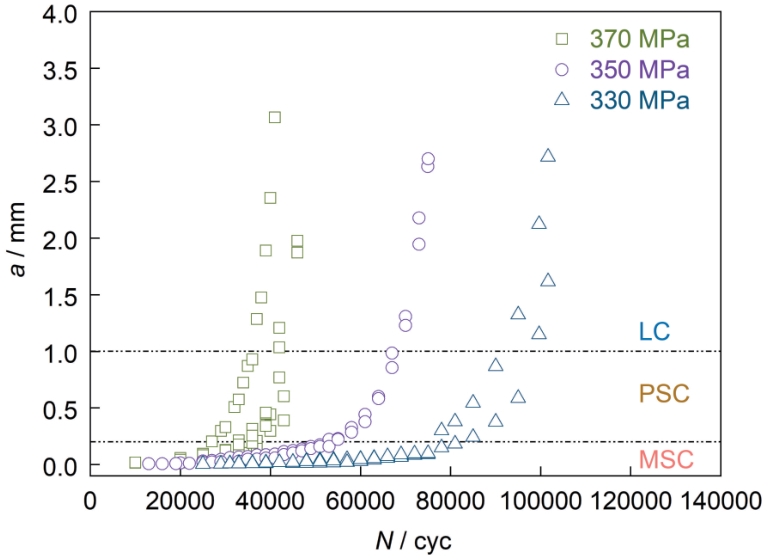
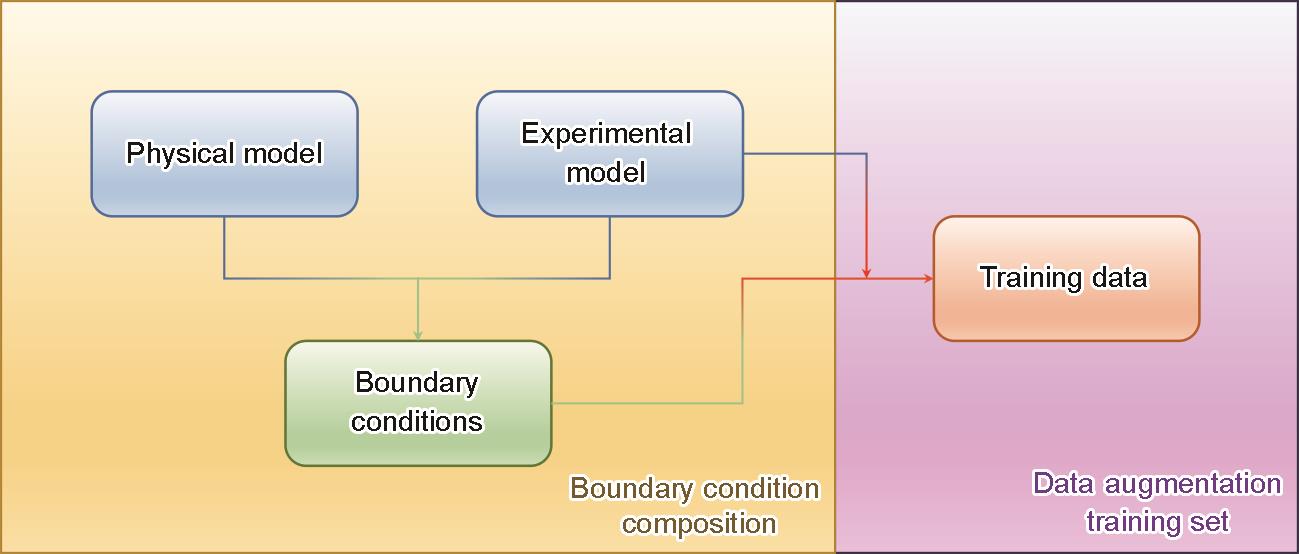
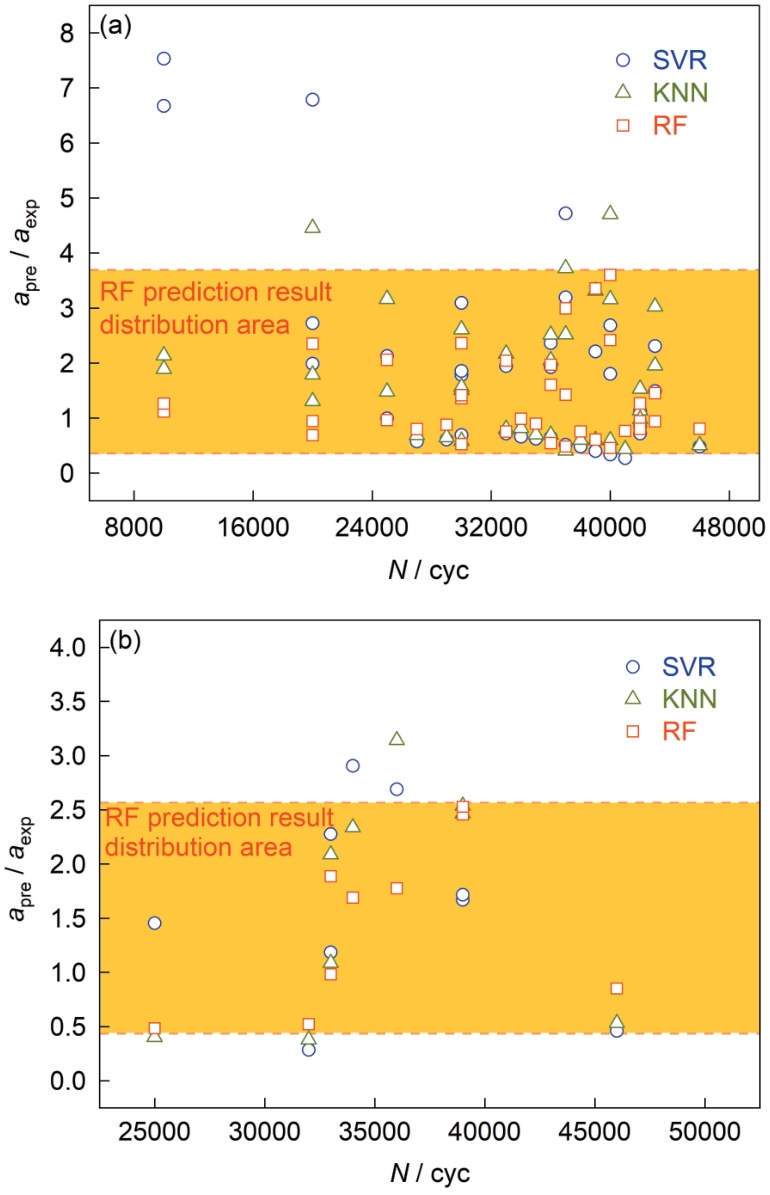
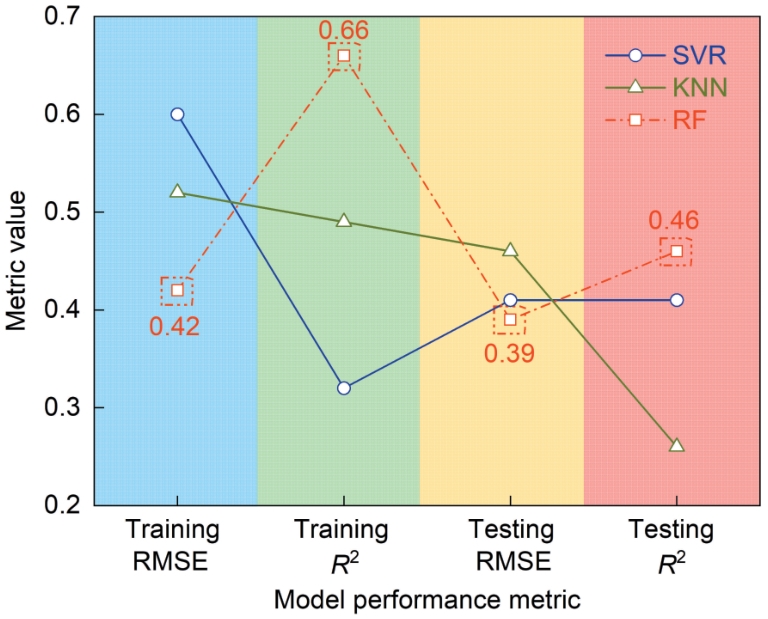
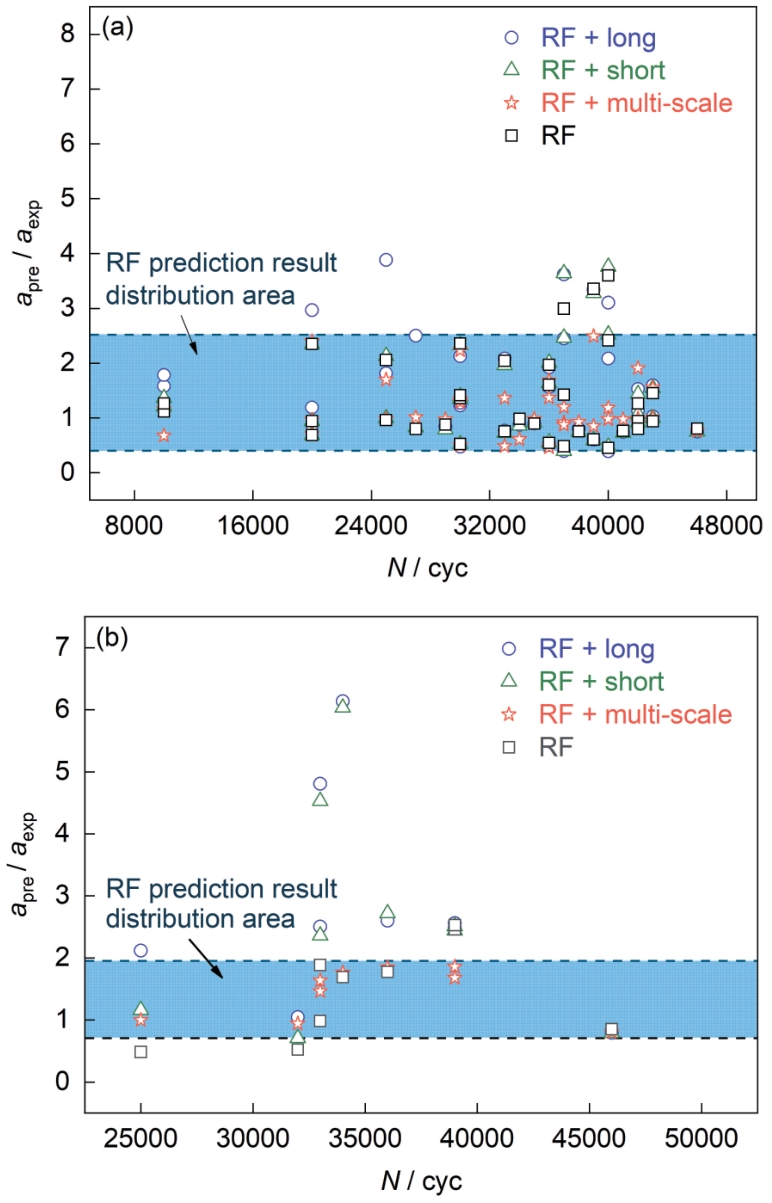
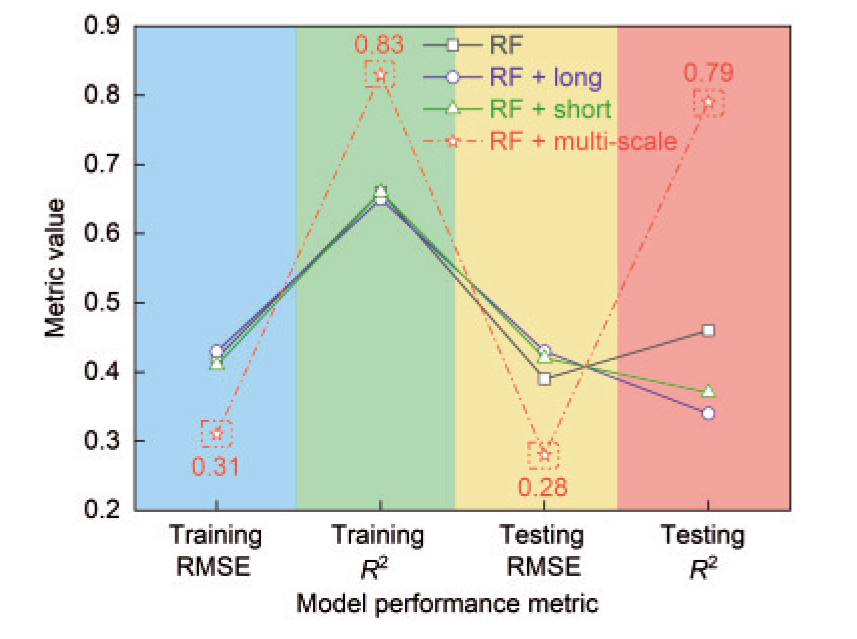
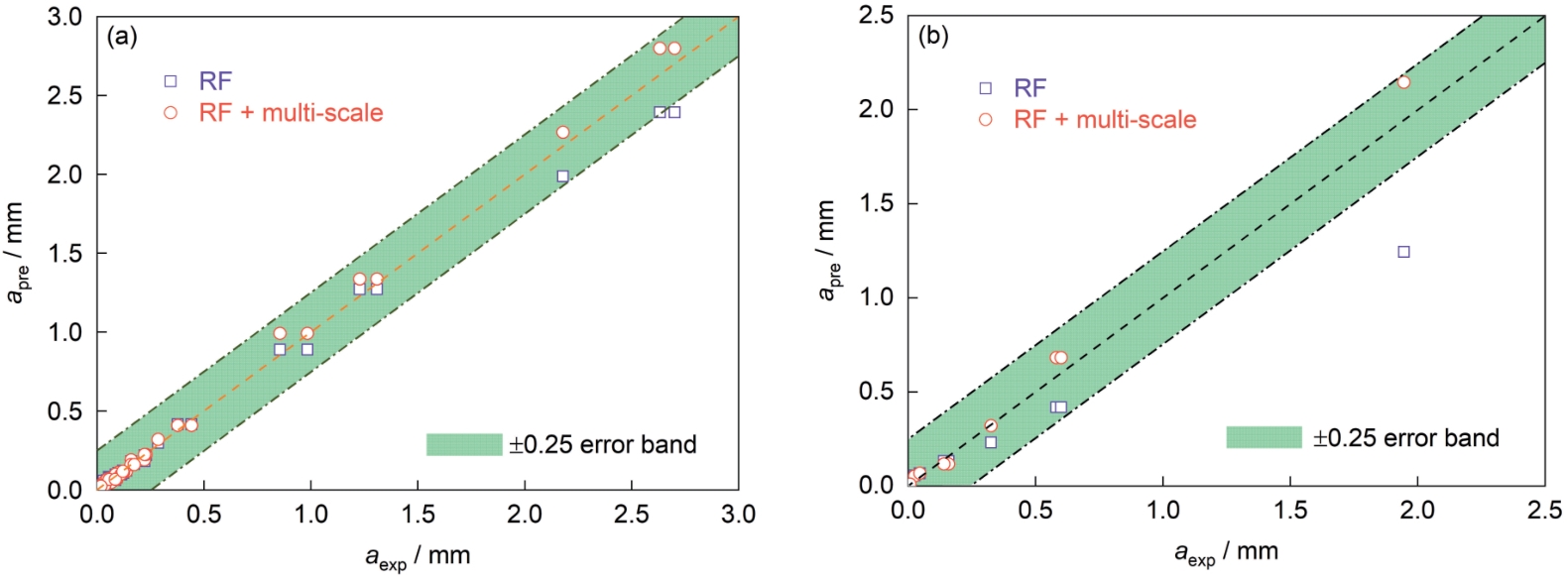
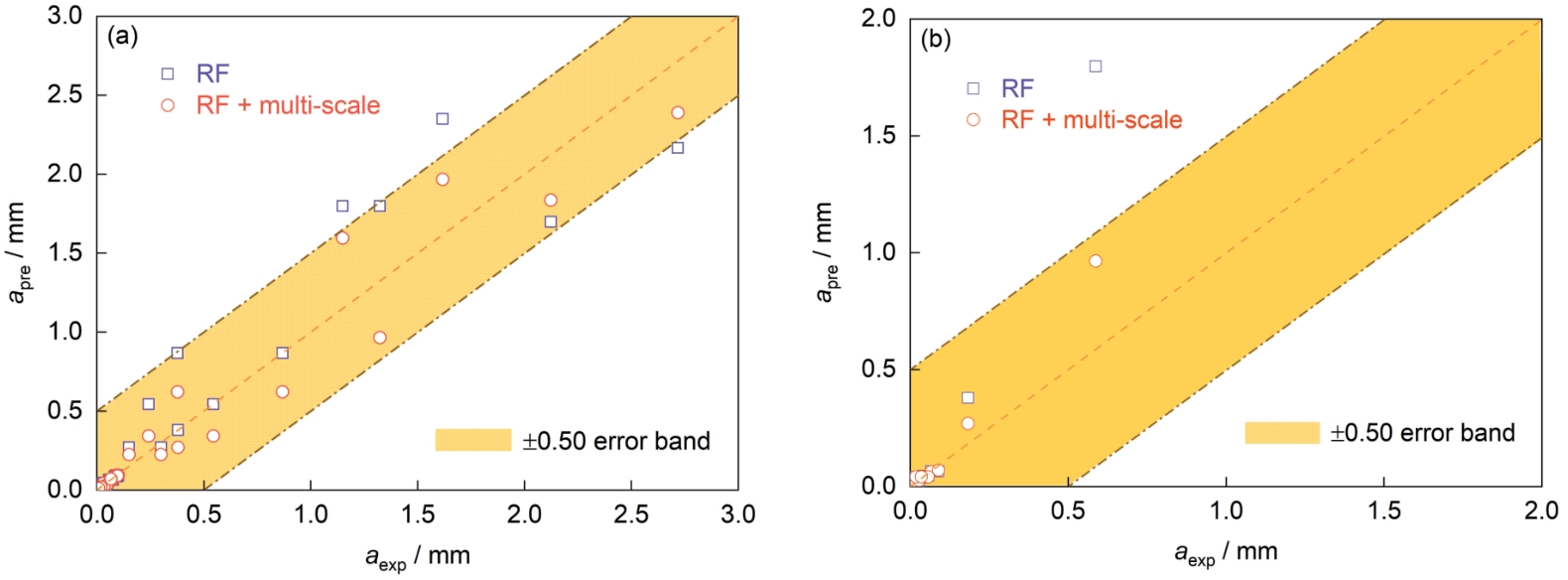
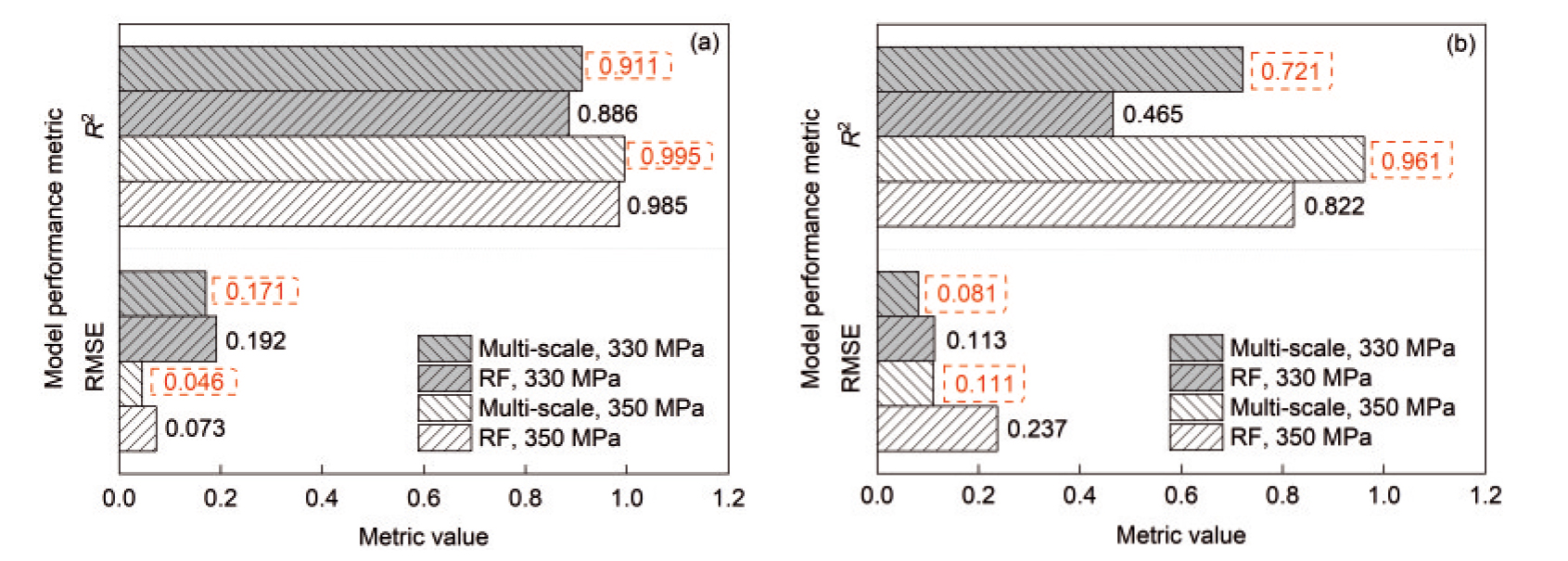
Abstract Data-driven methods based on machine learning have been employed to predict fatigue crack propagation. However, existing studies have largely overlooked the multi-scale nature of this process. Relying solely on macroscopic data for long-crack prediction often fails to capture the complete crack growth process, potentially resulting in non-conservative predictions. Moreover, purely data-driven models often lack interpretability, exhibit limited generalization capabilities, and struggle to adhere to physical laws. The challenge of integrating modeling with reasonable interpretations, driven by both data and mechanisms, remains a significant issue for researchers. In this study, we selected 304 austenitic stainless steel as the research object. To identify the algorithm with the best predictive performance, firstly, the fatigue crack propagation prediction capabilities of three algorithms were compared: K-nearest neighbor (KNN), support vector machine regression (SVR), and random forest (RF). The most effective algorithm and implemented data augmentation strategies based on three fatigue crack propagation models were selected, namely, long cracks, short cracks, and multi-scale cracks, to enhance prediction accuracy. Finally, using a dual-drive model framework that incorporated the data augmentation strategy, predictions of multi-scale fatigue crack propagation under different loads were conducted. Compared to the SVR and KNN algorithms, the results indicated that the RF algorithm had a lower root mean square error (RMSE) value and higher coefficient of determination (R2), making it more suitable for predicting fatigue crack propagation. Under a load of 370 MPa, the prediction accuracy for the training set ranked in the order of RF > KNN > SVR. By contrast, the accuracy for the test set was in the order of RF > SVR > KNN. The multi-scale fatigue crack propagation model effectively captured the entire process of crack growth, whereas the long- and short-crack models accurately represented only parts of it. Data enhancement based on the multi-scale crack model demonstrated significantly better results than the other two models, with increases in accuracy of 25.76% and 71.74% for the training and test sets, respectively. The dual-drive model based on the RF algorithm and data enhancement strategy exhibited strong generalization capabilities. Under a load of 350 MPa, the RMSE values for the training and test sets were 0.046 and 0.111, respectively, and R2 reached 0.995 and 0.961. Under a load of 330 MPa, the RMSE values for the training and test sets were 0.171 and 0.081, respectively, and the R2 reached 0.911 and 0.721. Finally, compared with the pure data-driven model based on the RF algorithm, the predictions from the dual-drive model were found to be significantly more accurate.
|
|
Received: 28 August 2024
|
|
|
| Fund: National Natural Science Foundation of China(52375154);National Natural Science Foundation of China(52311530067) |
Corresponding Authors:
YANG Jie, professor, Tel: (021)55272320, E-mail: yangjie@usst.edu.cn
|
| [1] |
Xu W, Huang M H, Wang J L, et al. Review: Relations between metastable austenite and fatigue behavior of steels [J]. Acta Metall. Sin., 2020, 56: 459
doi: 10.11900/0412.1961.2019.00399
|
|
徐 伟, 黄明浩, 王金亮 等. 综述: 钢中亚稳奥氏体组织与疲劳性能关系 [J]. 金属学报, 2020, 56: 459
|
| [2] |
Wei L S, Liu H L, Tang C G, et al. Investigation of novel type of cylindrical lithium-ion battery heat exchangers based on topology optimization [J]. Energy, 2024, 304: 131886
doi: 10.1016/j.energy.2024.131886
|
| [3] |
Wang H J, Li B, Gong J G, et al. Machine learning-based fatigue life prediction of metal materials: Perspectives of physics-informed and data-driven hybrid methods [J]. Eng. Fract. Mech., 2023, 284: 109242
doi: 10.1016/j.engfracmech.2023.109242
|
| [4] |
Irwin G R. Analysis of stresses and strains near the end of a crack traversing a plate [J]. J. Appl. Mech., 1957, 24: 361
doi: 10.1115/1.4011547
|
| [5] |
Paris P, Erdogan F. A critical analysis of crack propagation laws [J]. J. Basic Eng., 1963, 85: 528
doi: 10.1115/1.3656900
|
| [6] |
Forman R G, Kearney V E, Engle R M. Numerical analysis of crack propagation in cyclic-loaded structures [J]. J. Basic Eng., 1967, 89: 459
doi: 10.1115/1.3609637
|
| [7] |
Pearson S. Initiation of fatigue cracks in commercial aluminium alloys and the subsequent propagation of very short cracks [J]. Eng. Frac. Mech., 1975, 7: 235
doi: 10.1016/0013-7944(75)90004-1
|
| [8] |
Okazaki M, Yada T, Endoh T. Surface small crack growth behavior in low-cycle fatigue at elevated temperature and application limit of macroscopic crack growth law [J]. Nucl. Eng. Des., 1989, 111: 123
doi: 10.1016/0029-5493(89)90284-7
|
| [9] |
Deng G J, Tu S T, Wang Q Q, et al. Small fatigue crack growth mechanisms of 304 stainless steel under different stress levels [J]. Int. J. Fatigue, 2014, 64: 14
doi: 10.1016/j.ijfatigue.2014.01.027
|
| [10] |
Ye S, Zhang C C, Zhang P Y, et al. Fatigue life prediction of nickel-based GH4169 alloy on the basis of a multi-scale crack propagation approach [J]. Eng. Fract. Mech., 2018, 199: 29
doi: 10.1016/j.engfracmech.2018.05.023
|
| [11] |
Agrawal A, Choudhary A. Perspective: Materials informatics and big data: Realization of the “fourth paradigm” of science in materials science [J]. APL Mater., 2016, 4: 053208
|
| [12] |
Schleder G R, Padilha A C M, Acosta C M, et al. From DFT to machine learning: Recent approaches to materials science—A review [J]. J. Phys.: Mater., 2019, 2: 032001
|
| [13] |
Zhao S K, Jiang C, Long X Y. Remaining useful life estimation of mechanical systems based on the data-driven method and bayesian theory [J]. J. Mech. Eng., 2018, 54(12): 115
doi: 10.3901/JME.2018.12.115
|
|
赵申坤, 姜 潮, 龙湘云. 一种基于数据驱动和贝叶斯理论的机械系统剩余寿命预测方法 [J]. 机械工程学报, 2018, 54(12): 115
doi: 10.3901/JME.2018.12.115
|
| [14] |
Liu Y L, Niu C, Wang Z, et al. Machine learning in materials genome initiative: A review [J]. J. Mater. Sci. Technol., 2020, 57: 113
doi: 10.1016/j.jmst.2020.01.067
|
| [15] |
Wang H X, Zhang W F, Sun F Q, et al. A comparison study of machine learning based algorithms for fatigue crack growth calculation [J]. Materials, 2017, 10: 543
doi: 10.3390/ma10050543
|
| [16] |
Younis H B, Kamal K, Sheikh M F, et al. Prediction of fatigue crack growth rate in aircraft aluminum alloys using optimized neural networks [J]. Theor. Appl. Fract. Mech., 2022, 117: 103196
doi: 10.1016/j.tafmec.2021.103196
|
| [17] |
Zafar M H, Younis H B, Mansoor M, et al. Training deep neural networks with novel metaheuristic algorithms for fatigue crack growth prediction in aluminum aircraft alloys [J]. Materials, 2022, 15: 6198
doi: 10.3390/ma15186198
|
| [18] |
Mortazavi S N S, Ince A. An artificial neural network modeling approach for short and long fatigue crack propagation [J]. Comput. Mater. Sci., 2020, 185: 109962
doi: 10.1016/j.commatsci.2020.109962
|
| [19] |
Zhang J Q, Zhu J C, Guo W, et al. A machine learning-based approach to predict the fatigue life of three-dimensional cracked specimens [J]. Int. J. Fatigue, 2022, 159: 106808
doi: 10.1016/j.ijfatigue.2022.106808
|
| [20] |
Barbosa J F, Correia J A F O, Júnior R C S F, et al. Fatigue life prediction of metallic materials considering mean stress effects by means of an artificial neural network [J]. Int. J. Fatigue, 2020, 135: 105527
doi: 10.1016/j.ijfatigue.2020.105527
|
| [21] |
Gan L, Wu H, Zhong Z. Fatigue life prediction considering mean stress effect based on random forests and kernel extreme learning machine [J]. Int. J. Fatigue, 2022, 158: 106761
doi: 10.1016/j.ijfatigue.2022.106761
|
| [22] |
Yang J Y, Kang G Z, Liu Y J, et al. A novel method of multiaxial fatigue life prediction based on deep learning [J]. Int. J. Fatigue, 2021, 151: 106356
doi: 10.1016/j.ijfatigue.2021.106356
|
| [23] |
Liu F, Chen H F, Yang J, et al. Application of physics-informed machine learning methods in buckling design of axially compressed cylindrical shells [J]. Thin-Walled Struct., 2024, 200: 111963
doi: 10.1016/j.tws.2024.111963
|
| [24] |
Zhang X C, Gong J G, Xuan F Z. A physics-informed neural network for creep-fatigue life prediction of components at elevated temperatures [J]. Eng. Fract. Mech., 2021, 258: 108130
doi: 10.1016/j.engfracmech.2021.108130
|
| [25] |
Karpatne A, Atluri G, Faghmous J H, et al. Theory-guided data science: A new paradigm for scientific discovery from data [J]. IEEE Trans. Knowl. Data Eng., 2017, 29: 2318
doi: 10.1109/TKDE.2017.2720168
|
| [26] |
Karniadakis G E, Kevrekidis I G, Lu L, et al. Physics-informed machine learning [J]. Nat. Rev. Phys., 2021, 3: 422
doi: 10.1038/s42254-021-00314-5
|
| [27] |
Yang J Y, Kang G Z, Kan Q H. Rate-dependent multiaxial life prediction for polyamide-6 considering ratchetting: Semi-empirical and physics-informed machine learning models [J]. Int. J. Fatigue, 2022, 163: 107086
doi: 10.1016/j.ijfatigue.2022.107086
|
| [28] |
Jiang L F, Hu Y N, Liu Y X, et al. Physics-informed machine learning for low-cycle fatigue life prediction of 316 stainless steels [J]. Int. J. Fatigue, 2024, 182: 108187
doi: 10.1016/j.ijfatigue.2024.108187
|
| [29] |
Jiang L F, Hu Y N, Li H, et al. A cGAN-based fatigue life prediction of 316 austenitic stainless steel in high-temperature and high-pressure water environments [J]. Int. J. Fatigue, 2025, 190: 108633
doi: 10.1016/j.ijfatigue.2024.108633
|
| [30] |
Jain A K, Duin R P W, Mao J C. Statistical pattern recognition: A review [J]. IEEE Trans. Pattern Anal. Mach. Intell., 2000, 22: 4
doi: 10.1109/34.824819
|
| [31] |
Cover T, Hart P. Nearest neighbor pattern classification [J]. IEEE Trans. Inform. Theory, 1967, 13: 21
doi: 10.1109/TIT.1967.1053964
|
| [32] |
Cortes C, Vapnik V. Support-vector networks [J]. Mach. Learn., 1995, 20: 273
doi: 10.1023/A:1022627411411
|
| [33] |
Smola A J, Schölkopf B. A tutorial on support vector regression [J]. Stat. Comput., 2004, 14: 199
doi: 10.1023/B:STCO.0000035301.49549.88
|
| [34] |
Breiman L. Random forests [J]. Mach. Learn., 2001, 45: 5
doi: 10.1023/A:1010933404324
|
| [35] |
Xie J X, Su Y J, Xue D Z, et al. Machine Learning for Materials Research and Development [J]. Acta Metall. Sin., 2021, 57: 1343
doi: 10.11900/0412.1961.2021.00357
|
|
谢建新, 宿彦京, 薛德祯 等. 机器学习在材料研发中的应用 [J]. 金属学报, 2021, 57: 1343
doi: 10.11900/0412.1961.2021.00357
|
| [36] |
Lu R S, Yang J, Wang J, et al. Probabilistic damage tolerance assessment method based on the multi-scale crack growth model [J]. Eng. Fract. Mech., 2023, 285: 109297
doi: 10.1016/j.engfracmech.2023.109297
|
| No Suggested Reading articles found! |
|
|
Viewed |
|
|
|
Full text
|
|
|
|
|
Abstract
|
|
|
|
|
Cited |
|
|
|
|
| |
Shared |
|
|
|
|
| |
Discussed |
|
|
|
|